Author: Hiren Bhuriya

  • Messeregge :The Essential Knife Harrow Revolutionizing Modern Soil Cultivation

    Messeregge :The Essential Knife Harrow Revolutionizing Modern Soil Cultivation

    In the ever-evolving world of agricultural technology, where precision farming and sustainability take center stage, one piece of equipment continues to prove its indispensable value: the Messeregge, or knife harrow. This German-engineered tillage implement represents the perfect marriage of traditional farming wisdom and modern agricultural innovation, offering farmers a powerful solution for soil preparation, weed control, and sustainable land management.

    Understanding the Messeregge: More Than Just a Harrow

    The Messeregge, derived from the German words “Messer” (knife) and “Egge” (harrow), is a specialized agricultural implement designed for surface tillage operations. Unlike conventional disc harrows or spike tooth harrows, the Messeregge features sharp, blade-like tines that penetrate the soil with surgical precision, creating an optimal seedbed while minimizing soil disturbance.

    As agricultural machinery expert Dr. Thomas Bründl notes in his comprehensive study of European tillage equipment, “The knife harrow represents a fundamental shift in how we approach soil cultivation. Rather than aggressively turning and inverting soil layers, it works horizontally, preserving soil structure while achieving superior weed control and seedbed preparation.”

    This distinction is crucial. While traditional plowing inverts soil layers and can create compaction issues, the Messeregge operates in the top 3-8 centimeters of soil, maintaining the natural soil profile while still achieving excellent tillage results. This horizontal working method has earned it recognition as a cornerstone implement in conservation agriculture systems worldwide.

    The Anatomy and Engineering of a Messeregge

    Understanding the Messeregge requires examining its sophisticated yet elegantly simple design. The implement consists of several key components working in harmony:

    Blade Tines: The heart of the Messeregge is its array of sharp, knife-like tines arranged in multiple rows. These blades, often made from high-carbon steel or boron steel for extended durability, are designed to slice through soil and vegetation rather than tear or push it aside. Modern iterations feature tungsten carbide tips or cemented carbide edges that can withstand thousands of hectares of use before requiring replacement.

    Frame Structure: The robust frame holds the blade assemblies and distributes the tractor’s pulling force evenly across all working elements. Advanced models incorporate hydraulic systems that allow operators to adjust working depth and tine angle from the tractor cab, adapting instantly to changing soil conditions.

    Gang Configuration: Messeregge implements typically feature multiple rows or “gangs” of blades, with configurations ranging from three to eight rows depending on the model and intended application. As tillage engineer Maria Gerber explains, “The multi-row configuration ensures that the soil receives multiple passes in a single operation, creating a finer tilth without requiring multiple trips across the field.”

    Leveling Components: Many modern Messeregge systems incorporate rear-mounted leveling boards or rolling baskets that smooth the worked soil, creating an immediately plantable seedbed in a single pass.

    The Operational Advantages: Why Farmers Choose Messeregge

    The popularity of knife harrows in European agriculture and their growing adoption in North America and Australia—stems from their remarkable versatility and operational benefits:

    Superior Weed Control

    One of the Messeregge’s most celebrated attributes is its exceptional weed control capability. The sharp blades cut weed roots below the soil surface while simultaneously bringing weed seeds to the surface where they can germinate and be destroyed in subsequent passes. This mechanical weed control reduces dependency on herbicides, aligning perfectly with organic farming principles and integrated pest management strategies.

    “In our trials comparing various mechanical weeding systems, the knife harrow consistently outperformed traditional cultivators in controlling both broadleaf weeds and grass species,” reports agronomist Hans Studer from the Swiss Federal Research Station for Agroecology. “The slicing action is more effective than the stirring action of rotary tillers, particularly in slightly damp soil conditions.”

    Seedbed Preparation Excellence

    The Messeregge excels at creating the ideal seedbed that critical zone where seeds must have intimate contact with soil particles to ensure rapid germination and strong establishment. By breaking up surface crusts, eliminating clods, and creating a fine, even tilth, the knife harrow provides optimal conditions for seed-to-soil contact.

    Market gardener and agricultural author Jean-Martin Fortier, whose book “The Market Gardener” has influenced thousands of small-scale farmers, emphasizes this point: “The quality of your seedbed directly determines your germination rates and ultimately your yields. Investment in proper seedbed preparation with tools like knife harrows pays dividends throughout the growing season.”

    Residue Management

    Modern agriculture often involves managing significant crop residues from previous harvests. The Messeregge's blade design allows it to effectively cut through and incorporate these residues into the top soil layer, accelerating decomposition and nutrient cycling. This is particularly valuable in conservation tillage systems where some residue must be incorporated while maintaining overall soil cover.

    you can Also Read – https://dev.journalingtechniques.org/blog/zero-waste-lifestyle/

    Reduced Soil Compaction

    Unlike heavy disc harrows that can cause subsurface compaction through their substantial weight and aggressive soil displacement, the Messeregge works lightly and horizontally. This approach maintains or even improves soil structure, preserving the network of pores and channels that facilitate water infiltration and root penetration.

    Agricultural soil scientist Dr. Werner Käser explains: “Soil compaction is one of the most insidious problems in modern agriculture because its effects are cumulative and often invisible until yields begin declining. Implements like the Messeregge that work without excessive weight or vertical compression are essential tools in maintaining long-term soil health.”

    Applications Across Farming Systems

    The versatility of the Messeregge makes it valuable across diverse agricultural contexts:

    Organic Farming: Where herbicide use is prohibited, the Messeregge serves as a primary weed control tool, allowing multiple cultivation passes throughout the growing season without compromising soil structure.

    Conservation Agriculture: As part of reduced-tillage systems, knife harrows prepare seedbeds with minimal soil disturbance, maintaining the protective residue cover that prevents erosion and conserves moisture.

    Market Gardening: Small-scale intensive vegetable production relies heavily on Messeregge systems for rapid bed preparation between successive crops, maximizing land productivity.

    Pasture Renovation: The Messeregge can scarify pastures, removing dead thatch and stimulating new growth without destroying the established grass stand—a technique known as “pasture harrowing.”

    Technical Considerations: Matching Equipment to Conditions

    Successful Messeregge operation requires matching equipment specifications to soil type, moisture conditions, and operational goals:

    Soil Type Adaptation: Clay soils require different blade configurations than sandy loams. Heavier soils benefit from more aggressive blade angles and narrower tine spacing, while lighter soils work well with wider spacing to prevent over-pulverization.

    Moisture Management: “The Messeregge performs best when soil moisture is in the optimal range—not too wet to cause smearing, not too dry to create excessive dust,” advises field equipment specialist Jakob Moser. “Learning to read your soil conditions is as important as the equipment itself.”

    Speed and Depth Adjustment: Modern tractors equipped with GPS guidance and auto-steer allow precise control of ground speed and working depth, critical variables in achieving consistent results. Typical operating speeds range from 8-15 kilometers per hour, with working depths of 3-8 centimeters.

    Horsepower Requirements: Unlike power harrows that demand significant PTO horsepower, the Messeregge is pulled implement requiring moderate drawbar power typically 15-25 horsepower per meter of working width, making it accessible to smaller farm operations.

    Integration with Precision Agriculture

    The Messeregge’s role in modern agriculture extends beyond its mechanical function. When integrated into precision farming systems, knife harrows enable:

    • Variable-depth tillage based on soil mapping data
    • Zone-specific residue management adapting to yield variations
    • Automated guidance ensuring complete coverage without overlap or gaps
    • Data logging for documentation and compliance with organic certification requirements

    Economic Considerations: Investment and Returns

    From a financial perspective, the Messeregge represents a moderate capital investment with substantial returns. Entry-level 3-meter models suitable for small farms start around €7,000-€10,000, while professional-grade 6-meter systems can exceed €25,000.

    However, the economic benefits extend beyond the purchase price. Reduced fuel consumption compared to rotary tillers, lower maintenance costs than complex power harrows, and decreased herbicide expenses all contribute to favorable economics. Agricultural economist Anna Gerber’s analysis shows that “farmers typically recover their investment in knife harrow equipment within 3-4 seasons through reduced input costs and improved crop establishment.”

    Maintenance and Longevity

    Proper maintenance ensures decades of reliable service from quality Messeregge equipment:

    Daily Care: Cleaning blade assemblies after use prevents soil buildup and corrosion. Visual inspection identifies damaged or worn blades before they compromise performance.

    Seasonal Maintenance: Bearing lubrication, hydraulic system checks, and blade sharpening or replacement should occur during off-seasons.

    Blade Management: Modern carbide-tipped blades can work 500-800 hectares before requiring replacement, while standard steel blades need more frequent attention every 200-300 hectares depending on soil abrasiveness.

    Environmental Benefits: Sustainability Through Smart Tillage

    The environmental case for Messeregge technology grows stronger as agriculture faces climate change pressures and regulatory scrutiny:

    Carbon Sequestration: Minimal tillage depth preserves soil carbon stocks that would be oxidized through deep plowing, contributing to climate change mitigation.

    Erosion Prevention: By maintaining soil structure and incorporating residues, knife harrowing protects topsoil from wind and water erosion—critical in an era of increasing weather extremes.

    Biodiversity Support: Reduced tillage intensity preserves habitat for beneficial soil organisms, from earthworms to mycorrhizal fungi, that underpin soil health and plant nutrition.

    Water Conservation: The fine, level seedbed created by the Messeregge improves water infiltration and reduces runoff, maximizing efficiency of increasingly scarce water resources.

    Challenges and Limitations

    Despite its many advantages, the Messeregge is not without limitations:

    Residue Volume: Extremely heavy crop residues may overwhelm knife harrow capacity, requiring pre-treatment with stalk choppers or mowers.

    Stone Content: Rocky soils pose challenges for blade longevity and may require protective mechanisms or alternative equipment.

    Wet Soil Sensitivity: Like all tillage equipment, the Messeregge can cause soil damage if operated when conditions are too wet, requiring patience and good judgment.

    Learning Curve: Optimizing performance requires experience in adjusting blade angle, depth, and speed for varying conditions—skills developed over multiple seasons.

    The Future of Messeregge Technology

    Innovation continues to enhance knife harrow capabilities:

    Smart Sensors: Emerging systems incorporate sensors that detect soil conditions and automatically adjust implement settings in real-time.

    Autonomous Operation: Integration with autonomous tractors promises 24-hour operation during optimal soil windows, maximizing efficiency.

    Biomimicry: Research into natural soil disturbance patterns influences next-generation blade designs that work even more harmoniously with soil ecosystems.

    Conclusion: A Tool for Sustainable Intensification

    As global agriculture faces the twin challenges of feeding a growing population while reducing environmental impact, the Messeregge embodies the principle of sustainable intensification achieving more with less through intelligent tool design and thoughtful application.

  • Texas Built Construction Lawsuit | Deep Look at Legal Challenges

    Texas Built Construction Lawsuit | Deep Look at Legal Challenges

    The construction industry in Texas has experienced rapid growth over the past decade, fueled by population increases, housing demand, and commercial development. Alongside this expansion, however, has come a rise in legal disputes involving contractors, subcontractors, and property owners. One such case that has drawn attention is the Texas Built Construction lawsuit, which highlights the challenges, risks, and legal complexities inherent in construction projects.

    The lawsuit involving Texas Built Construction centers on allegations related to financial disputes, contractual obligations, and professional accountability. While the legal process is still unfolding, the case serves as a broader example of how construction litigation unfolds in Texas and why disputes between contractors and clients or subcontractors are becoming increasingly common.

    Background of Texas Built Construction

    Texas Built Construction operates as a general contractor offering residential and commercial construction services. Its work has included remodeling projects, custom home construction, and property improvements across parts of Texas. Like many mid-sized construction firms, the company relies on subcontractors, suppliers, and service providers to complete projects within set budgets and timelines.

    Over time, as the company expanded its operations, disputes reportedly arose related to payment issues, project expectations, and contract performance. These disputes eventually escalated into formal legal action, with plaintiffs seeking compensation and legal remedies under Texas construction and contract law.

    Overview of the Lawsuit

    The central lawsuit involving Texas Built Construction was filed by a business entity alleging nonpayment for services rendered. According to court filings, the plaintiff claimed that Texas Built Construction failed to pay for completed work, despite contractual agreements outlining payment obligations.

    The lawsuit asserts that:

    • A valid agreement existed between the parties

    • Services were performed as agreed

    • Payment was not made in full or within the agreed timeframe

    As a result, the plaintiff sought monetary damages, interest, legal fees, and other relief allowed under Texas law. Texas Built Construction responded by contesting the claims and asserting defenses, which may include disputes over the scope of work, quality of performance, or contractual interpretation.

    Such lawsuits are not uncommon in the construction industry, particularly when multiple parties are involved and project costs exceed initial estimates.

    Key Legal Issues in the Case

    Breach of Contract

    Central to the Texas Built Construction lawsuit is a foundational breach of contract dispute. In the construction sector, these agreements serve as the definitive framework for scope of work (SOW), material specifications, delivery milestones, and payment applications. When a counterparty fails to meet these performance obligations, litigation typically centers on the interpretation of these contractual clauses.

    In the current proceedings, the plaintiff asserts that Texas Built Construction breached its duties by failing to provide equitable compensation for certified, completed services. Conversely, the defense is expected to raise affirmative defenses, potentially arguing that the services rendered failed to meet contractual quality standards, were substantively incomplete, or fell outside the expressly defined scope of the agreement.

    Payment Disputes

    Payment disputes are one of the most common sources of litigation in construction. Contractors depend on consistent cash flow to pay workers and suppliers. When payments are delayed or withheld, disputes escalate quickly.

    In Texas, contractors and subcontractors may pursue several remedies for unpaid work, including lawsuits and claims for interest or damages. These disputes can become complicated when project changes, cost overruns, or disagreements over quality arise.

    Business Restructuring and Liability

    The lawsuit also touches on issues related to corporate structure and liability. Texas Built Construction reportedly underwent changes in business organization, which can complicate legal claims. Plaintiffs may argue that liability extends to successor entities, while defendants may claim that obligations belong to a prior entity.

    Texas courts often examine whether business restructuring was legitimate or intended to avoid financial responsibility. This adds another layer of complexity to the case.

    New Texas Law Provides Construction Professionals a Right to Repair

    Construction Litigation in Texas: A Growing Trend

    The Texas Built Construction lawsuit reflects a broader trend of increased construction litigation across the state. Several factors contribute to this rise:

    1. Accelerated Market Velocity
    Texas is currently experiencing an unprecedented surge in both residential and commercial capital expenditures. As the density of active projects increases, the statistical probability of construction defect claims and performance disputes rises proportionally. In this high-velocity environment, the margin for error in project management is significantly reduced.

    2. Macroeconomic Volatility: Labor & Materials
    Acute labor shortages and inflationary spikes in material costs have placed extreme pressure on fixed-price contracts. When actual expenditures exceed underwritten projections, the resulting “margin compression” often leads to litigation over cost-overrun liability and which party bears the economic risk of loss.

    3. Contractual Ambiguity & Technical Complexity
    Modern construction agreements are highly granular and technically dense. Disputes frequently arise from ambiguous indemnity clauses or poorly defined milestone triggers for payment. Without clear conditions precedent, these “gray areas” in the contract become the primary catalysts for breach of contract allegations and protracted legal battles.

    Impact on Subcontractors and Clients

    For subcontractors, nonpayment can be financially devastating. Many operate on tight margins and rely on timely payments to sustain operations. When disputes arise, subcontractors may be forced to seek legal remedies to recover owed funds.

    Clients, including homeowners and property developers, also face risks. Construction disputes can delay projects, increase costs, and result in incomplete or defective work. Legal battles often prolong these issues, making resolution difficult and expensive.

    Legal Process and Potential Outcomes

    Construction lawsuits typically follow a structured legal process:

    Filing and Response

    The plaintiff files a complaint outlining claims and damages. The defendant responds with an answer, denying or disputing allegations.

    Discovery

    Both parties exchange documents, contracts, invoices, and communications. Discovery is often extensive in construction cases.

    Mediation

    Courts often encourage mediation to resolve disputes without trial. Many construction cases settle at this stage.

    Trial

    If settlement fails, the case proceeds to trial. A judge or jury determines liability and awards damages if appropriate.

    Possible outcomes include:

    • Monetary compensation

    • Settlement agreements

    • Dismissal of claims

    • Court-ordered remedies

    Industry Lessons from the Lawsuit

    The Texas Built Construction lawsuit highlights important lessons for the construction industry:

    • Clear Contracts Matter. Detailed agreements reduce misunderstandings.

    • Documentation Is Essential. Written records protect all parties.

    • Financial Planning Is Critical. Cash flow management prevents disputes.

    • Transparency Builds Trust. Clear communication can prevent escalation.

    Contractors who fail to address these areas risk legal exposure and reputational damage.

    Consumer Awareness and Protection

    For Texans hiring construction firms, this case underscores the importance of due diligence. Consumers should:

    • Review contracts carefully

    • Verify licensing and business history

    • Maintain written records of communications

    • Understand dispute resolution options

    Being proactive can reduce the likelihood of legal disputes and protect financial investments.

    Broader Legal and Economic Implications

    Impact of construction litigation extends far beyond the primary litigants, creating significant economic externalities. Systemic legal disputes inflate project capitalization costs, decelerate regional development cycles, and place an undue burden on judicial resources. For developers and contractors, high-frequency litigation results in the erosion of reputational capital, often triggering “risk flags” that can jeopardize future institutional financing and partnership opportunities.

    From a jurisprudential perspective, proceedings such as the Texas Built Construction lawsuit serve as critical catalysts for the evolution of the Texas Property Code. These cases provide the bench with opportunities to refine the interpretations of contractual indemnity, vicarious liability, and the “standard of care” required in a modern, high-velocity construction environment. Ultimately, the outcomes of these disputes set the judicial precedents that will govern the next generation of Texas real estate development.

    Conclusion

    The Texas Built Construction lawsuit offers insight into the challenges facing contractors and clients in a fast-growing construction market. While the case focuses on specific allegations of nonpayment and contractual disputes, it reflects broader industry issues related to accountability, communication, and legal compliance.

    As Texas continues to expand, construction litigation is likely to remain a significant concern. Whether the dispute is resolved through settlement or trial, the case serves as a reminder that clear agreements, ethical business practices, and legal awareness are essential for success in the construction industry.

    Understanding cases like this empowers homeowners, subcontractors, and contractors alike to navigate construction projects more effectively and avoid costly legal conflicts.

  • How to Start Journaling: A Complete Beginner’s Guide

    How to Start Journaling: A Complete Beginner’s Guide

    Journaling has become one of the most powerful tools for self-growth, emotional wellbeing, creativity, and spiritual connection. Whether you’re trying to understand how to start journaling, build confidence, reduce anxiety, heal from heartbreak, or grow spiritually, journaling can support you every step of the way.

    But many beginners struggle with the same question:
    Where do I begin?

    This in-depth guide covers everything—from how to start daily journaling to how to start bullet journaling, art journaling, gratitude journaling, and even Bible or Quran journaling.

    If you’ve ever asked yourself “what is journaling and how to start?”, this guide is your all-in-one answer.


    What Is Journaling and How to Start

    At its core, journaling is the practice of writing down your thoughts, feelings, experiences, and reflections. It is your personal space to explore your emotions, set goals, track habits, express gratitude, and understand your inner world.

    You can start by:

    • Choosing a notebook or digital tool

    • Setting a few minutes aside every day

    • Writing without judgment

    • Using prompts if you feel stuck

    • Staying consistent, even if entries are short

    There is no right or wrong way—only your way.


    How to Start Journaling: A Universal Guide

    If you’re completely new and wondering how to start journaling for beginners, follow these steps:

    1. Pick Your Medium

    You can journal using:

    • A physical notebook

    • A mobile app

    • A digital planner

    • Voice-to-text notes

    • A laptop document

    Digital tools are great if you want to learn how to start digital journaling, while traditional notebooks help you slow down and reflect.


    2. Create a Ritual

    If you want to build consistency and understand how to start a daily journaling habit, make journaling part of a routine. For example:

    • Every morning with tea

    • Before bed

    • During lunch break

    • After prayer or meditation

    A simple ritual helps you learn how to start journaling everyday without stress.


    3. Start with Simple Prompts

    If you don’t know how to start journaling prompts, try these:

    • What is one thing I want today?

    • What am I feeling right now?

    • What is stressing me?

    • What made me smile today?

    • What is one goal I want to work on?

    Prompts help beginners understand how to start off journaling and eliminate fear of the blank page.


    4. Keep It Short at First

    Write for 5 minutes a day. That’s enough for anyone wondering journaling for beginners – how to start. You can expand your practice over time.


    5. Be Honest With Yourself

    Your journal is your private space. You can write raw, unfiltered thoughts. This is especially important for:

    • How to start journaling your feelings

    • How to start journaling your thoughts

    • How to start journaling for mental health

    Healing begins with honesty.


    How to Start a Journaling Habit (That Actually Lasts)

    Many people give up after a week. The secret to how to start a journaling habit is making it easy:

    • Keep your journal visible

    • Use short entries

    • Try habit stacking (journal after brushing teeth)

    • Remove pressure—your journal doesn’t need to be perfect

    • Celebrate small wins

    Small steps create long-term habits.


    How to Start Journaling for Mental Health

    Journaling is scientifically linked to reduced stress, better mood, and emotional clarity.

    If you’re exploring how to start journaling for mental health, start by:

    • Labeling your emotions

    • Tracking mood changes

    • Describing stressful moments

    • Writing how you want to feel

    • Using gratitude to shift perspective

    This practice also helps with:

    How to Start Journaling for Anxiety

    Focus on:

    • Listing your current worries

    • Asking “Is this in my control?”

    • Writing calming affirmations

    How to Start Journaling for Depression

    Try:

    • Tracking energy levels

    • Listing small daily accomplishments

    • Writing letters to your future self

    Mental health journaling becomes a safe outlet for healing.

    How to Start Journaling for Mental Health


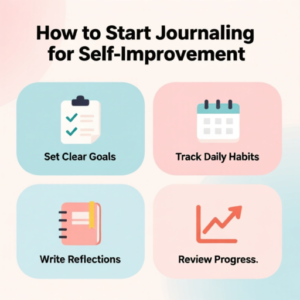
    How to Start Journaling for Self-Improvement

    Millions of people use journals as a tool for personal growth. If you’re curious about how to start journaling for self improvement, try including:

    • Monthly goals

    • Habit trackers

    • Reflection questions

    • Lessons learned

    • Self-assessment pages

    This practice creates self-awareness and discipline.

    self improvement journaling


    How to Start Journaling for Men

    Men often aren’t taught to express emotions, so journaling can feel uncomfortable. Here’s how men can start journaling:

    • Begin with factual entries (What happened today?)

    • Add one emotion per entry

    • Write about goals, plans, workouts

    • Use structured templates

    • Keep entries private

    Men who journal often experience better emotional regulation and clarity.


    How to Start Gratitude Journaling

    One of the easiest forms of journaling. Simply write:

    • Three things you’re grateful for

    • One person who helped you today

    • One good moment from the day

    How to start gratitude journaling is simple but powerful—it improves mood and reduces negativity.


    How to Start Journaling for Manifestation

    Manifestation journaling focuses on writing your desires as if they are already true. You can start by:

    • Setting clear intentions

    • Writing affirmations

    • Visualizing your future

    • Using “I am becoming…” statements

    This is a great guide for beginners wanting how to start journaling for manifestation.


    How to Start Journaling for Healing

    Whether emotional wounds, grief, or trauma—writing helps you process and recover.

    To explore how to start journaling for healing, try:

    • Writing a letter to your past self

    • Describing what hurt you

    • Listing what you learned

    • Forgiveness exercises

    • Noting what still triggers you

    Healing journaling is deeply personal and transformational.


    How to Start Journaling After a Breakup

    Journaling can help break emotional cycles and bring clarity.

    If you’re searching for how to start journaling after a breakup, try:

    • Writing what the relationship taught you

    • Listing the reasons it ended

    • Writing what you deserve now

    • Setting boundaries for the future

    • Tracking emotional progress

    Healing starts with understanding, not forgetting.


    How to Start Journaling for Therapy

    Therapists often recommend reflective writing. Here’s how to start journaling for therapy:

    • Track triggers

    • Write about therapy sessions

    • Identify patterns

    • Document coping mechanisms

    • Explore childhood memories

    This journaling style supports emotional recovery.


    How to Start Bullet Journaling

    A popular organizational system that combines creativity with planning.

    If you’re interested in how to start bullet journaling, begin by:

    • Choosing a dotted notebook

    • Creating an index

    • Making monthly and weekly spreads

    • Tracking habits, goals, tasks

    • Personalizing pages with symbols and bullets

    How to Start Bullet Journaling for Beginners

    Start minimal:

    • A simple calendar

    • To-do lists

    • Mood tracker

    As you grow comfortable, add more artistic elements.


    How to Start Junk Journaling

    Junk journals are creative, messy, colorful, and fun. They use old papers, stickers, stamps, photos, envelopes—anything recycled.

    To understand how to start junk journaling, follow these:

    • Collect old papers and craft scraps

    • Choose a notebook or make your own

    • Stick, paste, tear, and decorate freely

    • Add quotes or memories

    • Use textures and layers

    It’s perfect for creativity and emotional expression.


    How to Start Scrapbook Journaling

    Scrapbook journaling blends photos, journaling, and decorative elements.

    This is how to start scrapbook journaling:

    • Print photos

    • Add captions

    • Decorate pages with stickers

    • Write small memories or feelings

    • Use washi tapes, patterns, borders

    Ideal for memory-keeping.


    How to Start Art Journaling

    Art journaling mixes writing and visual art. You can begin with:

    • Watercolors

    • Sketches

    • Doodles

    • Magazine cut-outs

    • Quotes

    • Color themes

    If you want a creative outlet, how to start art journaling is a beautiful path.


    How to Start Bible Journaling

    Bible journaling is a spiritual practice where you write reflections, verses, and prayers.

    How to Start Bible Journaling

    You can begin by:

    • Choosing a Bible with wide margins

    • Highlighting meaningful verses

    • Adding notes or prayers

    • Using art, drawings, or stickers

    • Reflecting on how the verse applies to your life

    How to Start Bible Journaling for Beginners

    Start simple:

    • Pick one verse a day

    • Write how it makes you feel

    • Note any insight or guidance

    How to Start Journaling the Bible

    This includes deeper reflections, chapter summaries, and personal messages to God.

    How to Start a Bible Journaling Group

    Invite friends or community members, choose weekly themes, and share insights while respecting privacy.


    How to Start Journaling With God

    Spiritual journaling helps you strengthen your relationship with God.

    You can start by:

    • Writing prayers

    • Documenting blessings

    • Writing what you feel God is teaching you

    • Noting answers to prayers

    • Asking questions through writing


    How to Start Quran Journaling

    Quran journaling involves writing tafsir notes, reflections, life applications, and prayers.

    How to start:

    • Choose a Quran translation

    • Read slowly

    • Write what resonates

    • Note Arabic words you want to learn

    • Document reflections and dua

    This deepens both understanding and spiritual connection.


    How to Start Journaling Daily

    Consistency is key. To learn how to start daily journaling, choose a time, set a 5-minute timer, and write anything without pressure.


    How to Start Journaling Beginners Guide

    If you want a simple blueprint:

    • Pick a notebook

    • Write the date

    • Answer a prompt

    • Write feelings

    • End with gratitude

    That’s all you need to begin.


    Tips on How to Start Journaling

    Here are powerful tips for beginners:

    • Don’t judge your writing

    • Keep your journal private

    • Use prompts when stuck

    • Try different journaling styles

    • Allow your journal to evolve

    • Don’t aim for perfection

    • Be consistent, not perfect

    These are the same principles behind how to start journaling tips and how to start journaling for beginners tips.

  • Writing Aesthetic: The Soulful Beauty of Words

    Writing Aesthetic: The Soulful Beauty of Words

    Sometimes, writing is not just about communication. It is about creating a feeling, a moment, or a mood that stays in someone’s heart long after they have finished reading. That is what I call writing aesthetic, the art of making words not only meaningful but beautiful.

    It is not always perfect grammar or fancy vocabulary. It is the emotion behind the lines, the rhythm in your sentences, and the way your words look when they breathe on the page.

    1. The Beauty of Words

    There is something peaceful about the way words can turn ordinary thoughts into something that feels almost alive. The beauty of writing is not always about what you say but how you say it.

    Aesthetic writing has this quiet power. It paints with language. It uses sound, image, and emotion together like a painter uses color and light. When someone reads your words and feels something they cannot explain, that is the beauty you have created.

    The beauty of words does not need to be loud or dramatic. Sometimes it is hidden in silence, in small pauses, in the space between sentences.

    Beauty of Words

    2. What Does “Writing Aesthetic” Really Mean?

    When we talk about writing aesthetic, we do not just mean style or genre. It is something deeper. It is the feeling your writing gives. It is the mood of your words.

    For some writers, their aesthetic is soft, poetic, and dreamy. For others, it is dark, sharp, and real. There is no right or wrong. Your aesthetic grows naturally from who you are, what you love, and how you see the world.

    It is not about copying other people’s voices. It is about finding your own and letting it sound true even if it is a little messy or breaks a few rules.

    Sometimes when I read my old writing, I laugh a little at my mistakes. But I also smile because even in those messy lines there is something real. My aesthetic was not perfect, but it was mine, and that is what makes it beautiful.

    So when you think about your writing aesthetic, do not chase perfection. Chase truth. Because beauty comes naturally when you write from a real place.

    3. The Elements of Writing Aesthetic

    Writing beautifully is not about one single thing. It is a mix of many elements that work together like harmony in a song.

    ✍️ Tone and Mood

    Tone is your voice, the attitude and personality in your words. Mood is what your reader feels when they read it. Together, they build the emotional world of your writing.

    If your tone is gentle, your mood might feel calm or nostalgic. If your tone is passionate, your mood might feel alive and bold. Writing about rain can feel comforting in one tone and lonely in another.

    Good aesthetic writing balances both. It knows when to whisper and when to sing.

    💬 Word Choice (Diction)

    Every word has its own energy. Some words are soft and warm like honey, others are cold and sharp like steel. Choosing the right words gives your writing its flavor.

    You do not need to use complicated words to sound beautiful. Sometimes the simplest words are the most powerful if they fit perfectly in a sentence. Aesthetic writing is not about showing off. It is about making readers feel.

    When you write, ask yourself if this word belongs here, if it sounds right. The answer usually comes from your heart.

    🎶 Rhythm and Flow

    Writing has its own music. The rhythm of your sentences, how long or short they are, creates a certain feeling.

    A short line can hit hard:
    She left. Just like that.

    A longer line can feel calm and reflective:
    The world seemed quieter that morning, like even the sky was holding its breath.

    Both can be beautiful. The key is knowing when to use which. Rhythm helps your writing feel alive, not stiff or mechanical. Let your words breathe.

    🌹 Imagery and Detail

    Imagery is the color of your writing. It helps readers see and feel what you mean. It is the smell of coffee in the morning, the dust dancing in sunlight, the way someone’s laugh echoes in an empty room.

    Good imagery does not only describe. It creates emotion. It lets readers step inside your moment. But do not overdo it. Aesthetic writing is not about decoration everywhere. It is about choosing the right details that truly matter.

    Sometimes one strong image is better than a full paragraph of adjectives.

    🖋️ Presentation and Layout

    Even the way your words look can add to the aesthetic. The spacing, the paragraphs, the way you break a sentence all shape how your reader experiences your writing.

    Think about poetry. Sometimes one line standing alone can make you stop and breathe. That is the power of space. White space is silence in writing, and silence can also be beautiful.

    🌼 4. Finding Your Own Writing Aesthetic

    Finding your aesthetic does not happen overnight. It is a slow process, like growing into your own voice.

    Start by noticing what inspires you. The things you love in life often reflect the way you write. Maybe you love the stillness of nature, the calm of rain, or the hum of the city. Those things find their way into your words without you realizing.

    Ask yourself:

    • What emotion do I want my readers to feel?

    • Do I love simplicity or do I enjoy detail and description?

    • What kind of stories or images make me feel something deep?

    You do not have to fit into a label like dark academia or cottagecore. You do not need a perfect writing vibe. Your aesthetic is your fingerprint, unique, imperfect, and honest.

    The more you write, the more you see patterns, certain tones, themes, or words that return again and again. That is your style growing. It is your soul showing through the page.

    So do not rush it. Just write, rewrite, and keep feeling. The aesthetic will find you when it is ready.

    Finding Your Own Writing Aesthetic

    ☕ 5. The Writing Space and Atmosphere

    Your writing space matters more than you think. The atmosphere around you shapes the mood of your words.

    When I write in a quiet room with soft light, my words become slower and gentler. But when I am in a busy café, there is energy in them, a rhythm that feels alive. Even the time of day changes how I write. Morning feels hopeful and clear. Night feels emotional and dreamy.

    The little details matter, like the pen that glides smoothly, the rough paper of a notebook, or the tapping sound of a keyboard. These things become part of your ritual and your creative rhythm.

    Sometimes I write better when it rains. The sound helps me think and slow down. Maybe for you it is music, candlelight, or sitting near a window. Listen to what makes your mind quiet and your heart open. That is where aesthetic writing begins.

    The Writing Space and Atmosphere

    💫 6. Why Aesthetic Writing Matters

    Today we read fast. We scroll through posts and headlines without really feeling them. That is why aesthetic writing matters. It asks us to slow down.

    Writing beautifully is not about perfection. It is about connection. It is about making someone stop for a moment and feel something, maybe comfort, maybe nostalgia, maybe just peace.

    Aesthetic writing also helps the writer. It teaches you to observe more deeply, to see colors, notice silence, and feel the rhythm of your own breath. It is a form of mindfulness.

    When readers find beauty in your words, they connect not only to your story but also to you. They see your heart between the lines. That is what makes writing powerful, not fame or big vocabulary, but honesty and emotion.

    Aesthetic writing is not just an art form. It is a reminder that words are living things. When written with care, they can heal, inspire, and make the world feel softer.

    🌷 7. Final Thoughts

    At the end of the day, writing aesthetic is not about being perfect. It is about presence, being there in your words with your feelings, your flaws, and your truth.

    Do not be afraid to make mistakes. Do not be afraid to sound raw or emotional. Some of the most beautiful writing in the world came from people who did not try to be perfect. They just tried to be real.

    So write with your heart. Let your words breathe. Let them stumble a little. Let them glow quietly on the page.

    When your writing carries a piece of your soul, it does not need to be perfect. It is already beautiful.

  • 10 Shocking Benefits of Slow Weekends to Transform Your Life Today

    10 Shocking Benefits of Slow Weekends to Transform Your Life Today

    Research​‍​‌‍​‍‌​‍​‌‍​‍‌ shows that deliberately slowing down on weekends may help in lessening stress and increasing the feeling of well-being; however, the effects, in this case, depend on the individual’s consistency and personal circumstances.

    It is quite probable that performing slower activities leads to a better mood and higher productivity, but this is conditional on balancing rest with a bit of planning so as not to be too strict. Evidence leans toward benefits like less cortisol due to spending time in nature and better sleep due to following a routine, although, on the other hand, it is also true that issues such as family obligations may be present in all groups and still need to be solved.

    What Slow Weekends Involve

    Slow weekends focus more on intentional rest, awareness, and the little things in life instead of always being on the go, and the idea comes from slow living principles that aim at recharging both the mind and body.

    Core Benefits

    As a result of restful activities, the individual may experience a decrease in stress hormones, thus a better mood and less anxiety.

    With enough recovery time, the individual could be more productive during the following week, as studies show that the focus after a break is stronger.

    Slow weekends help people to sleep better and improve their relationships with others, although the influences may vary depending on each person’s way of life.

    Getting Started

    It’s a good idea to start with a weekend plan that is not too strict: Take a look at your weekends, create no-work zones among other boundaries, and implement 2-3 new habits such as digital detox or mindful mornings. Progress can be tracked through the use of a journal or by using apps like Calm.

    Check Out: 30+ Essential Best Book on Slow Living that You Must Read for a Calmer Life

    Essential Habits Overview

    One can start adopting habits like gentle movement, reflective journaling, and meal prep, thereby building a restorative routine that is consistent with their personal ​‍​‌‍​‍‌​‍​‌‍​‍‌needs.

    1,300+ Woman Standing Writing On Tablet Stock Photos, Pictures &  Royalty-Free Images - iStock

    Planning Your Slow Weekend: A Step-by-Step Guide

    Transitioning​‍​‌‍​‍‌​‍​‌‍​‍‌ to slow weekends should begin with self-examination. You can use a journal or an app like Day One to record a normal weekend and, after that, to find out what really consumes your energy—maybe it is continuous scrolling of the phone or chores that you neglect. Make up your mind to have certain limits, e.g., by stopping work notifications from Friday evening. This practice will not only create the necessary mental space but will also let you design a simple plan whose main goal will be to rest while still keeping the option of engaging in some light activities open.

    If you are a beginner, start concentrating on just one day, such as on a Sunday, and then slowly extend it. Google Calendar can be used for gentle reminding, whereas Notion is suitable for visual planners.

    Be in tune with your inner self: if you happen to be an introvert, Psychology Today’s quizzes for self-assessment can be of help in determining your needs, e.g., individual reflection rather than group participation.

    According to the CDC, it is advisable to personalize habits in order to effectively deal with chronic stress, and this may include practicing deep breathing or doing any other hobby, which also matches one’s lifestyle.

    Sample Slow Weekend Schedule Time Slot Activity Example Purpose Customization Tips
    Morning 7-9 AM Natural wake-up, hydration, journaling Build mental clarity Add gratitude prompts for positivity; adjust for night owls
    Mid-Morning 9-11 AM Gentle walk or yoga Physical recharge Opt for indoor stretches if weather is poor; 15-30 min duration
    Afternoon 11 AM-2 PM Mindful meal prep and eating Nutritional support Use seasonal produce; involve family for bonding
    Late Afternoon 2-4 PM Hobby or creative time Emotional fulfillment Reading, painting, or gardening; no performance pressure
    Evening 4-7 PM Reflection and light planning Week preparation Review highlights; set loose intentions
    Night 7 PM onward Wind-down ritual Quality sleep Bath or tea; dim lights 1 hour before bed
    Adapt this framework weekly, monitoring how it influences your energy via simple mood tracking.

    10 Key Habits for an Effective Lifestyle Reset

    As opposed to competitor guides that usually consist of 6-8 habits, this extended list offers more options that can be deeply personalized and backed by scientific research for full rejuvenation.

    1. Mindful Morning Awakening: Give up the use of alarms and wake up naturally, drink water and meditate for about 5 to 10 minutes. Apps like Headspace provide support for newcomers. Research by the NSF indicates that this practice stabilizes one’s sleep cycle, and the person feels more awake during the day.
    2. Intentional Space Decluttering: Clean and organize one area of your living space while being fully present and paying attention only to those things that bring you happiness according to the Marie Kondo method. Research conducted at Princeton University shows that getting rid of excess stuff is good for concentration and reduces mental overload.
    3. Gentle, Restorative Movement: One could do low-impact things like walking in nature, which, according to Harvard, can cause cortisol levels to drop by as much as 20%. The Mayo Clinic states that such exercises lead to an increase in endorphins, which in turn makes the body get back its energy without the feeling of being tired.
    4. Slow, Nourishing Meal Preparation: One should make a commitment to doing the cooking of healthy meals slowly and with love. According to the World Health Organization, mindful eating is directly connected with better digestion; you can prepare the whole week’s meals at once to save time on weekdays.
    5. Digital Detox Periods: Limit the use of screens to half an hour only, as UPenn research suggests, in order to be in a better state of health and total well-being. To keep oneself from becoming lonely, one may substitute the time previously used for screen activities by reading books or talking to people.
    6. Reflective Journaling Practice: Allocate 15 minutes of time to writing down your thoughts or, even better, things for which you are grateful. Harvard’s positive psychology research associates this with increased emotional strength and greater self-awareness.
    7. Mindful Connections with Others: Spend restful and unhurried time with people you love and who love you. The Blue Zones study points to these kinds of relationships as happiness and longevity enhancers.
    8. Pressure-Free Hobby Pursuit: One can become totally absorbed in doing crafts like knitting or playing a musical instrument, thus entering flow states, which psychologist Mihaly Csikszentmihalyi explains as the main source of one’s inner joy.
    9. Light Week-Ahead Planning: Take a flexible look at the things that need to be done by using such tools as Todoist. Productivity-related studies point out that this kind of behavior is an effective way of preventing the feeling of being overwhelmed and as a result, one’s work capacity is increased.
    10. Soothing Evening Wind-Down: Finish your day with bathing or tea drinking, which harmonizes with the NSF’s requirements for sleep hygiene, leading to good quality of ​‍​‌‍​‍‌​‍​‌‍​‍‌sleep.

    298,600+ Fire Place Stock Photos, Pictures & Royalty-Free Images - iStock |  Modern fireplace, Gas fireplace, Outdoor fireplace

    The​‍​‌‍​‍‌​‍​‌‍​‍‌ Science-Backed Benefits of Slow Weekends

    Slowing down during the weekends is not only backed up by studies, but it also promotes overall health. According to Harvard Health Publishing, lowering the stress hormone, cortisol, can be achieved by spending 20 to 30 minutes in nature. This then can help to repair the energy that has been used up by long periods of stress. The Mayo Clinic explains that light exercise such as walking can release more cortisol and at the same time the body can release endorphins, leading to an elevated mood and a feeling of relaxation.

    When we talk about mental health, a major contributor to this is the limitation of digital exposure. A major University of Pennsylvania study from 2018 revealed that social media use limited to 30 minutes per day leads to a significant reduction in loneliness and depression, thereby enhancing overall well-being.

    The importance of this cannot be overstated in the present day when screen time is gradually taking over our rest periods. Moreover, productivity is not left behind: the meta-analyses on the effect of breaks show a 5-8% increase in work performance, while the short workweek experiments like the ones in the UK indicate 71% burnout reduction rates and increased motivation due to better recovery.

    Moreover, slow weekends help people to sleep better physically. The National Sleep Foundation (NSF) points out that following a consistent wind-down routine, like dimming lights or drinking herbal teas, leads to good and uninterrupted sleep, which in turn strengthens the body & defense system and keeps the brain alert.

    The Blue Zones research that studies the elderly groups that have long-term longevity reveals that among the factors that contribute to a long and happy life are the unhurried social interactions. The residents in these areas mainly focus on enjoying their calm social time rather than doing it in a rushed manner.

    Nevertheless, the benefits are not evenly distributed as per CDC recommendations on personalized wellness for stress management; factors such as chronic health conditions or having a job with very high demands may affect the results. Altogether, such breaks can lead to about a 15-20% increase in concentration levels for other tasks, as suggested by various productivity studies; however, the extent of this effect varies from person to person and therefore one needs to try it ​‍​‌‍​‍‌​‍​‌‍​‍‌out.

    Lifestyle Type Adaptation Examples Research Rationale Tools/Resources
    Busy Parents Family meal prep, kid-inclusive walks Builds bonds, reduces isolation Blue Zones tips
    High-Stress Professionals Micro-downtime blocks, no-email rules Enhances recovery, cuts burnout UPenn social media study
    Urban Dwellers Indoor mindfulness, balcony resets Accessible cortisol reduction Harvard nature breaks
    Introverts/Extroverts Solo vs. small-group activities Matches energy needs Psychology Today quizzes

    Frequently Asked Questions

    1. How long for noticeable benefits? Typically 4-6 weeks with consistency, per wellness studies.
    2. Can this improve work performance? Evidence suggests yes, via better focus, though varies.
    3. Handling commitments? Incorporate micro-slowness, like mindful breaks.
    4. Costs involved? Minimal; focus on free habits.
    5. Measuring progress? Journal mood and energy levels.

    Read: 15 Journaling Techniques That Will Transform Your Life in 30 Days

  • How to Teach Kids Healthy Study Habits

    How to Teach Kids Healthy Study Habits

    Key Takeaways

    • Healthy​‍​‌‍​‍‌​‍​‌‍​‍‌ study habits start from the utmost care and concern of parents and guardians by being consistent in their values, setting structure, and leading by example.
    • Only through the consistent use of active techniques like retrieval practice and chunking will learning be facilitated.
    • Good health through sleep, reduced distractions, and specially designated time/space for learning are all ingredients of an ideal study atmosphere.

    Helping children develop healthy study habits early sets them on a path not only to stronger grades but to lifelong learning skills. Here we will go through the importance of study habits, how to establish them step by step, a checklist of real-life examples, and tips you can try at home. This is something I’ve seen firsthand: as I helped my cousin in the City to create a weekly study-space routine, her focus and confidence were noticeably better in a matter of weeks.

    Why Healthy Study Habits Matter for Kids

    Regular and efficient study habits that children carry out will, of course, bring positive effects with regard to homework but beyond that:

    • Through the use of time-management they get a life skill that is very transferable.
    • Deep engagement with material (for example with spaced practice) occurs rather than last-minute studying (cramming).
    • Research shows that just offering the right conditions (sleep, nutrition, quiet) leads to better cognitive performance.
    • Among the latest studies, one shows that children with parents who had strong views on learning strategies were more likely to follow these strategies.

    In a nutshell: we are not only instructing the simple “do your homework” rule but also teaching children to build habits that will help them in exams, university (or future work) and a lifetime of learning.

    Read: 50+ Free Things to Get on Your Birthday in 2025 (Legit Deals & How to Claim Them)

    Understanding the Stages: Study Habits by Age

    The approach you take will depend on your child’s age. Here’s a simple breakdown:

    Elementary (ages ~5-10)

    8,600+ Mother Helping Happy Daughter With Homework Stock Photos, Pictures &  Royalty-Free Images - iStock

    At this stage, the focus is on routine, positive associations with learning, and supervision.

    • Short study bursts—10-20 minutes—work best.

    • A dedicated spot (even a corner of a table) helps build association between “this is study time” and focus.

    • Celebrate effort rather than only correct answers—this builds a growth mindset.

    Middle School (ages ~11-14)

    For The Mom Whose Child Is Going To Middle School - Motherly

    Here children begin juggling more subjects, assignments and responsibilities—so the habits evolve:

    • Introduce planners or digital calendars for tracking homework, projects and deadlines.

    • Teach study tools: flashcards, outlines, mind maps for essays, digital tools like Quizlet.

    • Break tasks into smaller chunks and encourage reflection: “What worked? What didn’t?”

    High School (ages ~15-18)

    2,900+ Teacher Uniform Student High School Student Stock Photos, Pictures &  Royalty-Free Images - iStock

    Core​‍​‌‍​‍‌​‍​‌‍​‍‌ Healthy Study Habits to Teach

    We should look into the habits which every kid individually must get control of.

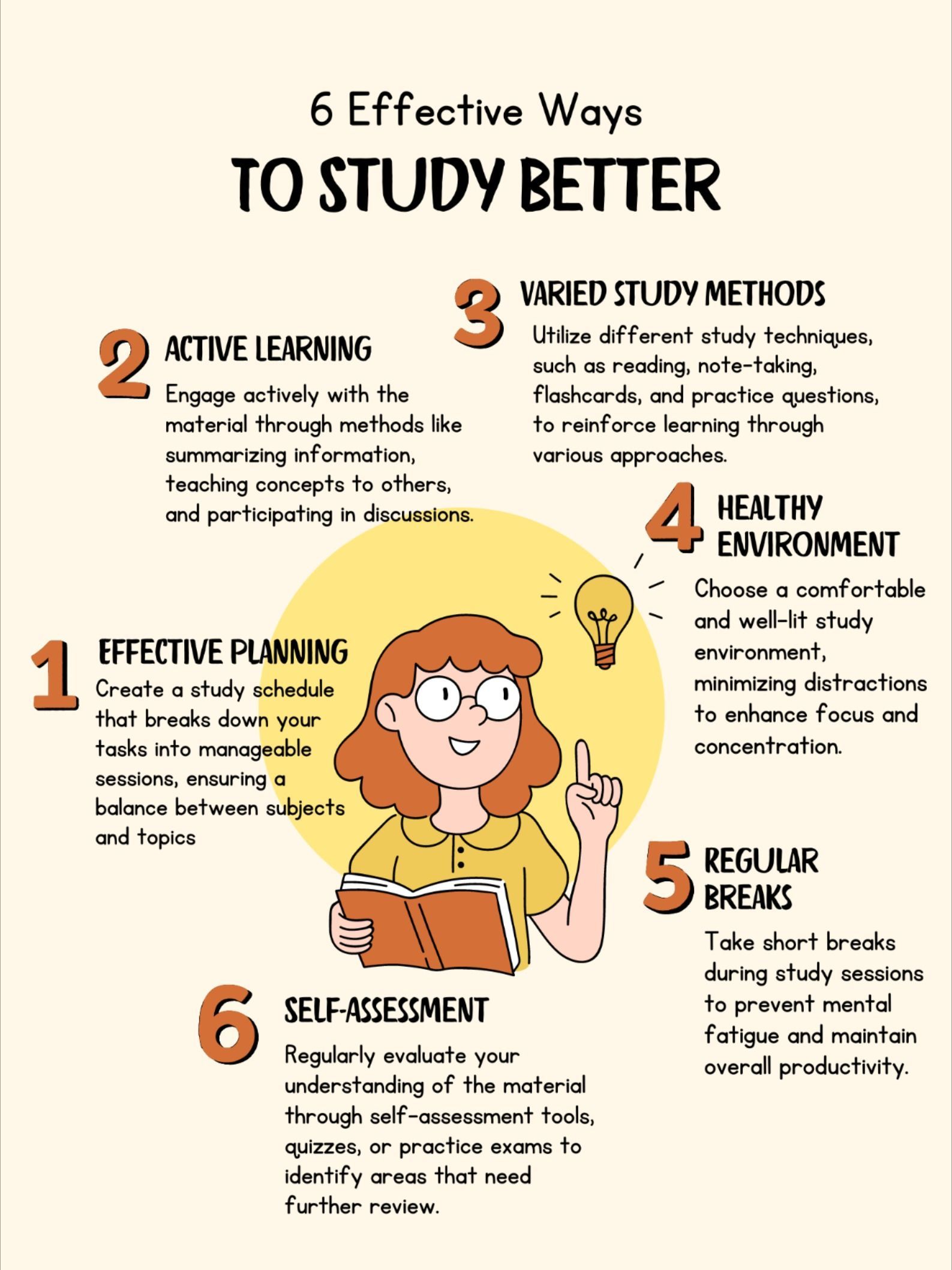
    Set a Consistent Study Schedule

    Summarizing: Creating a regular study routine at the same time each day helps the brain to understand that learning is done at that time – thus, concentration becomes easier and procrastination is less likely.

    A consistent flow is what supports habit formation. Here is the way to children accomplish it:

    • Choose daily or several days per week time for studying (after snack, before dinner, etc).
    • Short sessions should be preferred – concentrate on short, efficient segments (e.g., 30-45 minutes) and determine the length according to the children’s age.
    • Children can know when their study period starts and ends if they use a timer or a schedule ​‍​‌‍​‍‌​‍​‌‍​‍‌chart.

    Create the Right Environment

    158,200+ Kids Study Room Stock Photos, Pictures & Royalty-Free Images -  iStock

    Parents​‍​‌‍​‍‌​‍​‌‍​‍‌ often underestimate how much the study environment influences the performance of their children. This is what you should optimize:

    • A quiet space dedicated (desk or table) with minimal distractions (TV off, phone away).
    • Good lighting, comfortable seating, study supplies ready (not hunting for a pen!).
    • Healthy brain fuel: ensuring children are not hungry, have water, and are rested.

    Teach Active Study Techniques

    Passive methods (simply re-reading notes) rarely lead to deep understanding. Research supports active techniques.

    Some strategies:

    • Retrieval practice: after reading a section, ask your child to recall key points without looking.
    • Chunking: break large topics into smaller parts and focus one at a time.
    • Teaching someone else: having the child explain the idea aloud (even to a stuffed toy) improves retention.
    • Flashcards, mind-maps, and self-quizzing instead of passive highlighter use.

    Prioritise Breaks and Recovery

    The brain gets tired — little rest helps recharge.

    • Use techniques like the Pomodoro: study 25 minutes, break 5 minutes, repeat.
    • Encourage short physical movement or stretching during breaks.
    • Ensure adequate sleep, since studies show poor sleep undermines focus and memory.

    Foster a Growth Mindset and Encourage Reflection

    Habits form when children believe their effort matters.

    • Praise “you worked hard on that” rather than “you’re so smart”.
    • Ask reflective questions: “What challenge did you face? What helped you?”
    • Model mistakes: show your own that you learn and persist.

    Monitor Progress and Adjust

    • Use a weekly check-in: What study strategies worked? What didn’t?
    • Adjust expectations by age and ability level.
    • Celebrate progress, not just perfect ​‍​‌‍​‍‌​‍​‌‍​‍‌outcomes.

    6 Tips To Study Better - e-Learning Infographics

    A Practical 7-Step Plan You Can Start This Week

    1. Choose a study time each day (e.g., 6:30–7:30 pm) and mark it on a physical chart.

    2. Designate a “study zone” — a desk or table with minimal distractions, away from the TV and mobile gadget activity.

    3. Before the session begins, have your child list 1-2 learning goals (“I will finish the maths worksheet” or “I will summarise the science chapter”).

    4. Use a timer (30 minutes for younger children, 45-60 for older) with a built-in break at the end.

    5. During study: encourage retrieving information (child closes book and explains what they just read).

    6. After the timer, discuss: What was easy? What was tricky? How will you tackle the tricky bit tomorrow?

    7. End with a short reflection and healthy snack / movement break.

    When I used this plan with my cousin in the City, we tied the study time to just after she cleaned up from the day’s chores and before she watched TV. The visual chart on the wall helped her track progress, and she reported feeling less stressed about homework within two weeks.

    Common Pitfalls & How to Avoid Them

    Pitfall Why it happens What to do instead
    Studying in bed or couch Brain associates those places with rest, not focus. Use a proper desk or table. Make “bed = sleep” only.
    Cramming last minute Procrastination + pressure → shallow learning. Build study routine early; break tasks into small pieces.
    All passive reading Limits understanding and retention. Incorporate retrieval, self-quizzing, flashcards.
    Ignoring sleep and nutrition Even brilliant strategy falters if the body is tired/hungry. Prioritise 8+ hours of sleep, healthy snacks, and movement.
    Parent doing everything Child misses opportunity to build independence. Guide, encourage and gradually hand over ownership.

    Conclusion

    Building healthy study habits for kids is really not about forcefully making them drill every night, but rather inventing a system that they can take over, not only during their childhood but also later in life. Keep in mind: a consistent schedule + a supportive environment + active techniques + reflection = habits that last. There is no doubt that the earlier you start, the better the result will be.

    FAQ

    1. How do I motivate my child to develop healthy study habits?

    Put your main efforts into routine, positive reinforcement, and at the same time represent yourself as the learner.

    2. What’s the best time of day for kids to study?

    The most suitable time for the child to study is when he is energetic, letting very few distractions in and, above all, being consistent.

    3. My child gets distracted easily—what can I do?

    Eliminate distractions, break study time into short intervals and encourage the use of active learning methods.

    4. Are digital tools helpful or harmful for study habits?

    If digital tools are used deliberately they can be beneficial, however, it should be ensured that they do not become a source of distraction.

    5. When should I expect to see results from implementing healthy study habits?

    You will probably see better focus and less homework-related stress within a couple of weeks, whereas profound changes might take a semester or ​‍​‌‍​‍‌​‍​‌‍​‍‌longer.

    Check Out: 30+ Essential Best Book on Slow Living that You Must Read for a Calmer Life

  • 30+ Essential Best Book on Slow Living that You Must Read for a Calmer Life

    30+ Essential Best Book on Slow Living that You Must Read for a Calmer Life

    Key takeaways:

    • Begin with the foundational title that coined the modern “slow movement” and then explore nine follow-ups that deepen or broaden it.
    • Slow living is not a matter of inactivity; rather it is a matter of deciding with intention, awareness, and love of neighbor which things to do.
    • Among others, you will encounter the topics of practical rituals, minimalism combined with mindfulness, home design, and the career/hustle-culture aspect.
    • I included one mini-case: how I incorporated a slow ritual into my week and what results I noticed.

    In this article, I’ll highlight one book that is the historical reference of the movement, and then to other 30+ slow books, which in each case bring new insights.

    We should examine it more ​‍​‌‍​‍‌​‍​‌‍​‍‌closely.

    Check Out: 50+ Free Things to Get on Your Birthday in 2025 (Legit Deals & How to Claim Them)

    Why this is the book to start with

    In Praise of Slow by Carl Honoré (2004)

    In Praise of Slowness: Challenging the Cult of Speed: Honore, Carl: 9780060750510: Amazon.com: Books

    This​‍​‌‍​‍‌​‍​‌‍​‍‌ book is often seen as the primary handbook for slow living intervals: Honoré demonstrates how the “speed cult” affected aspects of food, cities, leisure, work, parenting, and much more.

    Basically: the best slow living book to help you ground yourself.

    What makes it different:

    Honore is a journalist from the real world, who looked at real-world examples (like Slow Food in Italy, time-use in business).

    The book has been translated into more than 30 languages and keeps being relevant.

    Besides critiquing, it also offers actionable and story-based insights: how slowing down improves digestion, relationships, work rhythms.

    The first time I read this book was at a time when my career was very demanding—I was traveling to the city, juggling client calls, feeling like I was losing the simple joy of an evening walk. I applied one suggestion: set a “slow hour” each evening (no email, no social media) for 30 minutes. Within two weeks, I noticed my anxiety level dropped. It wasn’t magic—but it was a significant change.

    If you are allowed only one title to comprehend the slow-living movement and how to integrate it into your daily life, it would be this ​‍​‌‍​‍‌​‍​‌‍​‍‌one.

    Other Essential Slow-Living Reads Worth Your Shelf

    The Things You Can See Only When You Slow DownHaemin Sunim (2017)

    A beautifully illustrated mindfulness guide that reminds us to find peace and clarity amid chaos and constant motion.

    The Things You Can See Only When You Slow Down: How to be Calm in a Busy World: Sunim, Haemin: 9780241298190: Amazon.com: Books

    The Little Book of Hygge: Danish Secrets to Happy LivingMeik Wiking (2016)

    Discover the Danish concept of hygge — a cozy, contented way of life built on simplicity, warmth, and connection.

    Destination Simple: Everyday Rituals for a Slower LifeBrooke McAlary (2016)

    Practical daily rituals to help you reclaim calm and focus in an overwhelmed world.

    Wintering: The Power of Rest and Retreat in Difficult TimesKatherine May (2020)

    A poetic reflection on embracing life’s winters — both literal and emotional — as essential seasons for growth and renewal.

    The Kinfolk Home: Interiors for Slow LivingNathan Williams (2015)

    A stunning visual journey into homes that embody the principles of intentional living and mindful design.

    The Kinfolk Home: Interiors for Slow Living | Papercut

    SlowBrooke McAlary (2017)

    An inspiring personal story of simplifying life and learning to live with purpose, presence, and gratitude.

    The Lady Farmer Guide to Slow LivingMary E. Kingsley (2020)

    A practical guide to cultivating sustainable simplicity and reconnecting with nature close to home.

    Slow Living: The Secrets to Slowing Down and Noticing the Simple Joys AnywhereHelena Woods (2022)

    Gentle wisdom on finding everyday magic and joy through slower, more intentional living.

    Slow Living: The Secrets to Slowing Down and Noticing the Simple Joys Anywhere (Happiness and Wellness, Meditative Lifestyle): Woods, Helena: 9781684811649: Amazon.com: Books

    How to Do Nothing: Resisting the Attention EconomyJenny Odell (2019)

    A powerful critique of productivity culture and a manifesto for reclaiming time, attention, and meaning.

    Chasing Slow: Courage to Journey Off the Beaten PathErin Loechner (2017)

    A vulnerable memoir and guide on redefining success and embracing imperfection in pursuit of peace.

    Soulful Simplicity: How Living with Less Can Lead to So Much MoreCourtney Carver (2017)

    Learn how simplifying your space and commitments can open the door to a more intentional, joy-filled life.

    Slow Productivity: The Lost Art of Accomplishment Without BurnoutCal Newport (2024)

    A fresh perspective on productivity rooted in depth, focus, and sustainable creativity — not hustle.

    Slow Productivity by Cal Newport: 9780593544853 | PenguinRandomHouse.com: Books

    Slow Living: Cultivating a Life of Purpose in a Hustle-Driven WorldStephanie O’Dea (2024)

    A guide to building a life anchored in meaning, rest, and alignment with your true values.

    Still: The Slow HomeNatalie Walton (2020)

    A serene exploration of spaces and stories that embody the essence of calm, slow living.

    Essentialism: The Disciplined Pursuit of LessGreg McKeown (2014)

    A life-changing framework for focusing only on what truly matters — and letting go of the rest.

    The Cottage Fairy CompanionPaola Merrill (2022)

    A whimsical and heartfelt invitation to reconnect with nature, creativity, and self-sufficiency.

    Simple Matters: Living with Less and Ending Up with MoreErin Boyle (2016)

    A minimalist’s guide to living with intention and finding beauty in simplicity.

    Seeking Slow: Reclaim Moments of Calm in Your DayMelanie Barnes (2019)

    An accessible introduction to slow living with simple steps to infuse mindfulness into daily routines.

    Lifestyle books for Autumn reading | 91 Magazine

    The Ruthless Elimination of HurryJohn Mark Comer (2019)

    A spiritual yet practical roadmap to slowing down and staying emotionally healthy in a frantic world.

    Slow Seasons: A Creative Guide to Reconnecting with Nature the Celtic WayRosie Steer (2023)

    A poetic guide to rediscovering rhythm and balance by syncing with nature’s seasons.

    Lagom: The Swedish Art of Balanced LivingLinnea Dunne (2017)

    Explore lagom — the Swedish philosophy of “just enough” — and how it fosters balance and wellbeing.

    Digital Minimalism: Choosing a Focused Life in a Noisy WorldCal Newport (2019)

    A practical guide to reducing digital noise and reclaiming focus, depth, and purpose.

    Digital Minimalism': How To Hang Up On Your Phone Addiction | Here & Now

    The Art of Slow Living: Embracing Nature’s PaceSamar Cajal (2024)

    A beautifully written reflection on embracing slowness, simplicity, and seasonal rhythms.

    Slow Down: 50 Mindful Moments in NatureRachel Williams (2020)

    Short, mindful prompts to help reconnect with the natural world and rediscover wonder in simplicity.

    An Intentional Life: A Guide to a Slower and More Peaceful ExistenceKathryn Bardsley (2021)

    Encourages readers to live with awareness and purpose through gentle, mindful choices.

    Slow Living: A Simple Approach to a Meaningful LifeS. Hashi (2023)

    A grounded, modern take on slow living — balancing mindfulness with purpose and creativity.

    The Slow Fix: Solve Problems, Work Smarter and Live Better in a Fast WorldCarl Honoré (2012)

    Shows how applying the slow philosophy to problem-solving can lead to smarter, more sustainable results.

    The Discovery of SlownessSten Nadolny (1983)

    A literary masterpiece exploring the profound power of patience and deep perception.

    Slowly, Softly, Sincerely: A Memoir of Slow LivingJamie Dean (2025)

    A heartfelt 2025 release chronicling the author’s journey from burnout to deep contentment through slow living.

    The Joy of Missing Out: Live More by Doing LessTanya Dalton (2019)

    A motivational guide Book to intentional productivity and living joyfully without overcommitment.

    The Joy of Missing Out: Live More by Doing Less: Amazon.co.uk: Dalton, Tanya: 9781400214334: Books

    In Praise of Idleness and Other EssaysBertrand Russell (1935)

    A timeless philosophical essay arguing that leisure and reflection are essential to human happiness.

    Grounded: Slow, Grow, Make, Do – A Companion for Slow LivingAnna Carlile (2020)

    An inspiring manual for embracing creativity, sustainability, and slow craft as daily rituals.

    How​‍​‌‍​‍‌​‍​‌‍​‍‌ to choose which book fits you best

    • In case you are feeling over-rushed and overwhelmed, get In Praise of Slow to see the big picture and figure out your “why”.
    • If you are after workable habits that you can implement this week then it would be best to get a copy of Destination Simple or Slow: Simple Living….
    • For those of you who reside in a city and are in need of some slow lifestyle changes that you can do right away, I would recommend Slow Living (Helena Woods).
    • In case your main point of contention is work/office/hustle burnout, then Slow Productivity is the right choice for you.
    • If your goal is to concentrate on the home space, design, and atmosphere then The Kinfolk Home or The Little Book of Hygge would be excellent choices.
    • If you are enthused by nature, seasons, and place-based rhythms, then you should consider reading The Lady Farmer Guide… or Wintering.

    Here’s a quick decision table:

    Your situation Best starting book
    I’m always in a hurry & want to slow down fundamentally In Praise of Slow
    I’m burnt out and want simple daily rituals Slow: Simple Living… / Destination Simple
    My stress is work- or office-related Slow Productivity
    My space/home feels chaotic The Kinfolk Home or Hygge
    I live in city and want practical slow habits Slow Living (Helena Woods)
    I’m drawn to nature, rhythm or sustainability Wintering or Lady Farmer Guide…

    A mini-case study from the City

    While living in the City and working remote, I experimented with what I’ll call the “slow evening ritual” drawn from these books I listed above:

    • For one week, from 8 pm to 9 pm, I switched off work notifications, avoided social media, chose one analog activity (reading, walk, cooking).

    • I journalled three things I noticed in that hour: ambient street sounds, the texture of dinner, the feel of the evening breeze.

    • After the week: I felt calmer, slept better, and noted that one of my key “drivers of hurry” was continuous email-checking.

    Insight: A major barrier to slow living is the invisible pace—that habitual checking, backdrop noise of tasks. Slowing the “default speed” (device notifications, ambient busyness) gives you space to breathe, choose, respond rather than react.

    Common mis-steps (and how to avoid them)

    • The slow life is not to be mistaken for a passive/idle one. It is not about doing less, rather it is about doing what matters with clarity.
    • Waiting for a perfect “time”: You cannot live slow properly unless you say let’s do it right here, right now.
    • Considering slow living merely as a fad. The aforementioned books are about changes in thinking, not taking a one-time “detox” session.
    • Going by the idea of complete transformation overnight. It is a gradual practice—rituals, environment, and mindset change over time.

    Conclusion

    If someone were to inquire what the best book on slow living is, I would say that “In Praise of Slow” is the one because it provides the basis. But the really inviting truth is that it is just one book that speaks to where you are, pick it and let the rest grow around it.

    Regardless of whether you are living in New York, London, or Cape Town, the message remains the same: in a world that highly values speed, meaning is most of the time found in the pause. Select the speed that liberates you. Begin reading, and let the ideas become part of your daily life. Slow living is not about putting a bookmark in a book—it’s about giving more presence and intention to your ​‍​‌‍​‍‌​‍​‌‍​‍‌hours.

    Read: 15 Journaling Techniques That Will Transform Your Life in 30 Days

  • Words of Encouragement for Someone Going Through a Tough Time

    Words of Encouragement for Someone Going Through a Tough Time

    I understand what it means when life abruptly uproots you, when what used to be familiar is not anymore and you feel like you’re emotionally on the edge of a storm. I haven’t experienced only once, but repeatedly: when the loss was so deep that it took longer than the silence to be felt; when failure was so heavy that it was even hard to think of the “what-ifs”; when the heart broke quietly and time seemed to be at standstill. Now, if my words find a home in your hands, maybe you’re at such a place — in a difficult situation, feeling tired, uncertain, longing for something which could be called as hope or healing.

    You are worthy of being seen. Someone in need of words, which are encouraging, during hard times like you, must receive such words. It’s not an empty phrase, i.e. they aren’t hollow platitudes, but rather comforting words for tough times, which take their origin from the real and raw moments of life and additionally they are scattered with the truth that even in the most gloomy chapters the light can become a companion again.

    Below, I will talk about the different categories of struggles, i.e., grief, failure, heartbreak, loss, depression, burnout, and for each one: authentic hopeful and supportive statements, each followed by a brief personal reflection: why it helps, when you might use it, how it might land in your heart. It would be helpful to consider this as my writing to you, a friend who needs reminding: you are not isolated, you are not neglected, and this pain will not be the main theme of your entire ​‍​‌‍​‍‌​‍​‌‍​‍‌story.

    Words of Encouragement For Grief and Loss

    When someone or something precious leaves our side — a person, a job, a dream — grief enters like a quiet guest who won’t leave.

    Here are words you might whisper (or I whisper to you) in that vulnerable space:

    1. “It’s okay to carry your tears — they’re proof you loved.” — Because crying honours the depth of what was and what you still hold.

    2. “In the silence your heart hears the name of what you lost, and that’s still sacred.” — Use when nights feel vast and you’re alone with your memories.

    3. “Even absence can become a kind of presence if you let it teach you how to feel again.” — Loss doesn’t erase love; it transforms it.

    4. “Today you are allowed to just breathe, nothing more.” — Use this when doing “normal” feels impossible.

    5. “The love you had doesn’t expire because the witness is gone.” — To remind you that emotions live beyond physical presence.

    6. “Grief doesn’t always roar; sometimes it hums in your bones.” — When you feel more ache than emptiness.

    7. “You don’t need to fix anything yet — your heart is learning to live with this missing piece.” — When others push healing too fast.

    8. “Let the memory warm you without shrinking you.” — When remembering feels like losing something again.

    9. “One day your story will include the loss, but not be limited by it.” — When you can’t imagine a future that isn’t like this.

    10. “It’s okay if the scar is wide — the wound was wide too.” — To normalize that your recovery might take long.

    How God Brings Joy Out of Our Sorrow - outreachmagazine.com

    For Failure and Setbacks

    When things don’t go as planned — a project collapses, a relationship breaks, a dream dissolves — it often feels like you’re less than. But you’re not less. Let’s rewrite that.

    1. “Falling isn’t the end — staying down would be.” — To encourage the first move upward.

    2. “You learned more in this falling than you would have learned staying upright.” — When you feel foolish for failing.

    3. “Your worth isn’t measured by your last success, but by the courage of your next attempt.” — When you’re afraid to try again.

    4. “Mistakes carve new hallways to a door you never knew existed.” — Metaphor for unexpected progress.

    5. “You didn’t lose — you paused in the middle of writing a chapter.” — For when you feel like it’s all ended.

    6. “Let this be the rehearsal for your next act, not your obituary.” — When you’re tempted to quit.

    7. “The person who never fails lacks the map to go somewhere meaningful.” — To normalize mistakes as part of growth.

    8. “You have more pages ahead than behind.” — When you fear the story is done.

    9. “Be patient with your next step — it’s still being figured out.” — When you’re frustrated by slow progress.

    10. “The bridge you burnt may actually lead to a better river.” — When the failure felt like destruction.

    For Heartbreak and Relationship Pain

    Whether a romantic love, a friendship, a trust shattered — heartbreak knocks the familiar out from under you and leaves the heart tender, raw.

    1. “You loved fiercely; that’s not something to waste, it’s something to carry forward.” — When you feel shame for how much you gave.

    2. “Let your heart mend soft and strong at the same time.” — To balance tenderness and resilience.

    3. “You are allowed to say ‘I trusted you’ and still choose yourself.” — For when trust has been broken.

    4. “Don’t rush your goodbye — let your soul feel the full phrase.” — When you’re tempted to move on too fast.

    5. “The mirror you broke is just showing a new angle to your reflection.” — Metaphor for self-perception after heartbreak.

    6. “Your heart may ache, but it remains rich with capacity to feel and forgive and choose again.” — To remind you of your inherent capacity.

    7. “Sometimes loving someone means letting them go so you can love yourself more.” — When you feel guilt for moving away.

    8. “This chapter ends, not because you failed love, but because you respected your worth.” — Reframing the ending.

    9. “Keep the music of your own heartbeat louder than the quiet of their absence.” — For when silence overwhelms.

    10. “You will meet someone who hears your scars as stories, not baggage.” — When you feel unworthy of future love.

    The Alchemy of a Broken Heart: How to Transform Your Pain into Purpose -  Tiny Buddha

    For Depression, Anxiety, Burnout

    When the weight of existence becomes too much — not just pain, but exhaustion, blankness, fear, dread — these are the moments you might feel disconnected from yourself.

    1. “I see you even when you cannot see yourself.” — To feel witnessed.

    2. “It’s okay if you’re not okay right now.” — Permission to rest in that state.

    3. “You are not broken; you are simply stretching beyond your known strength.” — When you fear you’ll never be “normal” again.

    4. “Silent storms do not mean you’re safe — they mean you’re brave for weathering them.” — For the unseen battles.

    5. “Let your body rest before your mind gets the message.” — When you’re mentally exhausted.

    6. “You aren’t running out of time — you’re running out of words for the pain.” — When fatigue becomes the enemy.

    7. “If the world feels heavy today, allow your hope to be the tiny feather that still floats.” — Metaphor for hope in minimal form.

    8. “Self-care isn’t a luxury — it’s your lifeline right now.” — To validate needed rest.

    9. “The dark room you’re in is still part of your house — you will leave it.” — For when retreat feels endless.

    10. “Your presence is enough — even when your performance is paused.” — Reminding you of inherent worth.

    For When Life Feels Hard and Uncertain

    Sometimes it’s not one large event; it’s a string of small hurts, constant fatigue, resentment, confusion about direction. The everyday “hard” can wear us down.

    1. “You don’t need to see the whole staircase — just the next step and a bit of courage.” — For those unsure of what comes next.

    2. “Hard doesn’t mean hopeless — it means you’re growing in the cracks.” — When pressure feels pointless.

    3. “Your small efforts matter — the seed you planted may not yet show its leaves.” — To honor incremental progress.

    4. “When you’re walking through the fog, remember your footprints still exist.” — For when you doubt you’re moving.

    5. “Your story is not defined by how many times you feel lost — but by your willingness to ask for directions.” — Encouraging vulnerability.

    6. “This chapter doesn’t have to make sense yet — let it unfold in time.” — When you crave dramatic clarity.

    7. “The pressure you feel is not just breaking you — it is remodeling you.” — Metaphor for transformation.

    8. “You have permission to feel frustrated, confused, tired — and still keep believing in your tomorrow.” — Validating mixed feelings.

    9. “The clouds above you are temporary — but the horizon they hide is still there.” — Visual hope.

    10. “Your life might not look like you planned — but it can look like you’re choosing authenticity.” — For when things changed unexpectedly.

    Depression and Memory Loss: Are They Linked?

    How​‍​‌‍​‍‌​‍​‌‍​‍‌ to Use These Phrases

    • Pick one phrase a day. Writing it on a sticky note, and leaving it beside your bed or at your working table will not let you forget it.
    • Say this phrase to yourself while looking in the mirror. Often the soft voice inside becomes louder in hearing it aloud.
    • If a friend is in trouble, talk to him/her with those words. Cheer him/her up. We are not only healed by what we get, but also by what we give.
    • Compose a version of your own. In your unique pain, your healing will be unique as well. These are just samples. Make them fit your needs.
    • Put the feeling behind the words. Don’t rush out of the sadness or frustration. Feel it. Let the phrase be your companion, not your escape.

    My Story: Why I Trust These Words

    Once, I lost a person I thought I would always have with me. I had to watch the dream I had built crumble. I met depression in the hush of life when everything seemed ‘on hold’. I know the unbearable pain of looking over your shoulder at the person you used to be, and the fear of looking ahead at the person you might become.

    During these times, people were telling me to ‘stay strong’ or that ‘things will be alright’ — although the intentions were good, these words felt shallow and almost as if they were dismissing the depth of my experience. Thus, I started to make up my own sentences which were more truthful, more gentle, and more in line with the changing pace of healing. I understood that real support doesn’t take the pain away; it stays alongside suffering, gives a hand, and says “I understand”. I also learned that hope is not a loud trumpet; it is most of the time a soft bell in the distance.

    Those words brought me back again and again: I was not a failure for feeling sorrow. I was not broken when things changed. I was just human — injured, healing, and still whole. Further, when I started to give those words to other people (friends, strangers, persons whom I barely knew), I experienced that the same truth applied: You are not alone.

    A Reassuring Closing: You Are Not Invisible

    Being in the middle of it, you probably won’t agree. The days might mix up with each other, and the nights might seem endless. You may wonder if this night will find you the same person, this chapter will be forever, and if you still have something to give.

    Here is the reality I want you to accept: Time is needed for healing. There is no magic button. With no swift flick of your wrist can the pain be erased. However, there is progress even if only the softest step is taken: allowing oneself to feel, giving oneself the right to rest, and seeking help when needed.

    During times of invisibility, you should remind yourself of the fact that some people (maybe a great number of them) are cheering you on. There is certainly a person who is waiting to exhale his/her relief when you inhale it. You may not feel it now — but those little sparks of love and hope are there. Even if the sparkle seems far away, let it warm you.

    If today you are only able to whisper one phrase, then whisper: “You are seen, you are allowed, you are becoming.” Let that be enough for today. Tomorrow we will try again.

    You are more than your struggle. You are more than your story of yesterday. You are more than the pain you carry. And one day — maybe when you least expect it — you will run your finger over the scar, feel the light coming from the other side, and realize: not only did you survive — you matured, became gentler, and grew. And at the same time, you helped someone ​‍​‌‍​‍‌​‍​‌‍​‍‌else.

    Read: Top Clear Signs You Should Talk to a Mental Health Professional Today

  • 50+ Free Things to Get on Your Birthday in 2025 (Legit Deals & How to Claim Them)

    50+ Free Things to Get on Your Birthday in 2025 (Legit Deals & How to Claim Them)

    Who​‍​‌‍​‍‌​‍​‌‍​‍‌ would not want free stuff on their birthday?

    Every year, brands, restaurants, and retailers offer free meals, drinks, gifts, and discounts to those with birthdays in the respective places. What makes this even better is that several of these giveaways are free of charge — theoretically, all you have to do is put yourself on the list beforehand.

    So, which is it? Free food, a free coffee, or a beauty product? There is now a list of birthday freebies for 2025 that features these offers, and also tells you the best and safest ways of claiming your gifts or rewards.

    What Counts as a Birthday Freebie?

    Birthday freebies refer to any gifts or services, as well as discounts, which are offered to a person by a company on his/her birthday or during his/her birthday month.

    Most companies offer the freebies through their reward or loyalty programs, which means that you must already have an account to be eligible.

    Three categories of birthday freebies exist:

    • Free products – no strings attached.
    • Free with a purchase – i.e. buy one get one free kind of deals.
    • Exclusive discounts – for instance, 20–50% off coupons.

    Tip: Remember to always register your information at least a couple of weeks prior to your birthday.

    Read: How to Build a Low-Tox Lifestyle at Home

    Top Online Birthday Freebies (Global and Instant)

    How about celebrating a birthday without stepping out of the house? Lots of online brands of high reputation offer global birthday freebies either through their websites or mobile applications.

    1.) Sephora Beauty Insider

    A mini beauty gift featuring the top brand like Glow Recipe or Rare Beauty is yours for free.

    After registering a free account with the Beauty Insider program, you can get your birthday present either in-store or online during your birthday month.

    2.) Starbucks Rewards

    On your birthday, a drink, food item, or a treat from Starbucks can be yours absolutely free of charge.

    Double-check, at least a week in advance of your birthday, whether you have entered your birthday in your profile.

    3.) Baskin Robbins Birthday Club

    Free ice cream scoop for you, no purchase necessary.

    A few days before your birthday, look out for a mail with your coupon code.

    4.) Krispy Kreme Rewards

    On their birthdays, Krispy Kreme members get an Original Glazed donut for free.

    Besides that, at least some places offer free coffee to go along with a donut.

    5.) Ulta Beauty Rewards

    Receive a free gift on your birthday annually. Platinum and Diamond tier members additionally get 10 dollars off coupon.

    6.) Amazon Prime (Local Perks)

    For example, in certain areas, Amazon Prime members can look forward to birthday specials or be the first ones to get limited deal access.

    Near your birthday, check if you have a “Your Deals” tab that lets you know if you are ​‍​‌‍​‍‌​‍​‌‍​‍‌eligible.

    Restaurant Chains That Give Free Meals on Your Birthday

    Dining out? Many restaurants offer free meals, desserts, or discounts for birthdays.

    Here are some popular birthday deals available in 2025:

    Restaurant Birthday Freebie Requirement
    Denny’s Free Grand Slam breakfast Show ID (no signup required)
    IHOP Free pancake stack Join MyHop Rewards
    Chili’s Free dessert Join My Chili’s Rewards
    Red Robin Free burger Join Red Robin Royalty Program
    Olive Garden Free dessert or $5 coupon Join the eClub
    Buffalo Wild Wings Free snack-size wings Join Blazin’ Rewards
    TGI Friday’s Free dessert Join Rewards app
    Panera Bread Free pastry or bakery item Join MyPanera account

    Pro Tip: Most restaurant rewards last for your entire birthday month, so you can plan multiple birthday meals throughout the week.

    Restaurants that give away free birthday food, from Pizza Express to All Bar One | Metro News

    Food​‍​‌‍​‍‌​‍​‌‍​‍‌ & Beverage Apps with Birthday Rewards

    The easiest food and coffee apps to gain quick birthday perks are those of food and coffee.

    Here are some of the leading ones that will be giving away free treats in 2025:

    • Dunkin’ Donuts: Free drink of any size for DD Perks members.
    • Chipotle Rewards: Free chips and guacamole (normally requires one prior purchase).
    • Subway MVP Rewards: Free cookie or fountain drink.
    • Domino’s Rewards: Use the points to get free pizza during your birthday month.
    • McDonald’s App: In some areas, free fries, desserts, or drinks are sent to celebrate.

    Tip: Do not forget to keep app notifications turned on to avail of your reward because most of them expire within a few days.

    Fashion and Retail Birthday Discounts or Gifts

    Fashion brands regularly reward their loyal customers with birthday perks. Below are some of the most reliable offers:

    a.) H&M

    One item for 25% off during your birthday month.

    It is done by creating an H&M Member account for free.

    b.) Nike

    Members get a birthday coupon with $10–$20 off, which can be used online or in-store.

    c.) Adidas

    15% off with free shipping for Creators Club members.

    d.) The Body Shop

    Free $10 birthday voucher via the Love Your Body Club.

    e.) Old Navy / Gap

    One can get a 20–25% off birthday coupon which is either sent through the mail or app.

    Unique or Fun Birthday Freebies You Might Not Know About

    The best birthday freebies, in some cases, are outside the standard food and fashion categories. Here is a list of a few surprising offers:

    • PetSmart or Petco: Free birthday treat or toy for your pet.
    • Regal Cinemas or AMC Theatres: Free popcorn or drink for rewards members.
    • Dave & Buster’s: Free $10 game credit.
    • Spotify Premium: Extended free trials or birthday-themed playlists.
    • Hotels.com or Booking.com: Birthday discount offers for registered users.
    • Klook / Airbnb: Travel and experience discounts during your birthday month (varies by region).

    Tip: Make sure you are always checking your app notifications or email inbox during your birthday week because some offers are only available for a limited ​‍​‌‍​‍‌​‍​‌‍​‍‌time.

    Local​‍​‌‍​‍‌​‍​‌‍​‍‌ Birthday Freebies Near You

    Besides, the local shops may also bring you some birthday delights with small gifts and treats from cafes, spas, and even your car service.

    To look at them simply:

    • Launch Google Maps.
    • Look for “freebies on the birthday near me” or “birthday deals in [your city].”
    • Have a look at the “Updates” or “Posts” segments of business listings for new offers and events.

    Neighborhood offerings usually comprise:

    • Free cupcake from bakery.
    • Free movie tickets at the local cinema.
    • Massage with no charge or spa discount.
    • Haircut or nail care services at the half price.
    • Free car wash or oil change coupons.

    Moreover, patronizing neighborhood businesses not only gives you a lot of pleasure but also is a great support for small entrepreneurs to attract more loyal customers.

    Restaurants That Offer Free Birthday Meals

    How to Maximize Your Birthday Freebies

    Essentially, beforehand and at the right time are the keys if you want to fully take advantage of your birthday freebies.

    Here are some efficient ways of planning your time:

    1. Creating a separate mail account for reward programs will help keep your inbox tidy.
    2. Signing up early – at least a month before your birthday is a great idea to ensure your eligibility.
    3. Stack your deals. Make a plan: free breakfast at Starbucks, free donut at Krispy Kreme, lunch at Denny’s, dessert at Olive Garden.
    4. Take a look at expiration dates. Some offers may only last for one day while others can last for the entire month.
    5. Bringing an ID with you is always a good idea. Some restaurants may check your ID to be sure that it’s your birthday.
    6. Keep an eye on social media for your favorite brands. Certain limited-time birthday codes might be shared only through Instagram or newsletters.
    7. Make a list of your birthday activities. You can use Google Sheets or a note app to plan the places you want to visit and the things you want to get.

    Avoid Scams and Fake “Freebie” Sites

    With the vast number of freebie offers online, there are scammers who create fake sites to look like brand promotions in order to trick users.

    In order not to be the victims of such frauds, people need to take these safety measures into consideration:

    • Ensure that you only register on legitimate brand websites or authorized applications.
    • Never provide your credit card details to a website that requires this in order to give you a free offer.
    • Try to be watchful for the incorrect spelling of URLs or generic “freebie” domains.
    • Before giving out your data, try to find the latest reviews on Reddit or Trustpilot.
    • Do not under any circumstances reveal your most private information such as your identity number, or bank details.

    True birthday freebies will not require any form of payment or sensitive data from ​‍​‌‍​‍‌​‍​‌‍​‍‌you.

    Conclusion: Turn Your Birthday into a Freebie Season

    Your birthday is the one time of year when brands genuinely want to celebrate you – and you can totally leverage it for free.

    There are over 50 legitimate birthday freebies available in 2025 ranging from free coffees and burgers to beauty gifts, movie tickets, and exclusive discounts.

    Prepare early by signing up, checking your offers, and making a plan to have a great day claiming them.

    Remember to save this article or the list because new brands are being added every year, and this guide will be updated regularly to indicate the current ​‍​‌‍​‍‌​‍​‌‍​‍‌offers.

    Check Out: Zero Waste Lifestyle: How to Reduce Trash, Save Money, and Build Habits That Last

  • African American Spiritual Blessings for Every Day of the Week

    African American Spiritual Blessings for Every Day of the Week

    Every​‍​‌‍​‍‌​‍​‌‍​‍‌ day is a new opportunity to regain connection with God’s presence and power. These African American spiritual blessings draws inspiration from the soulful and deeply emotional faith traditions that have been the source of strength and joy of countless generations – from Sunday’s renewal to Saturday’s gratitude.

    If you are longing for comfort, strength or hope, this week-long journey of faith-filled blessings can be your vehicle to move forward.

    The Power of Daily Spiritual Blessings

    Blessings are not only words – they are faith in God’s plan and they are the first step towards the implementation of that plan in our lives. When we pronounce a blessing, we set hope free in the invisible world and we welcome God in our days.

    In the African American spiritual tradition it has been always blessing each other, a mechanism of healing, resistance and building community. These daily prayers, which are deeply rooted in gospel worship, church fellowship and the fortitude of the ancestors, represent the faith that is alive and active.

    Just like the Scripture in Ephesians 1:3 states: “Blessed be the God and Father of our Lord Jesus Christ, who has blessed us in Christ with every spiritual blessing in the heavenly places.”

    So, why not take time to start a new day each morning — blessing as a way of grounding, a means of bringing the heart in line with purpose, gratitude and favour from ​‍​‌‍​‍‌​‍​‌‍​‍‌God.

    African American Spiritual Sunday Blessings

    A​‍​‌‍​‍‌​‍​‌‍​‍‌ Fresh Start for the Soul

    Sunday is a special day off—a restart. These African American spiritual Sunday blessings make us think about God’s mercy when a new week is coming.

    Blessing Example:

    May the Lord grant you this Sunday tranquility and a worthy goal of living. Let your heart be lifted with praise, your spirit find rest in His presence, and your coming week be led by His grace.

    Sunday is a day off, invitation for reflection and thanksgiving for what God has given and will give. It is a day for grounding ourselves in the promise of renewal.

    Prayer for Renewal

    If we are together (in church, at home, or in silence), say this prayer:

    God, heavenly Father, on this God-given Sunday I lift my voice to You. Change my thinking, energize my will, and give me back your calming presence. Let Your light shine on my way and be the road of hope for the days to come. In Jesus’ name, Amen.

    African American Spiritual Monday Blessings

    Strength to Begin the Week

    Monday usually comes with a heavy load of its own—work, responsibilities, and expectations. However, on this day we are endowed with a blessing. These African American spiritual Monday blessings allow us to draw God’s power instead of using our own.

    Blessing Example:

    God, fill me with Your power this Monday. Direct my decisions, keep my steps firm, and make every difficulty a source of your glory. Allow Your good grace to be like a shining star over me as I go through this week.

    This day demands that we decide what will govern us: faith first, fear last.

    Morning Prayer for Focus

    God, when I get up this Monday morning, my thought should be in line with Yours. Please give me the skill to finish my tasks, kindness during my dealings, and courage in my steps. Let all I do be a reflection of Your love and purpose. Amen.

    African American Spiritual Tuesday Blessings

    Faith in Action

    On Tuesday, we do not simply start something new but continue doing it. These African American spiritual Tuesday blessings encourage believers to commit to faith-life in everyday situations such as work, family, and relationships.

    Blessing Example:

    God the Father, please mark my Tuesday with Your coming even when it is in the tiny, seemingly insignificant moments. In every word spoken, every duty performed, may I be a light to You. Make my hands strong for work, my heart full of love, and my mind calm and peaceful.

    We are reminded that blessing is not just for the mountaintop but also for the field, the office, the kitchen, or the fact that we have to take a bus or train.

    Encouraging Bible Verse or Quote

    Why not think about this Biblical passage: “Trust in the Lord with all your heart and lean not on your own understanding” (Proverbs 3:5)? Let that trusting in Godbe your guide on Tuesday.

    African American Spiritual Wednesday Blessings

    Midweek Gratitude and Peace

    Wednesday is the middle point—it is a time for reflecting, reconnecting, and recalibrating. These African American spiritual Wednesday blessings lead one’s thoughts to gratitude and peace, which are like a very calm and stable center of the week.

    Blessing Example:

    Thank You, God, for this day, Wednesday, among the busy days of my life, that I can stop and give thanks. Let Your peace, unspeakable and serene, flow through every situation. Revive my inner man, renew my hope, and take my faith to higher levels for the rest of the week.

    It is the time to make the following statement: Besides not only surviving, I am, indeed, thriving under Your guidance.

    Prayer for Balance and Clarity

    God, I am asking for balance today—between work and rest, between giving and receiving. Please assist me in recognizing Your hand in everything. Grant me foresight for the decisions to come and serenity for the journey. Amen.

    African American Spiritual Thursday Blessings

    Thankful Heart and Endurance

    Thursday is a day of endurance and gratitude. These African American spiritual Thursday blessings teach us that perseverance is a blessed thing and that the thanksgiving keeps on rising like a balloon.

    Blessing Example:

    Thank You, God, for the great privilege of being carried by You up to this point. Let this Thursday be a living proof of Your faithfulness to me. When I am tired, give me strength; when I am feeling down, raise me; and, grateful to the end, accompany me on my walk with You.

    Usually, we like to think of the weekend when it is still far away, but why not make use of today to praise God for all that we have done and all that we will do.

    Faith-Filled Words for Strength

    Father, when I am drained, please speak your Word to my intellect. When I am filled with doubt, please bring your light my way. Let endurance not be merely survival, but trust in You, growing into triumph. In Jesus’ Name, ​‍​‌‍​‍‌​‍​‌‍​‍‌Amen.

    African​‍​‌‍​‍‌​‍​‌‍​‍‌ American Spiritual Friday Blessings

    A Day of Joy and Completion

    Friday is a point of special hope—the very walk of the week is almost over and the weekend is already calling. These African American Spiritual Friday blessings are an expression of faith in God’s help, gaiety, and heavenly completion.

    Blessing Example:

    Father God, as this Friday comes, Your delight, Your calm and Your grace should be my portion; Your favour, as always, upon my life. May the work of my hands be Your glory, and let me achieve my final victory of the week in You.

    A day like this is really a must to experience God’s goodness that are still to come by lifting your hands, raising your voice, and proclaiming it.

    Evening Reflection and Gratitude

    Lord, at the end of this day, I thank You for the wins, the teachings, and the gifts. Keep me safe during my sleep, look after those I love, and get me ready for tomorrow. I entrust my future to You. Amen.

    African American Spiritual Saturday Blessings

    Rest, Reflection, and Renewal

    Saturday is a time specially set apart—a moment for rest, renewal, and reflection. These African American spiritual Saturday blessings offer an invitation to slow down, deeply meditate, and prepare in optimistic ways for what is ahead.

    Blessing Example:

    God the Father, I love and appreciate this Saturday. Let my rest be with You, my thoughts unshakably founded on Your promise, and my spirit renewed to do all You have in store for me. I want to rest in this day’s trust and be full of hope.

    This day gives us the assurance that rest is not an option—it has been ordained. Renewal is definitely not an accident—it has been invited.

    Quiet Prayer to Close the Week

    Lord, at the end of this week, I throw into Your hands its records and its struggles. It would indeed be Your peace that heals my heart; it would be Your promise that glows in my soul, and my spirit, ready for a new week in You, would be so. Amen.

    Living a Week of Faith and Blessings

    Practicing faith throughout the week does not only give us spiritual momentum but also builds a legacy. The continuous application of blessing in speech opens people’s lives to uplifting: fear becomes smaller, hope gets deeper, and community louder.

    When on a daily basis we speak blessing over our selves, our families, and our communities; that is when we also connect the Sunday promise with the Saturday rest- thus we create a tapestry of faith which encompasses the whole week.

    Would you want to explore this path more? Just pick a blessing section every morning, talk it aloud, reflect for 1–2 minutes, and take its main idea with you throughout your day. You can also do it with a friend or someone you love. The power of the ripple effect is far greater than you can ​‍​‌‍​‍‌​‍​‌‍​‍‌apprehend.

    Read: 7 Spiritual Meanings of Waking Up at 3 AM