Category: Lifestyle

  • Messagenal: A Practical Guide for Clear Messaging

    Messagenal: A Practical Guide for Clear Messaging

    In the modern digital landscape, we are constantly transmitting data. Between instant messages, project management updates, and lengthy emails, the volume of our communication has never been higher. However, volume does not equate to value. Often, the more we speak, the less we are understood. This paradox is where a new standard of professional communication is required to bridge the gap between intent and impact.

    The Core Philosophy of Messagenal Communication

    The primary pillar of the Messagenal framework is the deliberate rejection of “urgency culture.” In many professional environments, there is an unwritten rule that a fast response is a good response. This philosophy challenges that by prioritizing distillation over speed. A distilled message is one that has been stripped of its “noise”—the filler words, the vague “checking in” phrases, and the ambiguous requests that plague our inboxes.

    By taking a ten-second pause before hitting send, you ensure that the intention of your message aligns with its ultimate reception. This intentionality reduces the “ping-pong” effect—the exhausting back-and-forth of clarifying questions that arise from an initially unclear message. When we communicate with this mindset, we move away from reactive, high-speed typing and toward a structured, thoughtful exchange that respects the receiver’s time and cognitive energy.

    Structural Foundations for Clear Messaging

    To provide descriptive information without overwhelming the reader, you should adopt the journalistic “Inverted Pyramid” structure. This ensures that the most vital information is front-loaded, catering to the reality that most digital readers are “skimmers.” This structural integrity is the first step toward achieving consistent clear messaging across your organization.

    • The Critical Core: The first sentence should answer the “So What?” Why are you writing, and what is the most important thing the reader needs to know right now?

    • The Contextual Body: This is where you provide the descriptive details. Use concrete data instead of subjective adjectives. State that “Phase 2 is 85% complete” rather than saying it is “moving along well.”

    • The Supplemental Tail: Information that provides background or historical context belongs at the end. This allows the reader to stop reading once they have acquired the actionable facts, saving them minutes of unnecessary labor.

    Managing Tone and Visual Architecture

    One of the most significant challenges in digital text is “negativity bias.” Research consistently shows that neutral messages are often interpreted as slightly negative by the receiver because they lack facial expressions and vocal inflection. A Messagenal practitioner acts as an “architect of tone,” explicitly describing the urgency or nature of the message to prevent anxiety.

    For instance, rather than saying, “We need to talk later,” which often triggers a stress response, a clear communicator would say, “I’d like to catch up for ten minutes to brainstorm ideas; no issues, just looking for your creative input.” Furthermore, walls of text lead to “skimming fatigue.” Utilizing visual signposts like action headings, parallel bullet points, and selective bolding is essential for maintaining clear messaging in a high-volume environment. These tools allow the human brain to categorize information before it even starts reading the actual words.

    Bridging Context Gaps and Content Redaction

    We often suffer from the “curse of knowledge”—the assumption that what is clear in our minds must be clear to everyone else. Effective communication requires “Contextual Intelligence.” This means always defining your variables and never assuming the reader knows which version of a document or which department you are referencing.

    True descriptive power also comes from what you leave out. You should advocate for the removal of “Zombie Nouns”—verbs that have been turned into heavy, stagnant nouns. Instead of saying “We will perform an investigation,” simply say “We will investigate.” By using active verbs, you make your writing more energetic and direct. This careful redaction ensures that every word on the page serves the goal of clear messaging, leaving no room for misinterpretation or fluff.

    Building Credibility Through Messagenal Habits

    Consistency is the bedrock of professional trust. When you consistently deliver information using these principles, you build a “Communication Brand.” People begin to recognize that a message from you is relevant, reliable, and respectful of their time. This reliability reduces workplace friction and is the most effective way to maintain clear messaging even during high-pressure crises.

    Part of this habit is also “Channel Discipline”—choosing the right platform for the message. A long guide sent via an instant messaging app is a failure of communication; it should be a linked document with a summary. By matching the complexity of your information to the appropriate digital channel, you ensure your message is archived correctly and easily retrieved. This habit quietly supports progress behind the scenes, transforming everyday tasks into manageable steps.

    Conclusion: Why Clear Messaging is Essential for Success

    At its heart, this practice reminds us that there is a human being behind every screen. In our rush to be “productive,” we often treat messaging as a chore to be finished rather than a connection to be made. By slowing down and applying structure, we move from being “overwhelmed by noise” to “empowered by clarity.”

    The Messagenal approach doesn’t just make you a better writer; it makes you a better leader and a more empathetic participant in the digital age. When you eliminate the friction of “decoding” intent, you improve productivity and strengthen professional relationships. Remember, the goal of clear messaging isn’t just to be heard—it is to be understood.

  • Supermarket: How to Navigate Aisles Like a Pro and Cut Your Grocery Bill

    Supermarket: How to Navigate Aisles Like a Pro and Cut Your Grocery Bill

    The average person spends over 2 hours per week in supermarkets, yet most of us navigate these retail spaces on autopilot. Understanding how modern supermarkets operate and learning strategic shopping techniques can save you hundreds of dollars annually while making your shopping experience more efficient and enjoyable. This comprehensive guide reveals insider insights and research-backed recommendations to transform you into a savvy supermarket shopper.

    Understanding Supermarket Layout Psychology

    Modern supermarkets are meticulously designed environments where every shelf placement, aisle width, and product position serves a strategic purpose. Research from the Journal of Consumer Psychology shows that store layouts can influence up to 70% of purchasing decisions.

    The Perimeter Strategy: Most supermarkets place fresh foods produce, dairy, meat, and bakery around the store’s outer edges. This isn’t coincidental. These high-margin, frequently purchased items force you to walk past numerous temptation points. The recommendation here is to shop the perimeter first when your willpower is strongest, then venture into center aisles for shelf-stable necessities.

    Eye-Level Economics: Products positioned at eye level generate 35% more sales than those on bottom shelves. Premium brands pay significant fees for this prime real estate. Your strategy? Look up and down. Generic and value brands typically occupy top and bottom shelves but offer identical quality in many categories.

    The Decompression Zone: The first 10-15 feet inside supermarket entrances are designed as “decompression zones” where shoppers transition from outside to inside. Retailers avoid placing essential items here because shoppers aren’t mentally ready to make decisions. Instead, you’ll find seasonal displays, flowers, or promotional items all non-essentials.

    Supermarket Market explained

    The Smart Shopper’s Toolkit

    Preparation separates efficient shoppers from those who overspend and waste time. Here are evidence-based recommendations:

    1. Master the List System: Studies from the Marketing Science Institute reveal that shoppers with detailed lists spend 23% less than those without. Create categorized lists matching your supermarket’s layout: produce, dairy, meat, frozen, pantry staples, household items. Apps like AnyList or Out of Milk can organize items by aisle.

    2. Timing Matters: Research suggests shopping during off-peak hours (Tuesday-Thursday mornings or after 8 PM) reduces impulse purchases by minimizing crowds and stress. You’ll also find fresher selections and fully stocked shelves.

    3. Never Shop Hungry: This advice is backed by solid science. A 2013 JAMA Internal Medicine study found that hungry shoppers purchase 64% more high-calorie items than satiated shoppers. Eat a protein-rich snack 30 minutes before shopping.

    4. Set a Budget (and Payment Method): Using cash instead of cards can reduce spending by 12-18% according to consumer behavior research. The physical act of handing over money creates psychological friction that encourages mindful purchasing.

    Navigating Supermarket Aisles: A Strategic Approach

    Professional shoppers and efficiency experts recommend a systematic approach to aisle navigation.

    Zone-Based Shopping: Divide your trip into four zones:

    Fresh Zone (Perimeter): Start with produce when you’re most energetic and quality-focused. Select fruits and vegetables that are in season.They’re cheaper and fresher. Check for local produce, which often costs 20-30% less than shipped alternatives.

    Protein Zone: Visit meat and seafood counters mid-shop. Don’t shy from asking butchers about markdown times (usually late afternoon). Family packs offer 15-30% savings and can be portioned and frozen at home.

    Dairy Zone: Positioned at the back for a reason forcing you through the entire store. Grab milk, yogurt, and cheese last to maintain cold chain integrity.

    Center Aisles: Approach methodically. Studies show shoppers who zigzag randomly spend 30% more time shopping and purchase 25% more items than those following a linear path.

    The Cart Psychology: Research from the University of Pennsylvania found that using hand baskets instead of carts reduces impulse purchases by 41% for small shopping trips. If you must use a cart, keep your reusable bags in it items in bags feel “purchased” psychologically, reducing the temptation to add more.

    Money-Saving Secrets Every Shopper Should Know

    Industry insiders and consumer advocates reveal these cost-cutting strategies:

    1. Unit Price Mastery: The unit price (cost per ounce, pound, or liter) appears on shelf tags and reveals true value. Surprisingly, bulk isn’t always cheaper—compare unit prices religiously. This habit alone can save 15-20% annually.

    2. Strategic Brand Switching: Private label (store brand) products are manufactured by the same companies producing name brands 75% of the time, according to industry analysis. The Food Marketing Institute reports that switching to store brands on just 10 staple items saves the average family $1,200 yearly.

    3. Loyalty Program Leverage: Modern supermarket loyalty programs aren’t just about collecting points. They provide personalized discounts based on purchase history. Recommendation: Use one primary supermarket for 80% of shopping to maximize program benefits, but comparison shop competitors for loss leaders (heavily discounted items designed to attract customers).

    4. Seasonal Shopping Cycles: Supermarkets follow predictable markdown patterns:

    • January: Diet and organizational products
    • April-May: Grilling items and condiments
    • September: Baking supplies and lunchbox items
    • November-December: Baking ingredients and entertaining items

    Stock up during these cycles for year-round savings.

    5. Markdown Schedules: Most supermarkets reduce prices on perishables at specific times:

    • Bakery: 50-75% off after 7 PM
    • Meat/Seafood: 30-50% off 2 hours before closing
    • Prepared foods: Markdowns after lunch and dinner rushes

    6. Rain Check Power: When sale items are out of stock, request a rain check. This guarantees the sale price when items restock, even if the sale has ended.

    Technology Transforming the Supermarket Experience

    The digital revolution has fundamentally changed how we shop, offering unprecedented opportunities for savings and convenience.

    Price Comparison Apps: Tools like Flipp, Basket, and ShopSavvy scan barcodes to compare prices across local stores instantly. Regular users report 10-15% savings by identifying the best deals before purchasing.

    Digital Coupons and Cashback: Apps like Ibotta, Fetch Rewards, and Checkout 51 offer cashback on grocery purchases. Unlike traditional couponing, these require minimal effort simply scan receipts. Dedicated users average $300-500 annual savings.

    Inventory Management Tools: Apps like NoWaste and FridgePal track purchases and expiration dates, reducing food waste by up to 30%. The average household throws away $1,500 worth of food annually technology can recapture much of this waste.

    Self-Checkout Strategy: While convenient, research shows self-checkout users spend 15% more time and make more errors than traditional checkout. Recommendation: Use self-checkout only for small trips (under 15 items) and when you’re time-pressed rather than budget-focused.

    Online Shopping Considerations: Grocery pickup and delivery have exploded post-pandemic. While convenient, online shopping increases spending by 10-20% according to research from MIT due to lower price visibility and minimum order requirements. However, it eliminates impulse purchases—making it potentially valuable for shoppers with poor self-control in stores.

    Sustainable Shopping Habits for Conscious Consumers

    Environmental responsibility and budget consciousness increasingly align in modern shopping practices.

    Reusable Bag Benefits: Beyond environmental impact, reusable bags encourage list-based shopping and limit over-purchasing. Studies show shoppers using reusable bags buy 25% more fruits and vegetables and fewer impulse items.

    Bulk Bin Advantages: Buying from bulk bins reduces packaging waste and costs 30-50% less than packaged equivalents for items like grains, nuts, and spices. Purchase only needed quantities to minimize waste.

    Seasonal and Local Prioritization: Local, seasonal produce requires less transportation, tastes better, and costs less. Farmers market prices average 20% below supermarket organic prices for comparable products.

    Ugly Produce Programs: Many supermarkets now offer “imperfect” produce at 30-50% discounts. These cosmetically challenged items have identical nutritional value and taste—perfect for smoothies, soups, and cooking applications.

    Package Size Awareness: Larger packages aren’t always more economical or sustainable. Calculate per-unit costs and purchase based on realistic consumption rates to minimize waste.

    Decoding Supermarket Pricing and Promotions

    Understanding pricing psychology helps you identify genuine deals from marketing manipulation.

    The 9-Ending Psychology: Prices ending in .99 or .97 feel significantly cheaper than rounded prices, even when the difference is one cent. This psychological pricing affects perception, not actual value—stay focused on total costs.

    BOGO Analysis: “Buy One Get One” deals seem attractive but require careful evaluation. If you don’t need two units, a non-sale single item elsewhere might cost less. True value exists only when you’d purchase multiples anyway.

    Loss Leader Recognition: Supermarkets intentionally lose money on certain heavily advertised items (milk, bread, eggs) to attract customers who’ll purchase higher-margin items. Recommendation: Purchase loss leaders but stick to your list for other items.

    End Cap Awareness: Products displayed at aisle ends aren’t necessarily on sale. They’re simply premium placement that manufacturers pay for. Always check regular aisle pricing before assuming end cap items are deals.

    “Sale” Verification: Consumer advocates recommend checking unit prices on “sale” items against competitors. Research reveals 15-20% of advertised sales offer no actual savings compared to regular pricing elsewhere.

    Fresh Produce Selection Mastery

    Selecting quality produce maximizes value and minimizes waste crucial skills given that produce comprises 30% of grocery spending.

    Ripeness Strategy: Purchase produce at varying ripeness stages for continuous consumption throughout the week. This prevents simultaneous spoilage and reduces waste.

    Quality Indicators by Category:

    Leafy Greens: Vibrant color, crisp texture, no wilting or sliminess. Recommendation: Buy whole heads rather than pre-cut packages.They last 3x longer and cost 40% less.

    Berries: No mold, uniform color, dry surfaces. Check bottom containers for crushing or leaking.

    Citrus: Heavy for size (indicates juiciness), firm skin, no soft spots.

    Root Vegetables: Firmness, unblemished skin, no sprouting or shriveling.

    Organic vs. Conventional Decision-Making: The Environmental Working Group’s “Dirty Dozen” and “Clean Fifteen” lists provide evidence-based guidance on where organic matters most. Prioritize organic for thin-skinned produce (berries, leafy greens, apples) where pesticide residue is highest. Save money buying conventional thick-skinned produce (bananas, avocados, pineapples) where residue is minimal.

    Pre-Cut Convenience Analysis: Pre-cut fruits and vegetables cost 200-400% more than whole equivalents. Reserve these for items you’ll actually consume—unused whole produce wastes money despite lower upfront costs.

    Weekly Supermarket Shopping vs. Daily Trips: What Works Best?

    Shopping frequency significantly impacts spending, waste, and time investment.

    Weekly Shopping Advantages:

    • Reduced impulse purchases (fewer store visits = fewer temptations)
    • Better meal planning capabilities
    • Bulk purchase savings opportunities
    • Time efficiency (one 90-minute trip vs. six 20-minute trips)

    Research Findings: Studies from Cornell University show weekly shoppers spend 20-25% less annually than daily shoppers and waste 15% less food due to better planning.

    Daily Shopping Benefits:

    • Fresh ingredients
    • Flexibile for spontaneous meal changes
    • Small carrying loads
    • Reduce storage requirements

    Optimal Hybrid Approach: Consumer behavior research suggests a “power shop plus fill-in” model works best:

    • One major weekly trip for staples, proteins, and shelf-stable items (60-70% of needs)
    • 1-2 quick trips for fresh produce, bread, and perishables (30-40% of needs)

    This approach combines bulk savings with freshness while minimizing waste and maintaining flexibility.

    Read more about Some interesting Blogs- Messeregge :The Essential Knife Harrow Revolutionizing Modern Soil Cultivation

    Common Supermarket Shopping Mistakes to Avoid

    Even experienced shoppers fall into these researched traps:

    1. Shopping Too Many Stores: The “cherry picking” strategy visit’s multiple stores for the best deals rarely yields net savings. Factor in time, gas, and increased impulse purchases across locations. Recommendation: Shop primarily at one supermarket, supplementing with one other store only for significant savings (20%+ difference) on major purchases.

    2. Ignorie Per-Unit Costs: The biggest package isn’t always the best value. Recent consumer analysis found that mid-sized packages offered better unit pricing 35% of the time compared to largest sizes.

    3. Produce Overbuying: Americans waste 25% of purchased produce. Combat this by shopping produce twice weekly and buying exactly what meal plans require, plus one “flexibility” item.

    4. Brand Loyalty Blindness: Emotional attachment to brands costs 15-30% more annually. Conduct blind taste tests at home—you’ll often discover indistinguishable quality in generics.

    5. Checkout Lane Weakness: The checkout zone generates $5.5 billion in impulse purchases annually. Recommendation: Keep hands busy with your phone or bring a book to read while waiting occupied hands don’t grab candy and magazines.

    6. Forget the Freezer: Frozen vegetables and fruits are nutritionally comparable to fresh (sometimes superior due to peak-harvest freezing) while costing 30-50% less and lasting months.

    7. Recipe Shopping Without Inventory Checking: Shopping for recipe ingredients without checking home inventory wastes money on duplicates. Maintain a running pantry inventory via phone app.

    8. Membership Confusion: Warehouse club memberships ($60-120 annually) require minimum spending levels to break even. Calculate whether your consumption justifies membership typically requiring $3,000+ annual grocery spending for value.

    Conclusion: Becoming a Supermarket Shopping Expert

    Transforming grocery shopping from a mundane chore into a strategic, money-saving activity requires three elements: knowledge, planning, and consistency.

    The modern supermarket is designed to extract maximum spending through sophisticated psychology and layout strategies. Armed with the research-backed recommendations in this guide, you can turn the tables using store design knowledge to your advantage, leveraging technology for savings, and implementing proven strategies that reduce spending by 20-30% while improving diet quality and reducing waste.

    Your Action Plan:

    1. This Week: Create a categorized shopping list system and identify your supermarket’s markdown schedule
    2. This Month: Download 2-3 recommended apps and establish a meal planning routine
    3. This Quarter: Calculate actual savings from implemented strategies and refine your approach
    4. This Year: Track annual grocery spending reduction most dedicated shoppers save $2,000-3,500 annually

    Remember that perfect implementation isn’t necessary for meaningful results. Even adopting 5-6 strategies from this guide yields substantial savings while making shopping more efficient and less stressful. The supermarket will always have advantages, but informed shoppers wielding research-backed strategies can level the playing field cutting costs dramatically while improving their overall shopping experience.


  • Jernsenger: The Timeless Elegance of Iron Beds

    Jernsenger: The Timeless Elegance of Iron Beds

    There are certain pieces of furniture that go beyond function. They carry history in every curve, story in every weld, and legacy in every generation they pass through. The Jernsenger classic iron bed is one such piece. From its quiet beginnings in Renaissance Italy to its bold revival in 21st-century interiors, the iron bed has remained one of the most enduring, versatile, and beloved pieces of bedroom furniture ever created. This is not just a story about beds. It is a story about craftsmanship, culture, survival, and the timeless human desire for beauty in the spaces where we rest.

    The Origins: Born in Italy, Built for Purpose

    The story of Jernsenger begins in Italy, during the Renaissance and Baroque periods, when the country was one of the most advanced centers of metalworking and artistic craftsmanship in the world. Italian artisans, renowned for their skill with various metals, began developing iron bed frames not simply for aesthetic appeal but out of urgent, practical necessity.

    In pre-modern Europe, wooden beds were breeding grounds for bed bugs and rodents. The dense, compact nature of iron frames made it significantly harder for pests to nest in cracks and crevices. By switching to iron, families could drastically improve hygiene and sleep quality. As one historical source notes, “Iron beds were initially introduced as a solution to the pest problems of the time, providing a more sanitary and durable alternative to wooden beds.

    A Golden Age of Iron Bed Design

    This practical origin gave iron beds an early foothold but it was craftsmanship that gave them permanence.

    The Victorian Era: A Golden Age of Iron Bed Design

    The true explosion of Jernsenger into mainstream culture came during the Victorian era of the 1850s, when industrialization transformed manufacturing across Europe and North America. As iron became more affordable and accessible, skilled metalworkers began pushing the boundaries of what bed frames could look like and feel like.

    Victorian iron beds became iconic. Craftsmen would heat iron rods to precise temperatures, bending them into graceful curves and intricate scrollwork. Elaborate floral motifs, ornamental castings, and hand-painted details became hallmarks of the era. These were not just beds — they were statements of wealth, taste, and refinement.

    “The Victorian aesthetic emphasized elegance and opulence, making wrought iron beds a perfect fit for the era’s lavish interiors,” reflecting a time when furniture was designed to delight the senses, not just serve a purpose.

    The growing middle class of the 19th century embraced iron beds for their durability, their clean aesthetic, and their resistance to the wear and tear that plagued wooden frames. Companies like Simmons Manufacturing began mass-producing iron beds in the 1880s, and small, independent foundries across the U.S. and Europe created one-of-a-kind, bespoke pieces that showcased the artistry of individual craftsmen.

    The Art and Craftsmanship Behind Every Jernsenger

    Understanding what makes a Jernsenger truly special requires looking closely at how these beds are made. Traditional iron bed craftsmanship is not a quick or simple process.

    Skilled blacksmiths forge individual iron components, shaping them with heat and precision. Joints are welded for structural integrity, and protective finishes are applied to prevent rust while enhancing visual appeal. Many antique pieces feature hand-forged dovetail joints connection methods that are now largely obsolete in mass manufacturing. These details are what separate a genuine antique iron bed from a modern reproduction.

    Authentic antique iron beds are notably heavy, made from solid cast iron and steel. They often carry foundry marks or patent dates stamped into the metal quiet signatures of the artisans who built them. Hand-painted floral motifs or gold accents, faint remnants visible under newer layers of paint, are further signs of true craftsmanship from another era.

    “Each antique frame has its own unique history, often visible in its hand-forged details and subtle, charming imperfections,” making every Jernsenger a one-of-a-kind piece of living history.

    Cultural Significance: More Than a Piece of Furniture

    Iron beds have woven themselves into the cultural fabric of societies around the world. In France, wrought iron beds have long symbolized romance and understated luxury featuring graceful curves and delicate floral or vine motifs drawn from centuries of French design tradition. In Spain, they carry rustic charm. In Italy, they reflect bold artistry.

    Beyond interiors, vintage iron beds have appeared in countless novels, films, and stories becoming symbols of nostalgia, enduring love, and the passage of time. There is something deeply human about a piece of furniture that outlives its owner, carrying memories from one generation to the next.

    “Passed down through the generations, the iron bed became a symbol of tradition and continuity within the family. It was where dreams were dreamt, and where the world felt safe and secure.”

    The Modern Era: Revival, Reinvention, and Sustainability

    The story of Jernsenger did not end with the Victorian age it evolved. And in many ways, the modern era represents the most exciting chapter yet.

    The mid-20th century brought the Mid-Century Modern movement, defined by clean lines and bold functionality. Iron beds adapted seamlessly, their versatility allowing them to complement minimalist design aesthetics without losing their character.

    However, the 1990s posed a serious threat to the industry. A flood of cheap, mass-produced metal beds imported from overseas made from hollow aluminum and lightweight alloys damaged consumer trust in iron furniture. Many of these imports were poorly constructed and short-lived, ending up in landfills within a few years.

    But the tide has turned. In the 21st century, there has been a powerful resurgence of interest in quality iron beds, driven by two major forces: sustainability and authenticity.

    Today’s consumers are more conscious than ever about environmental impact. Iron beds, often made from recycled materials, are significantly more sustainable than disposable wooden or synthetic furniture. They last generations, not years. They don’t end up in landfills. They are investments in quality, in design, and in the future.

    Leading this revival are companies like Heiressy, founded in California in 2020, which produces iron beds using solid castings hand-poured in foundries. Their beds are made in the United States, built to last a lifetime, and designed to honor the legacy of traditional craftsmanship while meeting the needs of contemporary living.

    “Interior designers and consumers are once again seeking out premium quality, authentic iron beds that are made to last,” marking a cultural shift back toward durability, beauty, and purpose.

    Modern iron beds now come in a wide range of styles from minimalist and sleek to ornate and traditional and accept various finishes, from matte black powder coating to brushed nickel or antique brass patinas. They work in farmhouse kitchens, industrial lofts, and elegant bedrooms alike.

    Choosing Your Jernsenger: What to Consider

    When selecting an iron bed today, there are several key factors to keep in mind. Authenticity matters look for hand-forged joints, foundry marks, and weight as indicators of genuine craftsmanship versus mass reproduction. Style flexibility is another advantage; iron beds can be finished and painted in nearly any color or tone to match existing décor. Finally, consider longevity. A well-made iron bed is not just furniture it is an heirloom waiting to be passed down.

    FAQ: Frequently Asked Questions About Jernsenger

    Q: What exactly is a Jernsenger?
    A: Jernsenger refers to classic iron beds bed frames made primarily from wrought or cast iron. The term captures the full range of iron bed designs, from antique Victorian pieces to sleek modern interpretations.

    Q: How long do iron beds last?
    A: A quality iron bed can last for generations often 50 to 100 years or more with proper care. Many antique iron beds from the 1800s are still in use and in excellent condition today.

    Q: Are iron beds safe and comfortable?
    A: Yes. Modern iron beds meet strict safety standards and are designed to be compatible with all types of mattresses, including memory foam, hybrid, and traditional innerspring options. The rigid frame actually provides excellent support.

    Q: How do I maintain an iron bed?
    A: Keep it dry to prevent rust, wipe it down regularly with a soft cloth, and apply a thin layer of protective wax or oil once or twice a year. If rust does appear, it can often be removed with a gentle scrubbing and re-coating.

    Q: Are iron beds environmentally friendly?
    A: Yes. Iron is one of the most recyclable materials on Earth. Many modern iron beds are made using recycled iron, and their longevity means they significantly reduce furniture waste compared to disposable alternatives.

    Q: Can iron beds work in a modern home?
    A: Absolutely. Iron beds are incredibly versatile. Modern designs feature clean, minimalist lines that pair beautifully with contemporary décor, while classic styles add warmth and character to any space.

    Q: How do I tell the difference between an antique iron bed and a reproduction?
    A: Look for hand-forged joints (especially dovetail connections), foundry marks or patent dates stamped into the metal, significant weight, and hand-painted details. Reproductions tend to use lightweight alloys, simple bolt connections, and clean modern welds.

    Q: What styles do iron beds come in?
    A: Iron beds range from ornate Victorian scrollwork and floral designs to minimalist industrial frames, Art Deco geometric patterns, and rustic farmhouse styles. Finishes include matte black, white, brass, bronze, brushed nickel, and antique patinas.

    Conclusion: A Legacy Written in Iron

    The Jernsenger is more than a bed. It is a testament to the enduring human values of craftsmanship, beauty, and sustainability. From its hygienic origins in Renaissance Italy, through the golden opulence of the Victorian era, and into today’s revival driven by environmental consciousness, the iron bed has proven one thing above all else: true quality never goes out of style.

    In an age of fast furniture and disposable design, the Jernsenger stands as a quiet rebellion a piece of iron shaped by skilled hands, built to outlast trends, and destined to carry stories from one generation to the next. Whether you are drawn to its history, its aesthetics, or its sustainability, one thing is certain: once a Jernsenger enters your home, it is there to stay.

  • 10 Shocking Benefits of Slow Weekends to Transform Your Life Today

    10 Shocking Benefits of Slow Weekends to Transform Your Life Today

    Research​‍​‌‍​‍‌​‍​‌‍​‍‌ shows that deliberately slowing down on weekends may help in lessening stress and increasing the feeling of well-being; however, the effects, in this case, depend on the individual’s consistency and personal circumstances.

    It is quite probable that performing slower activities leads to a better mood and higher productivity, but this is conditional on balancing rest with a bit of planning so as not to be too strict. Evidence leans toward benefits like less cortisol due to spending time in nature and better sleep due to following a routine, although, on the other hand, it is also true that issues such as family obligations may be present in all groups and still need to be solved.

    What Slow Weekends Involve

    Slow weekends focus more on intentional rest, awareness, and the little things in life instead of always being on the go, and the idea comes from slow living principles that aim at recharging both the mind and body.

    Core Benefits

    As a result of restful activities, the individual may experience a decrease in stress hormones, thus a better mood and less anxiety.

    With enough recovery time, the individual could be more productive during the following week, as studies show that the focus after a break is stronger.

    Slow weekends help people to sleep better and improve their relationships with others, although the influences may vary depending on each person’s way of life.

    Getting Started

    It’s a good idea to start with a weekend plan that is not too strict: Take a look at your weekends, create no-work zones among other boundaries, and implement 2-3 new habits such as digital detox or mindful mornings. Progress can be tracked through the use of a journal or by using apps like Calm.

    Check Out: 30+ Essential Best Book on Slow Living that You Must Read for a Calmer Life

    Essential Habits Overview

    One can start adopting habits like gentle movement, reflective journaling, and meal prep, thereby building a restorative routine that is consistent with their personal ​‍​‌‍​‍‌​‍​‌‍​‍‌needs.

    1,300+ Woman Standing Writing On Tablet Stock Photos, Pictures &  Royalty-Free Images - iStock

    Planning Your Slow Weekend: A Step-by-Step Guide

    Transitioning​‍​‌‍​‍‌​‍​‌‍​‍‌ to slow weekends should begin with self-examination. You can use a journal or an app like Day One to record a normal weekend and, after that, to find out what really consumes your energy—maybe it is continuous scrolling of the phone or chores that you neglect. Make up your mind to have certain limits, e.g., by stopping work notifications from Friday evening. This practice will not only create the necessary mental space but will also let you design a simple plan whose main goal will be to rest while still keeping the option of engaging in some light activities open.

    If you are a beginner, start concentrating on just one day, such as on a Sunday, and then slowly extend it. Google Calendar can be used for gentle reminding, whereas Notion is suitable for visual planners.

    Be in tune with your inner self: if you happen to be an introvert, Psychology Today’s quizzes for self-assessment can be of help in determining your needs, e.g., individual reflection rather than group participation.

    According to the CDC, it is advisable to personalize habits in order to effectively deal with chronic stress, and this may include practicing deep breathing or doing any other hobby, which also matches one’s lifestyle.

    Sample Slow Weekend Schedule Time Slot Activity Example Purpose Customization Tips
    Morning 7-9 AM Natural wake-up, hydration, journaling Build mental clarity Add gratitude prompts for positivity; adjust for night owls
    Mid-Morning 9-11 AM Gentle walk or yoga Physical recharge Opt for indoor stretches if weather is poor; 15-30 min duration
    Afternoon 11 AM-2 PM Mindful meal prep and eating Nutritional support Use seasonal produce; involve family for bonding
    Late Afternoon 2-4 PM Hobby or creative time Emotional fulfillment Reading, painting, or gardening; no performance pressure
    Evening 4-7 PM Reflection and light planning Week preparation Review highlights; set loose intentions
    Night 7 PM onward Wind-down ritual Quality sleep Bath or tea; dim lights 1 hour before bed
    Adapt this framework weekly, monitoring how it influences your energy via simple mood tracking.

    10 Key Habits for an Effective Lifestyle Reset

    As opposed to competitor guides that usually consist of 6-8 habits, this extended list offers more options that can be deeply personalized and backed by scientific research for full rejuvenation.

    1. Mindful Morning Awakening: Give up the use of alarms and wake up naturally, drink water and meditate for about 5 to 10 minutes. Apps like Headspace provide support for newcomers. Research by the NSF indicates that this practice stabilizes one’s sleep cycle, and the person feels more awake during the day.
    2. Intentional Space Decluttering: Clean and organize one area of your living space while being fully present and paying attention only to those things that bring you happiness according to the Marie Kondo method. Research conducted at Princeton University shows that getting rid of excess stuff is good for concentration and reduces mental overload.
    3. Gentle, Restorative Movement: One could do low-impact things like walking in nature, which, according to Harvard, can cause cortisol levels to drop by as much as 20%. The Mayo Clinic states that such exercises lead to an increase in endorphins, which in turn makes the body get back its energy without the feeling of being tired.
    4. Slow, Nourishing Meal Preparation: One should make a commitment to doing the cooking of healthy meals slowly and with love. According to the World Health Organization, mindful eating is directly connected with better digestion; you can prepare the whole week’s meals at once to save time on weekdays.
    5. Digital Detox Periods: Limit the use of screens to half an hour only, as UPenn research suggests, in order to be in a better state of health and total well-being. To keep oneself from becoming lonely, one may substitute the time previously used for screen activities by reading books or talking to people.
    6. Reflective Journaling Practice: Allocate 15 minutes of time to writing down your thoughts or, even better, things for which you are grateful. Harvard’s positive psychology research associates this with increased emotional strength and greater self-awareness.
    7. Mindful Connections with Others: Spend restful and unhurried time with people you love and who love you. The Blue Zones study points to these kinds of relationships as happiness and longevity enhancers.
    8. Pressure-Free Hobby Pursuit: One can become totally absorbed in doing crafts like knitting or playing a musical instrument, thus entering flow states, which psychologist Mihaly Csikszentmihalyi explains as the main source of one’s inner joy.
    9. Light Week-Ahead Planning: Take a flexible look at the things that need to be done by using such tools as Todoist. Productivity-related studies point out that this kind of behavior is an effective way of preventing the feeling of being overwhelmed and as a result, one’s work capacity is increased.
    10. Soothing Evening Wind-Down: Finish your day with bathing or tea drinking, which harmonizes with the NSF’s requirements for sleep hygiene, leading to good quality of ​‍​‌‍​‍‌​‍​‌‍​‍‌sleep.

    298,600+ Fire Place Stock Photos, Pictures & Royalty-Free Images - iStock |  Modern fireplace, Gas fireplace, Outdoor fireplace

    The​‍​‌‍​‍‌​‍​‌‍​‍‌ Science-Backed Benefits of Slow Weekends

    Slowing down during the weekends is not only backed up by studies, but it also promotes overall health. According to Harvard Health Publishing, lowering the stress hormone, cortisol, can be achieved by spending 20 to 30 minutes in nature. This then can help to repair the energy that has been used up by long periods of stress. The Mayo Clinic explains that light exercise such as walking can release more cortisol and at the same time the body can release endorphins, leading to an elevated mood and a feeling of relaxation.

    When we talk about mental health, a major contributor to this is the limitation of digital exposure. A major University of Pennsylvania study from 2018 revealed that social media use limited to 30 minutes per day leads to a significant reduction in loneliness and depression, thereby enhancing overall well-being.

    The importance of this cannot be overstated in the present day when screen time is gradually taking over our rest periods. Moreover, productivity is not left behind: the meta-analyses on the effect of breaks show a 5-8% increase in work performance, while the short workweek experiments like the ones in the UK indicate 71% burnout reduction rates and increased motivation due to better recovery.

    Moreover, slow weekends help people to sleep better physically. The National Sleep Foundation (NSF) points out that following a consistent wind-down routine, like dimming lights or drinking herbal teas, leads to good and uninterrupted sleep, which in turn strengthens the body & defense system and keeps the brain alert.

    The Blue Zones research that studies the elderly groups that have long-term longevity reveals that among the factors that contribute to a long and happy life are the unhurried social interactions. The residents in these areas mainly focus on enjoying their calm social time rather than doing it in a rushed manner.

    Nevertheless, the benefits are not evenly distributed as per CDC recommendations on personalized wellness for stress management; factors such as chronic health conditions or having a job with very high demands may affect the results. Altogether, such breaks can lead to about a 15-20% increase in concentration levels for other tasks, as suggested by various productivity studies; however, the extent of this effect varies from person to person and therefore one needs to try it ​‍​‌‍​‍‌​‍​‌‍​‍‌out.

    Lifestyle Type Adaptation Examples Research Rationale Tools/Resources
    Busy Parents Family meal prep, kid-inclusive walks Builds bonds, reduces isolation Blue Zones tips
    High-Stress Professionals Micro-downtime blocks, no-email rules Enhances recovery, cuts burnout UPenn social media study
    Urban Dwellers Indoor mindfulness, balcony resets Accessible cortisol reduction Harvard nature breaks
    Introverts/Extroverts Solo vs. small-group activities Matches energy needs Psychology Today quizzes

    Frequently Asked Questions

    1. How long for noticeable benefits? Typically 4-6 weeks with consistency, per wellness studies.
    2. Can this improve work performance? Evidence suggests yes, via better focus, though varies.
    3. Handling commitments? Incorporate micro-slowness, like mindful breaks.
    4. Costs involved? Minimal; focus on free habits.
    5. Measuring progress? Journal mood and energy levels.

    Read: 15 Journaling Techniques That Will Transform Your Life in 30 Days

  • How to Teach Kids Healthy Study Habits

    How to Teach Kids Healthy Study Habits

    Key Takeaways

    • Healthy​‍​‌‍​‍‌​‍​‌‍​‍‌ study habits start from the utmost care and concern of parents and guardians by being consistent in their values, setting structure, and leading by example.
    • Only through the consistent use of active techniques like retrieval practice and chunking will learning be facilitated.
    • Good health through sleep, reduced distractions, and specially designated time/space for learning are all ingredients of an ideal study atmosphere.

    Helping children develop healthy study habits early sets them on a path not only to stronger grades but to lifelong learning skills. Here we will go through the importance of study habits, how to establish them step by step, a checklist of real-life examples, and tips you can try at home. This is something I’ve seen firsthand: as I helped my cousin in the City to create a weekly study-space routine, her focus and confidence were noticeably better in a matter of weeks.

    Why Healthy Study Habits Matter for Kids

    Regular and efficient study habits that children carry out will, of course, bring positive effects with regard to homework but beyond that:

    • Through the use of time-management they get a life skill that is very transferable.
    • Deep engagement with material (for example with spaced practice) occurs rather than last-minute studying (cramming).
    • Research shows that just offering the right conditions (sleep, nutrition, quiet) leads to better cognitive performance.
    • Among the latest studies, one shows that children with parents who had strong views on learning strategies were more likely to follow these strategies.

    In a nutshell: we are not only instructing the simple “do your homework” rule but also teaching children to build habits that will help them in exams, university (or future work) and a lifetime of learning.

    Read: 50+ Free Things to Get on Your Birthday in 2025 (Legit Deals & How to Claim Them)

    Understanding the Stages: Study Habits by Age

    The approach you take will depend on your child’s age. Here’s a simple breakdown:

    Elementary (ages ~5-10)

    8,600+ Mother Helping Happy Daughter With Homework Stock Photos, Pictures &  Royalty-Free Images - iStock

    At this stage, the focus is on routine, positive associations with learning, and supervision.

    • Short study bursts—10-20 minutes—work best.

    • A dedicated spot (even a corner of a table) helps build association between “this is study time” and focus.

    • Celebrate effort rather than only correct answers—this builds a growth mindset.

    Middle School (ages ~11-14)

    For The Mom Whose Child Is Going To Middle School - Motherly

    Here children begin juggling more subjects, assignments and responsibilities—so the habits evolve:

    • Introduce planners or digital calendars for tracking homework, projects and deadlines.

    • Teach study tools: flashcards, outlines, mind maps for essays, digital tools like Quizlet.

    • Break tasks into smaller chunks and encourage reflection: “What worked? What didn’t?”

    High School (ages ~15-18)

    2,900+ Teacher Uniform Student High School Student Stock Photos, Pictures &  Royalty-Free Images - iStock

    Core​‍​‌‍​‍‌​‍​‌‍​‍‌ Healthy Study Habits to Teach

    We should look into the habits which every kid individually must get control of.

    Set a Consistent Study Schedule

    Summarizing: Creating a regular study routine at the same time each day helps the brain to understand that learning is done at that time – thus, concentration becomes easier and procrastination is less likely.

    A consistent flow is what supports habit formation. Here is the way to children accomplish it:

    • Choose daily or several days per week time for studying (after snack, before dinner, etc).
    • Short sessions should be preferred – concentrate on short, efficient segments (e.g., 30-45 minutes) and determine the length according to the children’s age.
    • Children can know when their study period starts and ends if they use a timer or a schedule ​‍​‌‍​‍‌​‍​‌‍​‍‌chart.

    Create the Right Environment

    158,200+ Kids Study Room Stock Photos, Pictures & Royalty-Free Images -  iStock

    Parents​‍​‌‍​‍‌​‍​‌‍​‍‌ often underestimate how much the study environment influences the performance of their children. This is what you should optimize:

    • A quiet space dedicated (desk or table) with minimal distractions (TV off, phone away).
    • Good lighting, comfortable seating, study supplies ready (not hunting for a pen!).
    • Healthy brain fuel: ensuring children are not hungry, have water, and are rested.

    Teach Active Study Techniques

    Passive methods (simply re-reading notes) rarely lead to deep understanding. Research supports active techniques.

    Some strategies:

    • Retrieval practice: after reading a section, ask your child to recall key points without looking.
    • Chunking: break large topics into smaller parts and focus one at a time.
    • Teaching someone else: having the child explain the idea aloud (even to a stuffed toy) improves retention.
    • Flashcards, mind-maps, and self-quizzing instead of passive highlighter use.

    Prioritise Breaks and Recovery

    The brain gets tired — little rest helps recharge.

    • Use techniques like the Pomodoro: study 25 minutes, break 5 minutes, repeat.
    • Encourage short physical movement or stretching during breaks.
    • Ensure adequate sleep, since studies show poor sleep undermines focus and memory.

    Foster a Growth Mindset and Encourage Reflection

    Habits form when children believe their effort matters.

    • Praise “you worked hard on that” rather than “you’re so smart”.
    • Ask reflective questions: “What challenge did you face? What helped you?”
    • Model mistakes: show your own that you learn and persist.

    Monitor Progress and Adjust

    • Use a weekly check-in: What study strategies worked? What didn’t?
    • Adjust expectations by age and ability level.
    • Celebrate progress, not just perfect ​‍​‌‍​‍‌​‍​‌‍​‍‌outcomes.

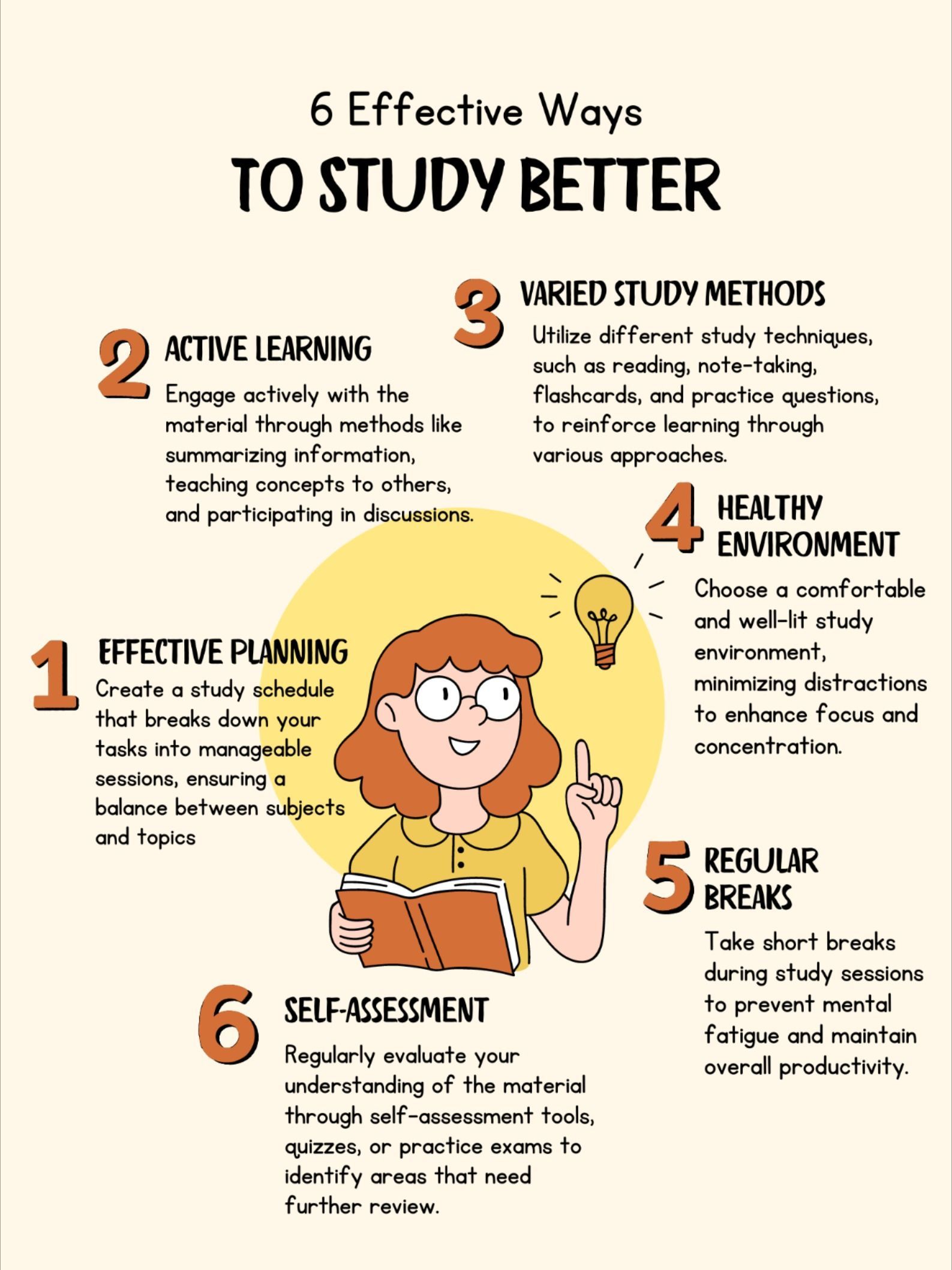
    6 Tips To Study Better - e-Learning Infographics

    A Practical 7-Step Plan You Can Start This Week

    1. Choose a study time each day (e.g., 6:30–7:30 pm) and mark it on a physical chart.

    2. Designate a “study zone” — a desk or table with minimal distractions, away from the TV and mobile gadget activity.

    3. Before the session begins, have your child list 1-2 learning goals (“I will finish the maths worksheet” or “I will summarise the science chapter”).

    4. Use a timer (30 minutes for younger children, 45-60 for older) with a built-in break at the end.

    5. During study: encourage retrieving information (child closes book and explains what they just read).

    6. After the timer, discuss: What was easy? What was tricky? How will you tackle the tricky bit tomorrow?

    7. End with a short reflection and healthy snack / movement break.

    When I used this plan with my cousin in the City, we tied the study time to just after she cleaned up from the day’s chores and before she watched TV. The visual chart on the wall helped her track progress, and she reported feeling less stressed about homework within two weeks.

    Common Pitfalls & How to Avoid Them

    Pitfall Why it happens What to do instead
    Studying in bed or couch Brain associates those places with rest, not focus. Use a proper desk or table. Make “bed = sleep” only.
    Cramming last minute Procrastination + pressure → shallow learning. Build study routine early; break tasks into small pieces.
    All passive reading Limits understanding and retention. Incorporate retrieval, self-quizzing, flashcards.
    Ignoring sleep and nutrition Even brilliant strategy falters if the body is tired/hungry. Prioritise 8+ hours of sleep, healthy snacks, and movement.
    Parent doing everything Child misses opportunity to build independence. Guide, encourage and gradually hand over ownership.

    Conclusion

    Building healthy study habits for kids is really not about forcefully making them drill every night, but rather inventing a system that they can take over, not only during their childhood but also later in life. Keep in mind: a consistent schedule + a supportive environment + active techniques + reflection = habits that last. There is no doubt that the earlier you start, the better the result will be.

    FAQ

    1. How do I motivate my child to develop healthy study habits?

    Put your main efforts into routine, positive reinforcement, and at the same time represent yourself as the learner.

    2. What’s the best time of day for kids to study?

    The most suitable time for the child to study is when he is energetic, letting very few distractions in and, above all, being consistent.

    3. My child gets distracted easily—what can I do?

    Eliminate distractions, break study time into short intervals and encourage the use of active learning methods.

    4. Are digital tools helpful or harmful for study habits?

    If digital tools are used deliberately they can be beneficial, however, it should be ensured that they do not become a source of distraction.

    5. When should I expect to see results from implementing healthy study habits?

    You will probably see better focus and less homework-related stress within a couple of weeks, whereas profound changes might take a semester or ​‍​‌‍​‍‌​‍​‌‍​‍‌longer.

    Check Out: 30+ Essential Best Book on Slow Living that You Must Read for a Calmer Life

  • 30+ Essential Best Book on Slow Living that You Must Read for a Calmer Life

    30+ Essential Best Book on Slow Living that You Must Read for a Calmer Life

    Key takeaways:

    • Begin with the foundational title that coined the modern “slow movement” and then explore nine follow-ups that deepen or broaden it.
    • Slow living is not a matter of inactivity; rather it is a matter of deciding with intention, awareness, and love of neighbor which things to do.
    • Among others, you will encounter the topics of practical rituals, minimalism combined with mindfulness, home design, and the career/hustle-culture aspect.
    • I included one mini-case: how I incorporated a slow ritual into my week and what results I noticed.

    In this article, I’ll highlight one book that is the historical reference of the movement, and then to other 30+ slow books, which in each case bring new insights.

    We should examine it more ​‍​‌‍​‍‌​‍​‌‍​‍‌closely.

    Check Out: 50+ Free Things to Get on Your Birthday in 2025 (Legit Deals & How to Claim Them)

    Why this is the book to start with

    In Praise of Slow by Carl Honoré (2004)

    In Praise of Slowness: Challenging the Cult of Speed: Honore, Carl: 9780060750510: Amazon.com: Books

    This​‍​‌‍​‍‌​‍​‌‍​‍‌ book is often seen as the primary handbook for slow living intervals: Honoré demonstrates how the “speed cult” affected aspects of food, cities, leisure, work, parenting, and much more.

    Basically: the best slow living book to help you ground yourself.

    What makes it different:

    Honore is a journalist from the real world, who looked at real-world examples (like Slow Food in Italy, time-use in business).

    The book has been translated into more than 30 languages and keeps being relevant.

    Besides critiquing, it also offers actionable and story-based insights: how slowing down improves digestion, relationships, work rhythms.

    The first time I read this book was at a time when my career was very demanding—I was traveling to the city, juggling client calls, feeling like I was losing the simple joy of an evening walk. I applied one suggestion: set a “slow hour” each evening (no email, no social media) for 30 minutes. Within two weeks, I noticed my anxiety level dropped. It wasn’t magic—but it was a significant change.

    If you are allowed only one title to comprehend the slow-living movement and how to integrate it into your daily life, it would be this ​‍​‌‍​‍‌​‍​‌‍​‍‌one.

    Other Essential Slow-Living Reads Worth Your Shelf

    The Things You Can See Only When You Slow DownHaemin Sunim (2017)

    A beautifully illustrated mindfulness guide that reminds us to find peace and clarity amid chaos and constant motion.

    The Things You Can See Only When You Slow Down: How to be Calm in a Busy World: Sunim, Haemin: 9780241298190: Amazon.com: Books

    The Little Book of Hygge: Danish Secrets to Happy LivingMeik Wiking (2016)

    Discover the Danish concept of hygge — a cozy, contented way of life built on simplicity, warmth, and connection.

    Destination Simple: Everyday Rituals for a Slower LifeBrooke McAlary (2016)

    Practical daily rituals to help you reclaim calm and focus in an overwhelmed world.

    Wintering: The Power of Rest and Retreat in Difficult TimesKatherine May (2020)

    A poetic reflection on embracing life’s winters — both literal and emotional — as essential seasons for growth and renewal.

    The Kinfolk Home: Interiors for Slow LivingNathan Williams (2015)

    A stunning visual journey into homes that embody the principles of intentional living and mindful design.

    The Kinfolk Home: Interiors for Slow Living | Papercut

    SlowBrooke McAlary (2017)

    An inspiring personal story of simplifying life and learning to live with purpose, presence, and gratitude.

    The Lady Farmer Guide to Slow LivingMary E. Kingsley (2020)

    A practical guide to cultivating sustainable simplicity and reconnecting with nature close to home.

    Slow Living: The Secrets to Slowing Down and Noticing the Simple Joys AnywhereHelena Woods (2022)

    Gentle wisdom on finding everyday magic and joy through slower, more intentional living.

    Slow Living: The Secrets to Slowing Down and Noticing the Simple Joys Anywhere (Happiness and Wellness, Meditative Lifestyle): Woods, Helena: 9781684811649: Amazon.com: Books

    How to Do Nothing: Resisting the Attention EconomyJenny Odell (2019)

    A powerful critique of productivity culture and a manifesto for reclaiming time, attention, and meaning.

    Chasing Slow: Courage to Journey Off the Beaten PathErin Loechner (2017)

    A vulnerable memoir and guide on redefining success and embracing imperfection in pursuit of peace.

    Soulful Simplicity: How Living with Less Can Lead to So Much MoreCourtney Carver (2017)

    Learn how simplifying your space and commitments can open the door to a more intentional, joy-filled life.

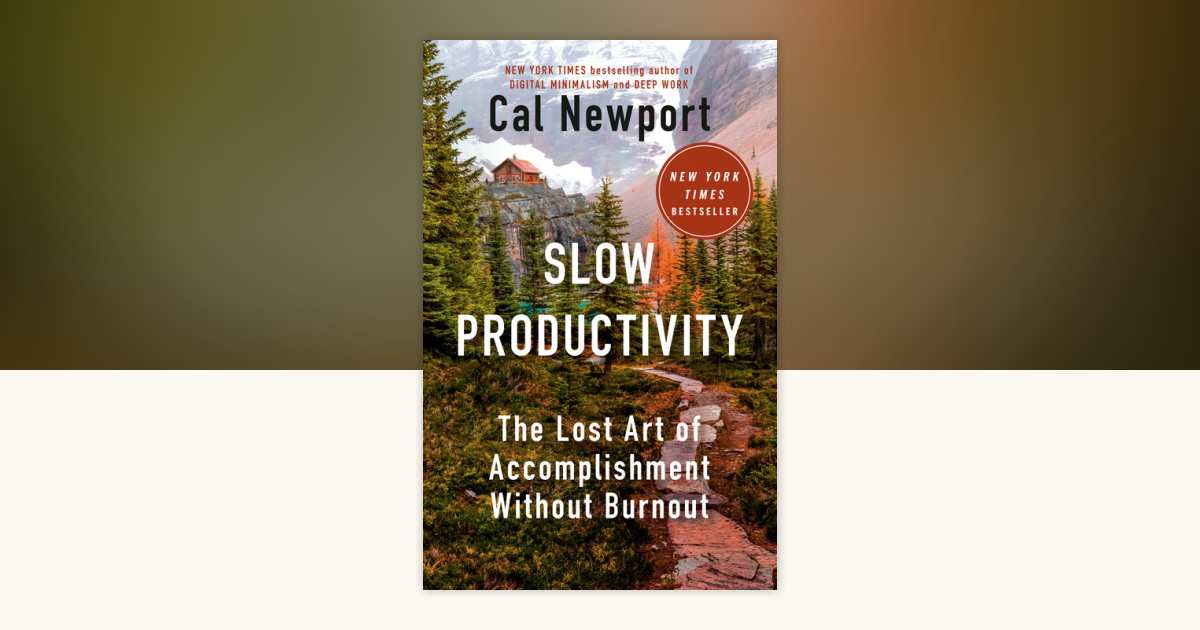
    Slow Productivity: The Lost Art of Accomplishment Without BurnoutCal Newport (2024)

    A fresh perspective on productivity rooted in depth, focus, and sustainable creativity — not hustle.

    Slow Productivity by Cal Newport: 9780593544853 | PenguinRandomHouse.com: Books

    Slow Living: Cultivating a Life of Purpose in a Hustle-Driven WorldStephanie O’Dea (2024)

    A guide to building a life anchored in meaning, rest, and alignment with your true values.

    Still: The Slow HomeNatalie Walton (2020)

    A serene exploration of spaces and stories that embody the essence of calm, slow living.

    Essentialism: The Disciplined Pursuit of LessGreg McKeown (2014)

    A life-changing framework for focusing only on what truly matters — and letting go of the rest.

    The Cottage Fairy CompanionPaola Merrill (2022)

    A whimsical and heartfelt invitation to reconnect with nature, creativity, and self-sufficiency.

    Simple Matters: Living with Less and Ending Up with MoreErin Boyle (2016)

    A minimalist’s guide to living with intention and finding beauty in simplicity.

    Seeking Slow: Reclaim Moments of Calm in Your DayMelanie Barnes (2019)

    An accessible introduction to slow living with simple steps to infuse mindfulness into daily routines.

    Lifestyle books for Autumn reading | 91 Magazine

    The Ruthless Elimination of HurryJohn Mark Comer (2019)

    A spiritual yet practical roadmap to slowing down and staying emotionally healthy in a frantic world.

    Slow Seasons: A Creative Guide to Reconnecting with Nature the Celtic WayRosie Steer (2023)

    A poetic guide to rediscovering rhythm and balance by syncing with nature’s seasons.

    Lagom: The Swedish Art of Balanced LivingLinnea Dunne (2017)

    Explore lagom — the Swedish philosophy of “just enough” — and how it fosters balance and wellbeing.

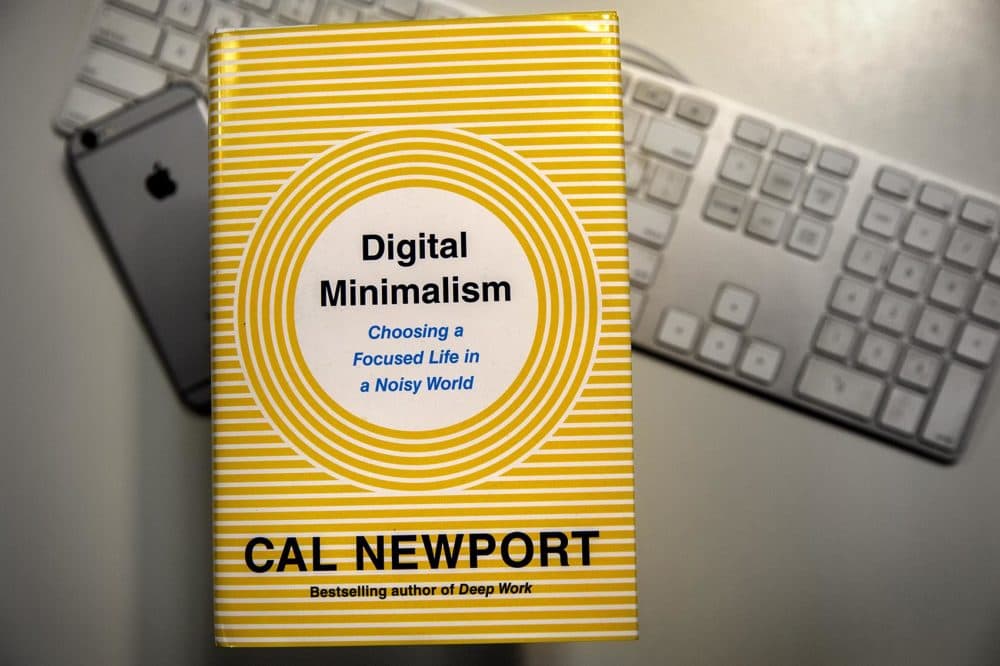
    Digital Minimalism: Choosing a Focused Life in a Noisy WorldCal Newport (2019)

    A practical guide to reducing digital noise and reclaiming focus, depth, and purpose.

    Digital Minimalism': How To Hang Up On Your Phone Addiction | Here & Now

    The Art of Slow Living: Embracing Nature’s PaceSamar Cajal (2024)

    A beautifully written reflection on embracing slowness, simplicity, and seasonal rhythms.

    Slow Down: 50 Mindful Moments in NatureRachel Williams (2020)

    Short, mindful prompts to help reconnect with the natural world and rediscover wonder in simplicity.

    An Intentional Life: A Guide to a Slower and More Peaceful ExistenceKathryn Bardsley (2021)

    Encourages readers to live with awareness and purpose through gentle, mindful choices.

    Slow Living: A Simple Approach to a Meaningful LifeS. Hashi (2023)

    A grounded, modern take on slow living — balancing mindfulness with purpose and creativity.

    The Slow Fix: Solve Problems, Work Smarter and Live Better in a Fast WorldCarl Honoré (2012)

    Shows how applying the slow philosophy to problem-solving can lead to smarter, more sustainable results.

    The Discovery of SlownessSten Nadolny (1983)

    A literary masterpiece exploring the profound power of patience and deep perception.

    Slowly, Softly, Sincerely: A Memoir of Slow LivingJamie Dean (2025)

    A heartfelt 2025 release chronicling the author’s journey from burnout to deep contentment through slow living.

    The Joy of Missing Out: Live More by Doing LessTanya Dalton (2019)

    A motivational guide Book to intentional productivity and living joyfully without overcommitment.

    The Joy of Missing Out: Live More by Doing Less: Amazon.co.uk: Dalton, Tanya: 9781400214334: Books

    In Praise of Idleness and Other EssaysBertrand Russell (1935)

    A timeless philosophical essay arguing that leisure and reflection are essential to human happiness.

    Grounded: Slow, Grow, Make, Do – A Companion for Slow LivingAnna Carlile (2020)

    An inspiring manual for embracing creativity, sustainability, and slow craft as daily rituals.

    How​‍​‌‍​‍‌​‍​‌‍​‍‌ to choose which book fits you best

    • In case you are feeling over-rushed and overwhelmed, get In Praise of Slow to see the big picture and figure out your “why”.
    • If you are after workable habits that you can implement this week then it would be best to get a copy of Destination Simple or Slow: Simple Living….
    • For those of you who reside in a city and are in need of some slow lifestyle changes that you can do right away, I would recommend Slow Living (Helena Woods).
    • In case your main point of contention is work/office/hustle burnout, then Slow Productivity is the right choice for you.
    • If your goal is to concentrate on the home space, design, and atmosphere then The Kinfolk Home or The Little Book of Hygge would be excellent choices.
    • If you are enthused by nature, seasons, and place-based rhythms, then you should consider reading The Lady Farmer Guide… or Wintering.

    Here’s a quick decision table:

    Your situation Best starting book
    I’m always in a hurry & want to slow down fundamentally In Praise of Slow
    I’m burnt out and want simple daily rituals Slow: Simple Living… / Destination Simple
    My stress is work- or office-related Slow Productivity
    My space/home feels chaotic The Kinfolk Home or Hygge
    I live in city and want practical slow habits Slow Living (Helena Woods)
    I’m drawn to nature, rhythm or sustainability Wintering or Lady Farmer Guide…

    A mini-case study from the City

    While living in the City and working remote, I experimented with what I’ll call the “slow evening ritual” drawn from these books I listed above:

    • For one week, from 8 pm to 9 pm, I switched off work notifications, avoided social media, chose one analog activity (reading, walk, cooking).

    • I journalled three things I noticed in that hour: ambient street sounds, the texture of dinner, the feel of the evening breeze.

    • After the week: I felt calmer, slept better, and noted that one of my key “drivers of hurry” was continuous email-checking.

    Insight: A major barrier to slow living is the invisible pace—that habitual checking, backdrop noise of tasks. Slowing the “default speed” (device notifications, ambient busyness) gives you space to breathe, choose, respond rather than react.

    Common mis-steps (and how to avoid them)

    • The slow life is not to be mistaken for a passive/idle one. It is not about doing less, rather it is about doing what matters with clarity.
    • Waiting for a perfect “time”: You cannot live slow properly unless you say let’s do it right here, right now.
    • Considering slow living merely as a fad. The aforementioned books are about changes in thinking, not taking a one-time “detox” session.
    • Going by the idea of complete transformation overnight. It is a gradual practice—rituals, environment, and mindset change over time.

    Conclusion

    If someone were to inquire what the best book on slow living is, I would say that “In Praise of Slow” is the one because it provides the basis. But the really inviting truth is that it is just one book that speaks to where you are, pick it and let the rest grow around it.

    Regardless of whether you are living in New York, London, or Cape Town, the message remains the same: in a world that highly values speed, meaning is most of the time found in the pause. Select the speed that liberates you. Begin reading, and let the ideas become part of your daily life. Slow living is not about putting a bookmark in a book—it’s about giving more presence and intention to your ​‍​‌‍​‍‌​‍​‌‍​‍‌hours.

    Read: 15 Journaling Techniques That Will Transform Your Life in 30 Days

  • 50+ Free Things to Get on Your Birthday in 2025 (Legit Deals & How to Claim Them)

    50+ Free Things to Get on Your Birthday in 2025 (Legit Deals & How to Claim Them)

    Who​‍​‌‍​‍‌​‍​‌‍​‍‌ would not want free stuff on their birthday?

    Every year, brands, restaurants, and retailers offer free meals, drinks, gifts, and discounts to those with birthdays in the respective places. What makes this even better is that several of these giveaways are free of charge — theoretically, all you have to do is put yourself on the list beforehand.

    So, which is it? Free food, a free coffee, or a beauty product? There is now a list of birthday freebies for 2025 that features these offers, and also tells you the best and safest ways of claiming your gifts or rewards.

    What Counts as a Birthday Freebie?

    Birthday freebies refer to any gifts or services, as well as discounts, which are offered to a person by a company on his/her birthday or during his/her birthday month.

    Most companies offer the freebies through their reward or loyalty programs, which means that you must already have an account to be eligible.

    Three categories of birthday freebies exist:

    • Free products – no strings attached.
    • Free with a purchase – i.e. buy one get one free kind of deals.
    • Exclusive discounts – for instance, 20–50% off coupons.

    Tip: Remember to always register your information at least a couple of weeks prior to your birthday.

    Read: How to Build a Low-Tox Lifestyle at Home

    Top Online Birthday Freebies (Global and Instant)

    How about celebrating a birthday without stepping out of the house? Lots of online brands of high reputation offer global birthday freebies either through their websites or mobile applications.

    1.) Sephora Beauty Insider

    A mini beauty gift featuring the top brand like Glow Recipe or Rare Beauty is yours for free.

    After registering a free account with the Beauty Insider program, you can get your birthday present either in-store or online during your birthday month.

    2.) Starbucks Rewards

    On your birthday, a drink, food item, or a treat from Starbucks can be yours absolutely free of charge.

    Double-check, at least a week in advance of your birthday, whether you have entered your birthday in your profile.

    3.) Baskin Robbins Birthday Club

    Free ice cream scoop for you, no purchase necessary.

    A few days before your birthday, look out for a mail with your coupon code.

    4.) Krispy Kreme Rewards

    On their birthdays, Krispy Kreme members get an Original Glazed donut for free.

    Besides that, at least some places offer free coffee to go along with a donut.

    5.) Ulta Beauty Rewards

    Receive a free gift on your birthday annually. Platinum and Diamond tier members additionally get 10 dollars off coupon.

    6.) Amazon Prime (Local Perks)

    For example, in certain areas, Amazon Prime members can look forward to birthday specials or be the first ones to get limited deal access.

    Near your birthday, check if you have a “Your Deals” tab that lets you know if you are ​‍​‌‍​‍‌​‍​‌‍​‍‌eligible.

    Restaurant Chains That Give Free Meals on Your Birthday

    Dining out? Many restaurants offer free meals, desserts, or discounts for birthdays.

    Here are some popular birthday deals available in 2025:

    Restaurant Birthday Freebie Requirement
    Denny’s Free Grand Slam breakfast Show ID (no signup required)
    IHOP Free pancake stack Join MyHop Rewards
    Chili’s Free dessert Join My Chili’s Rewards
    Red Robin Free burger Join Red Robin Royalty Program
    Olive Garden Free dessert or $5 coupon Join the eClub
    Buffalo Wild Wings Free snack-size wings Join Blazin’ Rewards
    TGI Friday’s Free dessert Join Rewards app
    Panera Bread Free pastry or bakery item Join MyPanera account

    Pro Tip: Most restaurant rewards last for your entire birthday month, so you can plan multiple birthday meals throughout the week.

    Restaurants that give away free birthday food, from Pizza Express to All Bar One | Metro News

    Food​‍​‌‍​‍‌​‍​‌‍​‍‌ & Beverage Apps with Birthday Rewards

    The easiest food and coffee apps to gain quick birthday perks are those of food and coffee.

    Here are some of the leading ones that will be giving away free treats in 2025:

    • Dunkin’ Donuts: Free drink of any size for DD Perks members.
    • Chipotle Rewards: Free chips and guacamole (normally requires one prior purchase).
    • Subway MVP Rewards: Free cookie or fountain drink.
    • Domino’s Rewards: Use the points to get free pizza during your birthday month.
    • McDonald’s App: In some areas, free fries, desserts, or drinks are sent to celebrate.

    Tip: Do not forget to keep app notifications turned on to avail of your reward because most of them expire within a few days.

    Fashion and Retail Birthday Discounts or Gifts

    Fashion brands regularly reward their loyal customers with birthday perks. Below are some of the most reliable offers:

    a.) H&M

    One item for 25% off during your birthday month.

    It is done by creating an H&M Member account for free.

    b.) Nike

    Members get a birthday coupon with $10–$20 off, which can be used online or in-store.

    c.) Adidas

    15% off with free shipping for Creators Club members.

    d.) The Body Shop

    Free $10 birthday voucher via the Love Your Body Club.

    e.) Old Navy / Gap

    One can get a 20–25% off birthday coupon which is either sent through the mail or app.

    Unique or Fun Birthday Freebies You Might Not Know About

    The best birthday freebies, in some cases, are outside the standard food and fashion categories. Here is a list of a few surprising offers:

    • PetSmart or Petco: Free birthday treat or toy for your pet.
    • Regal Cinemas or AMC Theatres: Free popcorn or drink for rewards members.
    • Dave & Buster’s: Free $10 game credit.
    • Spotify Premium: Extended free trials or birthday-themed playlists.
    • Hotels.com or Booking.com: Birthday discount offers for registered users.
    • Klook / Airbnb: Travel and experience discounts during your birthday month (varies by region).

    Tip: Make sure you are always checking your app notifications or email inbox during your birthday week because some offers are only available for a limited ​‍​‌‍​‍‌​‍​‌‍​‍‌time.

    Local​‍​‌‍​‍‌​‍​‌‍​‍‌ Birthday Freebies Near You

    Besides, the local shops may also bring you some birthday delights with small gifts and treats from cafes, spas, and even your car service.

    To look at them simply:

    • Launch Google Maps.
    • Look for “freebies on the birthday near me” or “birthday deals in [your city].”
    • Have a look at the “Updates” or “Posts” segments of business listings for new offers and events.

    Neighborhood offerings usually comprise:

    • Free cupcake from bakery.
    • Free movie tickets at the local cinema.
    • Massage with no charge or spa discount.
    • Haircut or nail care services at the half price.
    • Free car wash or oil change coupons.

    Moreover, patronizing neighborhood businesses not only gives you a lot of pleasure but also is a great support for small entrepreneurs to attract more loyal customers.

    Restaurants That Offer Free Birthday Meals

    How to Maximize Your Birthday Freebies

    Essentially, beforehand and at the right time are the keys if you want to fully take advantage of your birthday freebies.

    Here are some efficient ways of planning your time:

    1. Creating a separate mail account for reward programs will help keep your inbox tidy.
    2. Signing up early – at least a month before your birthday is a great idea to ensure your eligibility.
    3. Stack your deals. Make a plan: free breakfast at Starbucks, free donut at Krispy Kreme, lunch at Denny’s, dessert at Olive Garden.
    4. Take a look at expiration dates. Some offers may only last for one day while others can last for the entire month.
    5. Bringing an ID with you is always a good idea. Some restaurants may check your ID to be sure that it’s your birthday.
    6. Keep an eye on social media for your favorite brands. Certain limited-time birthday codes might be shared only through Instagram or newsletters.
    7. Make a list of your birthday activities. You can use Google Sheets or a note app to plan the places you want to visit and the things you want to get.

    Avoid Scams and Fake “Freebie” Sites

    With the vast number of freebie offers online, there are scammers who create fake sites to look like brand promotions in order to trick users.

    In order not to be the victims of such frauds, people need to take these safety measures into consideration:

    • Ensure that you only register on legitimate brand websites or authorized applications.
    • Never provide your credit card details to a website that requires this in order to give you a free offer.
    • Try to be watchful for the incorrect spelling of URLs or generic “freebie” domains.
    • Before giving out your data, try to find the latest reviews on Reddit or Trustpilot.
    • Do not under any circumstances reveal your most private information such as your identity number, or bank details.

    True birthday freebies will not require any form of payment or sensitive data from ​‍​‌‍​‍‌​‍​‌‍​‍‌you.

    Conclusion: Turn Your Birthday into a Freebie Season

    Your birthday is the one time of year when brands genuinely want to celebrate you – and you can totally leverage it for free.

    There are over 50 legitimate birthday freebies available in 2025 ranging from free coffees and burgers to beauty gifts, movie tickets, and exclusive discounts.

    Prepare early by signing up, checking your offers, and making a plan to have a great day claiming them.

    Remember to save this article or the list because new brands are being added every year, and this guide will be updated regularly to indicate the current ​‍​‌‍​‍‌​‍​‌‍​‍‌offers.

    Check Out: Zero Waste Lifestyle: How to Reduce Trash, Save Money, and Build Habits That Last

  • African American Spiritual Blessings for Every Day of the Week

    African American Spiritual Blessings for Every Day of the Week

    Every​‍​‌‍​‍‌​‍​‌‍​‍‌ day is a new opportunity to regain connection with God’s presence and power. These African American spiritual blessings draws inspiration from the soulful and deeply emotional faith traditions that have been the source of strength and joy of countless generations – from Sunday’s renewal to Saturday’s gratitude.

    If you are longing for comfort, strength or hope, this week-long journey of faith-filled blessings can be your vehicle to move forward.

    The Power of Daily Spiritual Blessings

    Blessings are not only words – they are faith in God’s plan and they are the first step towards the implementation of that plan in our lives. When we pronounce a blessing, we set hope free in the invisible world and we welcome God in our days.

    In the African American spiritual tradition it has been always blessing each other, a mechanism of healing, resistance and building community. These daily prayers, which are deeply rooted in gospel worship, church fellowship and the fortitude of the ancestors, represent the faith that is alive and active.

    Just like the Scripture in Ephesians 1:3 states: “Blessed be the God and Father of our Lord Jesus Christ, who has blessed us in Christ with every spiritual blessing in the heavenly places.”

    So, why not take time to start a new day each morning — blessing as a way of grounding, a means of bringing the heart in line with purpose, gratitude and favour from ​‍​‌‍​‍‌​‍​‌‍​‍‌God.

    African American Spiritual Sunday Blessings

    A​‍​‌‍​‍‌​‍​‌‍​‍‌ Fresh Start for the Soul

    Sunday is a special day off—a restart. These African American spiritual Sunday blessings make us think about God’s mercy when a new week is coming.

    Blessing Example:

    May the Lord grant you this Sunday tranquility and a worthy goal of living. Let your heart be lifted with praise, your spirit find rest in His presence, and your coming week be led by His grace.

    Sunday is a day off, invitation for reflection and thanksgiving for what God has given and will give. It is a day for grounding ourselves in the promise of renewal.

    Prayer for Renewal

    If we are together (in church, at home, or in silence), say this prayer:

    God, heavenly Father, on this God-given Sunday I lift my voice to You. Change my thinking, energize my will, and give me back your calming presence. Let Your light shine on my way and be the road of hope for the days to come. In Jesus’ name, Amen.

    African American Spiritual Monday Blessings

    Strength to Begin the Week

    Monday usually comes with a heavy load of its own—work, responsibilities, and expectations. However, on this day we are endowed with a blessing. These African American spiritual Monday blessings allow us to draw God’s power instead of using our own.

    Blessing Example:

    God, fill me with Your power this Monday. Direct my decisions, keep my steps firm, and make every difficulty a source of your glory. Allow Your good grace to be like a shining star over me as I go through this week.

    This day demands that we decide what will govern us: faith first, fear last.

    Morning Prayer for Focus

    God, when I get up this Monday morning, my thought should be in line with Yours. Please give me the skill to finish my tasks, kindness during my dealings, and courage in my steps. Let all I do be a reflection of Your love and purpose. Amen.

    African American Spiritual Tuesday Blessings

    Faith in Action

    On Tuesday, we do not simply start something new but continue doing it. These African American spiritual Tuesday blessings encourage believers to commit to faith-life in everyday situations such as work, family, and relationships.

    Blessing Example:

    God the Father, please mark my Tuesday with Your coming even when it is in the tiny, seemingly insignificant moments. In every word spoken, every duty performed, may I be a light to You. Make my hands strong for work, my heart full of love, and my mind calm and peaceful.

    We are reminded that blessing is not just for the mountaintop but also for the field, the office, the kitchen, or the fact that we have to take a bus or train.

    Encouraging Bible Verse or Quote

    Why not think about this Biblical passage: “Trust in the Lord with all your heart and lean not on your own understanding” (Proverbs 3:5)? Let that trusting in Godbe your guide on Tuesday.

    African American Spiritual Wednesday Blessings

    Midweek Gratitude and Peace

    Wednesday is the middle point—it is a time for reflecting, reconnecting, and recalibrating. These African American spiritual Wednesday blessings lead one’s thoughts to gratitude and peace, which are like a very calm and stable center of the week.

    Blessing Example:

    Thank You, God, for this day, Wednesday, among the busy days of my life, that I can stop and give thanks. Let Your peace, unspeakable and serene, flow through every situation. Revive my inner man, renew my hope, and take my faith to higher levels for the rest of the week.

    It is the time to make the following statement: Besides not only surviving, I am, indeed, thriving under Your guidance.

    Prayer for Balance and Clarity

    God, I am asking for balance today—between work and rest, between giving and receiving. Please assist me in recognizing Your hand in everything. Grant me foresight for the decisions to come and serenity for the journey. Amen.

    African American Spiritual Thursday Blessings

    Thankful Heart and Endurance

    Thursday is a day of endurance and gratitude. These African American spiritual Thursday blessings teach us that perseverance is a blessed thing and that the thanksgiving keeps on rising like a balloon.

    Blessing Example:

    Thank You, God, for the great privilege of being carried by You up to this point. Let this Thursday be a living proof of Your faithfulness to me. When I am tired, give me strength; when I am feeling down, raise me; and, grateful to the end, accompany me on my walk with You.

    Usually, we like to think of the weekend when it is still far away, but why not make use of today to praise God for all that we have done and all that we will do.

    Faith-Filled Words for Strength

    Father, when I am drained, please speak your Word to my intellect. When I am filled with doubt, please bring your light my way. Let endurance not be merely survival, but trust in You, growing into triumph. In Jesus’ Name, ​‍​‌‍​‍‌​‍​‌‍​‍‌Amen.

    African​‍​‌‍​‍‌​‍​‌‍​‍‌ American Spiritual Friday Blessings

    A Day of Joy and Completion

    Friday is a point of special hope—the very walk of the week is almost over and the weekend is already calling. These African American Spiritual Friday blessings are an expression of faith in God’s help, gaiety, and heavenly completion.

    Blessing Example:

    Father God, as this Friday comes, Your delight, Your calm and Your grace should be my portion; Your favour, as always, upon my life. May the work of my hands be Your glory, and let me achieve my final victory of the week in You.

    A day like this is really a must to experience God’s goodness that are still to come by lifting your hands, raising your voice, and proclaiming it.

    Evening Reflection and Gratitude

    Lord, at the end of this day, I thank You for the wins, the teachings, and the gifts. Keep me safe during my sleep, look after those I love, and get me ready for tomorrow. I entrust my future to You. Amen.

    African American Spiritual Saturday Blessings

    Rest, Reflection, and Renewal

    Saturday is a time specially set apart—a moment for rest, renewal, and reflection. These African American spiritual Saturday blessings offer an invitation to slow down, deeply meditate, and prepare in optimistic ways for what is ahead.

    Blessing Example:

    God the Father, I love and appreciate this Saturday. Let my rest be with You, my thoughts unshakably founded on Your promise, and my spirit renewed to do all You have in store for me. I want to rest in this day’s trust and be full of hope.

    This day gives us the assurance that rest is not an option—it has been ordained. Renewal is definitely not an accident—it has been invited.

    Quiet Prayer to Close the Week

    Lord, at the end of this week, I throw into Your hands its records and its struggles. It would indeed be Your peace that heals my heart; it would be Your promise that glows in my soul, and my spirit, ready for a new week in You, would be so. Amen.

    Living a Week of Faith and Blessings

    Practicing faith throughout the week does not only give us spiritual momentum but also builds a legacy. The continuous application of blessing in speech opens people’s lives to uplifting: fear becomes smaller, hope gets deeper, and community louder.

    When on a daily basis we speak blessing over our selves, our families, and our communities; that is when we also connect the Sunday promise with the Saturday rest- thus we create a tapestry of faith which encompasses the whole week.

    Would you want to explore this path more? Just pick a blessing section every morning, talk it aloud, reflect for 1–2 minutes, and take its main idea with you throughout your day. You can also do it with a friend or someone you love. The power of the ripple effect is far greater than you can ​‍​‌‍​‍‌​‍​‌‍​‍‌apprehend.

    Read: 7 Spiritual Meanings of Waking Up at 3 AM

  • How to Build a Capsule Wardrobe for Men (2025 Guide to Effortless Style)

    How to Build a Capsule Wardrobe for Men (2025 Guide to Effortless Style)

    If​‍​‌‍​‍‌​‍​‌‍​‍‌ you have ever examined your clothes and thought, “I have nothing to wear,” you’re not alone. The truth is most men have a huge amount of clothes but only wear a small percentage of them. The solution isn’t more shopping. It’s strategy.

    Enter the capsule wardrobe for men — a carefully selected collection of versatile, timeless pieces that can be mixed and matched in an infinite number of ways. It is less of a struggle to make your choice, you have less mess, and you get an effortless confidence every day.

    In this 2025 guide, we will explain how to build a men’s capsule wardrobe that suits your lifestyle–whether you are a daily minimalist or a creative professional looking for refined simplicity.

    What Is a Capsule Wardrobe for Men?

    A capsule wardrobe for men is a limited, thoughtful selection of clothing that seeks to generate maximum outfit combinations with minimum excess. Each piece serves a function and goes well with the others. The emphasis is on quality rather than quantity.

    Think of having 30–40 pieces capable of being mixed and matched into more than 100 outfit ideas — from business meetings to short trips. This is what a capsule wardrobe can do.

    Why Every Man Needs a Capsule Wardrobe

    For the modern man — be he a creative, an entrepreneur, or a professional — time and mental capacity are two of the most valuable things. A men capsule wardrobe strategy takes away the daily dressing hassle, thus making your style both intentional and effortless.

    a.) Saves Time and Energy

    The 10-minute outfit debates are over. With a capsule system, any choice is the right one.

    Studies show we make over 35,000 decisions daily — and what to wear is one of the first. Simplify your wardrobe and save your brainpower for things that matter more.

    b.) Reduces Decision Fatigue

    If the choices of clothing are limited to only the best ones, then you get rid of the “maybe” pile — the garments that you own but never wear. Every piece becomes a dependable one that matches your personal aesthetic.

    c.) Enhances Personal Style

    A capsule wardrobe elevates your image. You come to possess a distinct signature style — self-assured, simple, and steady.

    From Steve Jobs’ turtlenecks to Pharrell’s neutral layers, the most successful men usually turn to simplified wardrobes as a way to strengthen their personal brand and concentrate their energy elsewhere.

    How to Build a Capsule Wardrobe for Men (Step-by-Step)

    Here’s the practical, step-by-step system to create your capsule wardrobe for men, without guesswork or overwhelm.

    Step 1 – Audit Your Closet

    Before adding anything new, start by decluttering.
    Lay out every clothing item you own. Create three piles:

    • Keep: You wear it regularly and it fits well.

    • Maybe: You haven’t worn it in 3+ months but still like it.

    • Donate/Sell: It doesn’t fit, flatter, or align with your current style.

    This process reveals what you actually wear — and what you can live without.

    Pro tip: Snap photos of your favorite outfits. You’ll notice patterns in color and fit that inform your capsule palette.

    Step 2 – Choose a Color Palette

    A capsule wardrobe thrives on a cohesive color system.
    Pick 2–3 base colors and 2 accent shades that flatter your skin tone and lifestyle.

    Base colors: navy, gray, black, beige, olive
    Accent colors: rust, burgundy, forest green, denim blue

    Neutrals ensure maximum mix-and-match potential, while accent hues keep things fresh.
    For instance, a white Oxford shirt pairs as easily with dark denim as it does with khaki chinos or a navy blazer.

    Step 3 – Pick the Core Pieces

    This is where your men capsule wardrobe essentials come in.
    Focus on high-quality staples that can shift between casual and smart-casual effortlessly.

    Tops

    • 2–3 white/neutral T-shirts

    • 2 button-down shirts (one Oxford, one chambray or flannel)

    • 1 lightweight knit or crewneck sweater

    Bottoms

    • 1 pair dark jeans

    • 1 pair tailored chinos

    • 1 pair smart trousers (optional if your work requires it)

    Outerwear

    • 1 versatile jacket (denim or bomber)

    • 1 structured coat (wool or trench for colder months)

    Shoes

    • White minimalist sneakers

    • Leather loafers or boots

    • Neutral trainers

    Accessories

    • Brown or black leather belt

    • Simple watch

    • Neutral scarf or cap (optional)

    Every item should pass this test: Can I wear it at least three ways?
    If not, skip it — your future self will thank you.

    Step 4 – Mix and Match to Create Outfits

    Now the fun begins. With your capsule assembled, experiment with combinations.

    Example outfit formulas:

    • White tee + navy chinos + white sneakers

    • Oxford shirt + dark jeans + leather loafers

    • Turtleneck + wool coat + trousers + boots

    Snap outfit photos on your phone for quick reference — your personal digital lookbook.
    This not only boosts creativity but also keeps you from falling back into “buy more” habits.

    Step 5 – Maintain and Refresh Your Capsule

    A true men’s capsule wardrobe evolves with you.
    Seasonally (every 3–4 months), reassess what’s working.

    • Replace worn-out staples.

    • Rotate pieces for weather changes.

    • Add one or two “statement” upgrades per year — like a premium jacket or pair of boots.

    The goal isn’t to restrict yourself; it’s to refine.
    Over time, you’ll notice that dressing becomes instinctive — not effortful.

    Men’s Capsule Wardrobe Essentials (Checklist)

    Below is a simple yet effective capsule wardrobe checklist for men — a baseline you can tailor to your lifestyle, job, and climate.

    Tops and Shirts (6–8 pieces)

    • 2 premium cotton T-shirts (white, gray, or navy)

    • 2 Oxford/button-down shirts

    • 1 casual overshirt or flannel

    • 1 neutral sweater or crewneck knit

    • 1 polo (optional, for semi-formal occasions)

    Bottoms (3–4 pieces)

    • 1 dark denim

    • 1 beige or olive chino

    • 1 tailored trouser

    • Optional: 1 pair of tailored shorts (for warmer climates)

    Footwear (2–3 pairs)

    • White sneakers (clean, minimal)

    • Brown leather boots or loafers

    • Neutral trainers for off-duty looks

    Outerwear (2 pieces)

    • Lightweight jacket (bomber, Harrington, or denim)

    • Classic overcoat or trench

    Accessories

    • 1 leather belt

    • 1 minimalist watch

    • Neutral scarf, sunglasses, or cap

    By sticking to timeless silhouettes and durable fabrics, these essentials can serve you year-round — perfect for both everyday wear and business-casual settings.

    Capsule Wardrobe Examples for Different Seasons

    The beauty of a capsule wardrobe for men lies in its flexibility. With a few strategic swaps each season, you can keep your looks fresh without overhauling your entire closet.

    Spring / Summer Capsule Wardrobe

    Lightweight fabrics and breathable layers define this season’s capsule. Focus on comfort, airiness, and easy coordination.

    Essential pieces:

    • White or light-blue Oxford shirt

    • 2–3 linen or cotton T-shirts

    • Lightweight chinos or tailored shorts

    • Minimal sneakers or loafers

    • Unstructured blazer or denim jacket

    Style tip:

    Stick to lighter neutrals like beige, white, and soft gray. A navy jacket adds polish for evenings out, while linen shirts keep you cool and sharp during daytime.

    Outfit formula examples:

    • White tee + beige chinos + white sneakers

    • Linen shirt + tailored shorts + loafers

    • Navy blazer + white T-shirt + dark jeans

    Fall / Winter Capsule Wardrobe

    As temperatures drop, layering becomes key. Swap lightweight fabrics for wool, flannel, and heavier cotton.

    Essential pieces:

    • 1 turtleneck sweater or merino knit

    • 1 flannel shirt

    • 1 wool or trench coat

    • Dark denim or wool trousers

    • Chelsea boots or leather lace-ups

    Style tip:

    Earthy tones — brown, charcoal, olive — dominate fall and winter palettes. They create warmth and depth, ideal for mixing with your neutral bases.

    Outfit formula examples:

    • Turtleneck + wool coat + tailored trousers + boots

    • Flannel shirt + jeans + puffer jacket

    • Crewneck knit + chinos + leather boots

    Pro insight:

    Rotate outerwear seasonally but keep your base wardrobe consistent. This ensures year-round versatility without ballooning your closet.

    Capsule Wardrobe Examples for Work and Weekends

    Because real life doesn’t fit one uniform, here’s how to adapt your capsule to different contexts:

    For Work / Business Casual

    • Oxford shirt + chinos + loafers + minimalist watch

    • Knit polo + wool trousers + Chelsea boots

    • Turtleneck + blazer + dark denim

    For Weekends / Creative Work

    • White T-shirt + olive chinos + sneakers

    • Flannel overshirt + jeans + boots

    • Hoodie + denim jacket + neutral trainers

    For Travel

    Pack 10–12 interchangeable pieces that create 15+ outfits:

    • 3 tops (tee, shirt, knit)

    • 2 bottoms (jeans, chinos)

    • 1 jacket

    • 1 pair of sneakers + 1 of loafers

    Everything fits in a carry-on — proof that simplicity can still mean versatility.

    Style​‍​‌‍​‍‌​‍​‌‍​‍‌ Beyond the Wardrobe

    A men’s capsule wardrobe does more than simplify your mornings — it changes your personal style and ultimately how you interact.

    1. Boosts Confidence

    If every cloth that you wear fits you well, flatters you, and is in harmony with your personal identity, then you will be able to emit quiet confidence. This is not a matter of showing off — it is simply a matter of showing up unsubtle.

    2. Elevates First Impressions

    The outfit you are wearing is the first and loudest of your words whether you are pitching a client, going for a casual brunch, or meeting someone new. A capsule wardrobe is your guarantee that you will always be ready — stylish without trying too hard and never overdressed.

    3. Encourages Mindful Consumption

    Given the current climate of overproduction and fast fashion, putting together a capsule wardrobe is your way of going against the grain. Besides that, you are committing to less and of better quality — which takes care of both the environment and the need for lasting value.

    Maintaining Your Capsule Wardrobe (Long-Term)

    The capsule wardrobe is not a one-time project. It is more like a lifestyle.

    To be able to keep it for a long time, the emphasis should be on care, curation, and consistency.

    1. Care for Quality

    Do everything to prevent fabric damage: wash in cold water, air-dry if possible, and store deliberately.

    If you use cedar blocks or garment bags for off-season storage, besides that it is good for the fabric, it is also good for your investment.

    2. Curate Seasonally

    Perform a clothing mini-audit twice a year:

    • Are the clothes still fitting nicely?
    • Did you wear that in the last season?
    • Does this item suit your life now?

    Remove what no longer serves you. Only add that which increases your wardrobe’s versatility.

    3. Evolve with Your Lifestyle

    Clothing is not an exception to the rule of life — your wardrobe should change accordingly.

    Perhaps your work will change from being in the office to working remotely. Or maybe your style will grow from streetwear to smart casual. Make changes to your capsule slowly.

    Pro Tips for Capsule Wardrobe Success

    1. Put money where it matters — in a tailor – The fit is what really counts — even cheap pieces can look like luxury when they are tailored.
    2. Stick to one aesthetic – Whether your basis is that of a minimalist or that of a smart-casual, refuse any impulse buys that aren’t in line with it.
    3. Take pictures of the outfits you love – Create an easy-to-access lookbook on your phone.
    4. Use digital wardrobe apps – Programs such as Capsule Wardrobe Planner and Smart Closet help you to see potential outfits.
    5. Build patience – Putting together the perfect wardrobe will take a while — the important thing is the progress, not the perfection.

    Conclusion

    The idea behind a capsule wardrobe for men is not less but better.

    It is the quiet confidence of knowing that each outfit you pick is right for your body, your style, and your day.

    If you are an entrepreneur juggling between meetings and traveling or a minimalist going through your morning routine and looking for clarity, a men’s capsule wardrobe is the one timeless benefit that comes with it: freedom.

    • Freedom from clutter.
    • Freedom from indecision.
    • Freedom to devote your time to the things that really matter — you.

    So why wait any longer?

    First, review your wardrobe, then choose your colors and finally style yourself. Within a couple of weeks, you’ll realize the one thing that fashionable men have always known — simplicity is the ultimate ​‍​‌‍​‍‌​‍​‌‍​‍‌sophistication.

    FAQs – Answering Common Capsule Wardrobe Questions

    1. How​‍​‌‍​‍‌​‍​‌‍​‍‌ to build a capsule wardrobe for men?

    Firstly, clean out your closet and secondly pick out base items that are of neutral color and thirdly invest in a set of high-quality pieces that can be easily mixed and matched. Your wardrobe should consist of about 20-30 pieces that can be styled for work, casual, and smart occasions.

    2. How to create a men’s capsule wardrobe?

    Focus on classic clothing styles such as Oxfords, chinos, and minimal sneakers and make sure each item is suitable for your lifestyle. Maintain a harmonious color scheme and renew only when necessary.

    3. What should be in a men’s capsule wardrobe?

    An adequate set of essentials: 6–8 tops, 3–4 bottoms, 2–3 pairs of shoes, and 2 jackets. Also, include accessories like a belt and a watch to complete the look. Each item should be an effortless match with the others.

    4. How many clothes should be in a men’s capsule wardrobe?

    A very functional wardrobe capsule is generally between 20 and 30 total pieces, not counting workout gear and underwear. The aim is not to restrict but to refine. Just enough to be able to dress confidently, but not so much that you are overwhelmed.

    5. How often should I update my capsule wardrobe?

    Review every 3-4 months. You can replace the clothes that you have worn out and add 1-2 pieces of good quality clothing each season. For instance, put on a linen shirt in the hot season and a wool coat in the cold season.

    6. Can I build a capsule wardrobe on a budget?

    Yes. Begin with what you have. Work on the fit and coordination of your clothes before deciding to replace anything. When you decide to buy something new, do not forget to pick quality basics. For example, a $50 good fitting shirt is better than a $150 trendy one that fades ​‍​‌‍​‍‌​‍​‌‍​‍‌quickly.

    Read: Luxury Vacation Rental Guidebook Criteria

  • When to Move from Independent to Assisted Living: Key Signs & Timing

    When to Move from Independent to Assisted Living: Key Signs & Timing

    Key​‍​‌‍​‍‌​‍​‌‍​‍‌ Takeaways:

    • Identify the first signs that may indicate a change from independent to assisted living.
    • Know the differences of independent living vs assisted living, so you can figure out what to choose.
    • Discover a step-by-step planning checklist to make the transition with dignity and less anxiety.

    It’s a major decision that ageing adults and their families have to make. If someone lives independently but you notice that he/she falls more often, is forgetting to take medications or that personal hygiene is getting worse, then these are signs that should be considered. In this article, I will explain to you how these signs look, how to recognise them, how to have the conversation and how to organize the move so it is easy and you have a clear goal (I have indeed guided several families through ​‍​‌‍​‍‌​‍​‌‍​‍‌this).

    What is the difference between independent living vs assisted living?

    Independent living is designed for older adults who can manage daily life on their own; assisted living supports residents who require help with one or more activities of daily living.

    Independent​‍​‌‍​‍‌​‍​‌‍​‍‌ living (IL)

    • It is the most suitable choice for seniors, who are in good health and are capable of taking care of themselves and managing the daily tasks of their lives.
    • These services generally come in the form of social, recreational, dining programs in maintenance-free accommodations, and may include housekeeping and meal services. Assistance with bathing, dressing, or medication, however, is not usually available.
    • The main features are the emphasis on freedom, independence, and the community lifestyle.

    Assisted living (AL)

    • It is a housing solution with features, which are especially beneficial for senior citizens, who still want to live independently but require assistive support in at least one of the activities of daily living (ADLs) such as bathing, dressing, or medication management.
    • Such a living environment would be characterised by 24-hour staff, support services, a more structured care plan and safety features.
    • One of the features of this bridge is the transition from memory care and nursing care to full independent living.

    Why the distinction matters

    Understanding the different stages on this spectrum of care can help you figure out the right time for a move – it’s not just about age, but also the level of support required. If you wait too long, safety risks or crisis moves may result; if you move too early, it may seem ​‍​‌‍​‍‌​‍​‌‍​‍‌unnecessary.

    What are the key signs it’s time to consider assisted living?

    If transferring from independent to assisted living is on your mind, you should definitely consider these early but significant signs. Each of them should lead to a discussion and possibly an evaluation.

    a.) Difficulty managing daily tasks and ADLs

    • Bathing, dressing, grooming, etc. are activities that used to be done effortlessly, but now they take a long time or a person needs help.
    • Meal preparation becomes sporadic, there may be spoiled food in the fridge, the fridge may be empty, or only convenience foods may be present.
    • Medication mishandling: missed doses, expired prescriptions, forgotten refills.
    • Mobility issues: increased falls, trouble getting up from chairs, difficulty going up or down stairs, or walking on uneven flooring.

    b.) Safety and home maintenance concerns

    The home is showing signs of neglect: the clutter is getting out of hand, yards or repairs are not being kept, and mail is piling up without being attended to.

    Senior Lifestyle

    Safety hazards become more frequent: leaving the stove on, difficulty unlocking/locking doors, getting lost in places that are usually familiar.

    The home is no longer suitable for their physical condition (stairs, bathing, mobility).

    c.) Social isolation, poor nutrition and mental-health changes

    Withdrawal from social activities, friends, and community engagements. Loneliness has increased or there are signs of depression.

    Weight loss, changes in eating habits, and poor hygiene or grooming.

    The person might say “I don’t feel safe if I am alone” or “I don’t go out much anymore.”

    d.) Caregiver stress and family burden

    If the family or home-care support is under pressure, burnout will follow: frequent visits, work-life balancing, stress.

    When families understand that “we are managing, but it is not safe enough anymore,” that is the time to act. Waiting until a crisis occurs adds trauma. A Reddit caregiver has put it this way:

    “I would say do it sooner than later. … It is very challenging and very exhausting in all ways to move someone with even mild memory loss, but it will not get easier.”

    e.) When care needs are beyond the capacity of independent living/home care

    The point at which in-home care or independent living seem no longer able to meet the safety, social, physical, or cognitive needs of a person.

    Example: hospitalisations that are repeated, cognitive decline, or multiple falls that indicate the necessity for a higher level of support.

    How to decide the right time to move

    The time that you choose to do something is important: you want to be able to intervene before a crisis (fall, hospitalisation, major injury), but at the same time, you don’t want to do it too early so that it doesn’t feel forced. There is a decision-framework below that can help you.

    Step-by-step decision checklist

    1. Gather observations – record changes that have occurred in the last 3-6 months: falls, missed meds, isolation, home safety.
    2. Speak with the elderly person – get their opinion: “How do you feel living by yourself? Which tasks are more difficult now?”. The supportive tone should be maintained.
    3. Seek advice from professionals – a primary-care physician, geriatric care manager can assess cognition, mobility, and safety.
    4. Review living environment – decide whether it would be more reasonable to make modifications (grab bars, stairlift) or move?
    5. Evaluate home‐care and community living options – look at the differences in terms of cost, safety, support, and social life.
    6. Visit assisted living communities together – It doesn’t have to be a stressful move, rather make it a nice day out.
    7. Create a transition plan – selecting date, organising belongings, communicating with family, handing over responsibilities.
    8. After the move, keep an eye on things – see if the new environment is beneficial and make changes to the care plan as ​‍​‌‍​‍‌​‍​‌‍​‍‌required.

    In a past case I supervised, a 79-year-old father was living independently while his wife did most of the house management. After his wife fell and had a long recovery, his home maintenance worsened, he had two close falls, and his medication compliance dropped. The family moved him proactively into assisted living. That decision prevented a third fall which would likely have resulted in hospital admission. Timing that transition before disaster made all the difference.

    Personal checklist:

    ☐ Have there been two or more falls or near-falls in the past 6 months?

    ☐ Is daily grooming, showering or dressing requiring help now or neglected?

    ☐ Are medications being missed, expired or incorrectly taken?

    ☐ Has social isolation increased (less going out, less interest)?

    ☐ Is the home environment becoming unsafe (stairs, lighting, clutter, appliances)?

    ☐ Is nutrition poor or weight changing unexpectedly?

    ☐ Are I or other caregivers feeling overwhelmed or constantly worried?

    ☐ Has a doctor expressed concern about living alone safely?

    If you checked 3 or more, it’s time to seriously consider assisted living.

    Conclusion

    Determining​‍​‌‍​‍‌​‍​‌‍​‍‌ when to move from Independent to Assisted Living is mainly influenced by the requirements for support, safety, social connection, and quality of life rather than age. Understanding the signs, involving the older adult in the discussion, selecting the right assisted living community, and organizing the move with care can make it a wonderful, empowering new chapter instead of a loss.

    In case you notice these initial signs – falls, memory loss, difficulty with the home – why not talk about it right away? A move that is planned early will be easy and will have a positive ​‍​‌‍​‍‌​‍​‌‍​‍‌result.

    Read: How to Build a Low-Tox Lifestyle at Home