Category: Lifestyle

  • How to Fix Shaky Hands in Photography- Beginner to Advanced Guide

    You line up the perfect shot, press the shutter, and… it’s blurry. If that sounds familiar, you’re not alone. Shaky hands are one of the most common reasons photos turn out soft or unusable especially when shooting handheld in low light or with zoom lenses.

    The good news? This problem is completely fixable. Whether you’re a beginner using a smartphone or an intermediate photographer with a DSLR or mirrorless camera, there are proven techniques to eliminate camera shake and capture crisp, sharp images.

    In this guide, you’ll learn real-world strategies, technical fundamentals, and practical tips to help you confidently shoot without blur.

    Real-World Experience (Experience)

    Shaky hands show up most often when conditions aren’t ideal. Think about shooting at a wedding reception where the lights are dim, or capturing street photography at night while moving quickly. In these moments, you don’t always have the luxury of a tripod.

    Many photographers rely on simple habits in the field like leaning against a wall, holding their breath briefly while shooting, or bracing their elbows against their body. These aren’t just tricks they’re survival skills developed over years of shooting in unpredictable environments.

    For example, during travel photography, you might find yourself on a crowded street with no stable surface. In such cases, even resting your camera on a railing or using your camera strap for tension can significantly reduce shake. These small adjustments often make the difference between a blurry shot and a keeper.

    What Causes Shaky Hands in Photography? (Expertise)

    To fix the issue, it’s important to understand why it happens. Camera shake occurs when your camera moves slightly during the exposure. Even tiny movements can cause blur, especially at slower shutter speeds.

    Key Factors Behind Camera Shake:

    1. Shutter Speed
    The slower your shutter speed, the more time your camera has to capture movement including your hand movements.

    2. Reciprocal Rule
    A widely accepted guideline: your shutter speed should be at least the reciprocal of your focal length. For example, if you’re shooting at 50mm, use at least 1/50s. At 200mm, aim for 1/200s or faster.

    3. Focal Length Impact
    The longer your lens, the more noticeable even small shakes become. Telephoto lenses amplify motion.

    4. Image Stabilization
    Modern cameras and lenses often include stabilization systems (like optical or in-body stabilization), which help reduce shake—but they’re not magic. You still need proper technique.

    Proven Techniques to Fix Shaky Hands (Authoritativeness)

    1. Use a Faster Shutter Speed

    This is the most effective fix. If your images are blurry, increase your shutter speed immediately.

    2. Hold Your Camera Properly

    • Use both hands
    • Keep elbows tucked into your body
    • Support the lens from below

    3. Stabilize Your Body

    • Stand with feet shoulder-width apart
    • Lean against walls, poles, or tables
    • Sit or kneel when possible

    4. Use Burst Mode

    Taking multiple shots increases your chances of getting one sharp image.

    5. Use the Viewfinder

    Holding the camera to your eye adds an extra point of contact, making it more stable than shooting with the screen.

    Step-by-Step Guide to Reduce Camera Shake

    1. Check your shutter speed first—raise it if it’s too slow
    2. Adjust ISO to maintain exposure
    3. Hold your camera with a firm but relaxed grip
    4. Tuck your elbows into your body
    5. Take a deep breath, then gently press the shutter
    6. Shoot in bursts for better results
    7. Review and adjust as needed

    Follow this sequence every time you shoot, and it will quickly become second nature.

    Best Camera Settings for Sharp Photos

    Daylight Photography

    • Use low ISO (100–200)
    • Shutter speed: 1/200s or faster
    • Aperture: based on depth of field needs

    Low-Light Photography

    • Increase ISO (800–3200 or higher if needed)
    • Use the widest aperture possible
    • Keep shutter speed as fast as possible without underexposing

    Moving Subjects

    • Use fast shutter speeds (1/500s or higher)
    • Enable continuous autofocus
    • Use burst mode

    Balancing these settings is key. Don’t be afraid to raise ISO slight noise is better than a blurry image.

    Body Control & Breathing Techniques

    Many photographers overlook this, but your body plays a huge role in stability.

    Breathing Technique:

    • Take a deep breath
    • Exhale slowly
    • Press the shutter gently at the end of the exhale

    Posture Tips:

    • Keep your body relaxed, not stiff
    • Distribute weight evenly
    • Avoid sudden movements
      These techniques are often used by professionals and even sharpshooters because they significantly reduce micro-movements

    Gear That Helps Reduce Camera Shake

    Tripods

    Best for landscapes, long exposures, and low-light scenes. They provide maximum stability.

    Monopods

    More portable than tripods great for sports or wildlife photography.

    Gimbals

    Ideal for video and smooth motion shots.

    Stabilized Lenses

    Lenses with built-in stabilization help reduce minor hand movements.

    Camera Straps

    Using a neck or shoulder strap with tension can add extra stability when shooting handheld.

    Gear helps—but remember, technique always comes first.

    Common Mistakes to Avoid (Trustworthiness)

    • Using shutter speeds that are too slow
    • Relying completely on image stabilization
    • Holding the camera with one hand
    • Jerking the shutter button instead of pressing gently
    • Ignoring proper posture
    • Not checking images after shooting

    Avoiding these mistakes alone can dramatically improve your results.

    Quick Checklist for Sharp Photos

    Before taking a shot, run through this checklist:

    • ✔ Is my shutter speed fast enough?
    • ✔ Am I holding the camera properly?
    • ✔ Are my elbows tucked in?
    • ✔ Can I stabilize myself against something?
    • ✔ Am I using burst mode if needed?
    • ✔ Are my settings optimized for lighting conditions?

    This simple routine can instantly boost your photo sharpness.

    Conclusion

    Fixing shaky hands in photography isn’t about having the most expensive gear .it’s about mastering the basics. With the right combination of technique, settings, and awareness, you can dramatically improve your image sharpness.

    Start by focusing on shutter speed, stabilize your body, and practice consistently. Over time, these habits will become automatic, and blurry photos will become a thing of the past.

    Remember: even professional photographers deal with shaky conditions. The difference is they know how to adapt. Now, so do you.

    you can read- Make a Table Comparing Memory Foam vs Hybrid Mattresses 2026

  • how do i know if a roofing company is legit

    how do i know if a roofing company is legit

    Homeowners or property managers know how important it is to choose a reliable roofing company. Roof repairs and installations are a giant investment. Doing quality research ensures quality work and gives peace of mind. An understandable process helps clients choose a reliable vendor. Now you can consider the following steps to find someone you are comfortable with before making a decision.

    Check Experience and Reputation

    Most importantly, start out by assessing the experience of the company you will be doing business with. Longevity certainly is a function of stability and talent. Those with extensive experience have likely dealt with different roofing situations. Reputation is an important factor in decision-making as well. Word of mouth is as beneficial as it can get in the long run, based on online reviews, feedback on social media, and suggestions by your neighbors and friends. If the company has excellent ratings and positive reviews, it is a sign of steady service. Exploring Cincinnati Roofing Companies shows how to evaluate providers before hiring. 

    Review Credentials and Insurance

    A professional roofing company should hold the appropriate insurance and licensing. Valid licensing demonstrates the company’s ability to meet local needs. During the project, insurance coverage can protect the client and the workers. Request proof of general liability and workers’ compensation insurance. Such documentation will ease a great deal of accountability for accidents or property damage. Always verify those primary essential documents before hiring any contractor.

    Request Detailed Written Estimates

    It’s important to obtain a written estimate before agreeing to any work. The detailed quote should show the material cost, labor charges, and any other additional charges. This avoids surprises during implementation. Obtain multiple estimates for your vehicle to gauge the pricing differences between providers. The lowest price is not always the best deal. And some higher costs are obviously due to more expensive materials or skilled labor.

    Assess Communication and Professionalism

    Pay attention to the tone of the communication from day one. Responses on time show that you honor the client’s time as well as your attention to the matter. A professional company will answer all your questions clearly and explain everything in as much detail as required. Provide updates throughout the duration of the project to help build trust and minimize confusion. This means your business is organized and client-oriented.

    Examine Warranty and After-Service Policies

    Leading roofing companies offer guarantees on their work. Inquire about how long such warranties on materials and labor last. Transparent warranty terms demonstrate commitment to quality and customer satisfaction. Ensure that they provide maintenance or follow-up services after they have done installation or repair. An excellent after-service policy shows accountability in the long run.

    Inspect Portfolio and References

    To assess the capability of the company, we should review some of their past projects. Quality services will post pictures and descriptions from past work. Locate other examples similar to your roof. Get recent references to learn about the experiences firsthand. Talking with former customers could show you places where you excelled and things that may need work. Happy clients inspire the best corporations.

    Evaluate Safety Standards and Training

    One more thing to consider is safety in roofing projects. Companies need to ensure proper worker and job site safety protocols. Inquire about their safety protocols and staff training programs; teams that are trained properly are less likely to have accidents and are more likely to complete a higher-quality project. Safety standards convey professionalism and a genuine interest in the safety of employees and private property.

    Review Materials and Techniques

    The quality of roofing always depends on the products and procedures used. Respected companies will offer advice about the materials and techniques they prefer. Good materials ensure longevity and proper protection. Ask what kinds of shingles, membranes, or coatings they offer. Having this understanding allows clients to make more informed decisions about the needs of their property.

    Look for Local Presence

    They are also easier to reach if you have a grievance since they have a physical office or a well-established front in the area. Regional climate and local building regulations are something local distributors are acquainted with. Such knowledge guarantees order rules and the choice of the right materials. In addition, hiring contractors nearby contributes to the local economy while also holding them accountable.

    Conclusion

    Choosing a roofing company takes research and comparison. These tips can help clients find the professionals who perform the best work. A little research that requires your time will protect your property and your peace of mind for years.

  • how to choose outdoor patio furniture at your local store

    how to choose outdoor patio furniture at your local store

    furnitureChoosing patio or outdoor furniture requires some consideration. A lot of people want their new furniture to work through all seasons and climates, while offering comfort and durability. This comfort and durability can only be ensured by quality construction. This quick guide offers insight into what to look for at your local patio furniture store to buy quality items. It helps shoppers identify the good quality craftsmanship and long-lasting materials.

    Materials Matter Most

    Material selection is at the heart of outdoor furniture. There are many materials available, like metal, wood, plastic, and synthetic fibers, which all have their respective strengths and weaknesses. Aluminum does not corrode and is lightweight, which means it is easy to transport. Steel offers additional durability; however, it requires coatings to prevent corrosion and rust. Teak and cedar wood hold up to extreme weather better than the softer varieties of wood. Polyethylene is designed to resemble natural fibers, but it is less durable and does not fade.

    Construction Techniques Speak Volumes

    The way the pieces fit together says a lot about how durable items are at the Kansas City patio furniture store. Screws may fail mechanically over time, but welded metal joints generally do not. If you’re looking at wooden objects, mortise, tenon, or dowel joints indicate careful construction. For screws, rust-resistant types are very desirable, ideally stainless steel or coated types. The presence of glue residue or visible staples can signal that the item might be flimsy. Check for frail connections or wobbly items. 

    Hardware and Fasteners

    It is important to check nuts, bolts, and hinges to ensure stability. Rain or shine, corrosion-resistant hardware maintains tight connections. Choose brass, stainless steel, and powder-coated fittings for a long life. To ensure smooth operation with minimum noise, shoppers should test movable sections. Good quality fasteners don’t loosen with routine use and are safe against accidents.

    Cushions and Upholstery

    Quality is as much about comfort as it is about structure . The better the cushion, the more supportive the item will be. All foam densities should feel firm, not a rock stage. Solution-dyed acrylic fabrics, for instance, dry rapidly while repelling water, and can withstand continuous exposure to sunlight without fading. Covers that are removable simplify the task of cleaning. The stitch work should look uniform, with no thread coming loose.

    Finish and Protective Coatings

    Outdoor furniture is exposed to sun, rain, and temperature fluctuations. Finishes protect these materials against harsh conditions. Metal can be coated using a powdered substance that will hold color and limit rust. Polyurethanes shield the wood from splitting and twisting in extreme climates. Synthetic wicker is most frequently treated with ultraviolet inhibitors to slow the fading process. Buyers must focus on even coverage to ensure lasting results. 

    Weight and Stability

    Lighter furniture is easy to move around, but it can also get blown by the strong wind. Larger, especially wider, will be heavier and more stable. When you give a chair or table a gentle push or bump, there should be no sense of imbalance. Opt for items with adjustable feet to prevent wobble and ensure steadiness on uneven surfaces. 

    Warranty and Support

    An excellent warranty shows that the manufacturer is confident in their product. Trustworthy shops usually give details on what the warranty covers, like frame, fabric, and hardware. Shoppers must check the terms and conditions for repairs or replacements. Inquire about the maintenance regimes from the staff for better upkeep and lasting results. Check if their post-purchase support is satisfactory to ensure that your investment will not be wasted. 

    Conclusion

    Awareness is key in picking patio furniture that will endure the test of time. Durability depends on material, the type of joint, the quality of hardware, and finishing. In order to achieve satisfaction, experts recommend testing the cushions, checking the stability of the piece, and ensuring the warranty terms. It is worth taking time to evaluate these things, as it will result in comfort and enjoyment for multiple seasons. This approach makes shopping for outdoor spaces a rewarding experience. 

  • Benefits of leadership communication training

    Benefits of leadership communication training

    At the core of effective leadership is communication. A clear communicator is a leader who inspires his or her teams, drives results, and creates a positive workplace culture. Communication training assists leaders in developing trust, conflict resolution, and employee motivation. Your organization will reap the rewards of investing in communication skills in the time to come.

    Improved Team Collaboration

    Communication training for leaders enables them to encourage collaboration in a team. Clear communication decreases miscommunication and confusion. When leaders communicate expectations clearly and openly, team members know exactly what they are responsible for. This clarity facilitates collaboration and minimizes mistakes. Confident communication will enable people to work together efficiently so that projects will continue to move toward completion.

    Stronger Relationships with Employees

    Leaders who communicate their vision and strategy are building closer links with their teams. An open dialogue signals to employees that their opinions matter. To hear concerns and respond with compassion, leaders must practice listening skills taught in training. Such mutual respect creates trust that makes employees feel connected and valued.

    Enhanced Conflict Resolution

    Workplace disagreements are unavoidable. However, trained leaders in communication can resolve conflicts calmly and positively. Engaging in active listening and using mindful words, they prevent minor issues from growing bigger. By using this method, it reduces friction and allows for a more welcoming space to ensure that issues are addressed across the board.

    Boosted Morale and Motivation

    Effective communication is what makes leaders inspire and motivate. Recognizing workers for their contributions motivates them to put forth their best effort. It is a simple but effective way to boost job satisfaction when expressed genuinely. Morale improves, and productivity often follows when employees know they’re valued.

    Greater Adaptability to Change

    Organizational change often generates uncertainty. Teams are able to adapt quickly to changes when their leaders are open about communicating them. When you clearly articulate the rationale behind decisions, you naturally allay fears and help employees gear up for different routes. By having an open and transparent dialogue around these changes, you reduce resistance and give people confidence in your thinking as the leader.

    Increased Productivity

    A better-structured workplace environment, free of ambiguity, reinforces productivity. Communication experts can save both time and money as they provide delegations for work. When employees know what they need to do, they will work towards common goals in a more focused manner. Clear messages leave less room for error, and projects run continuously without needless breaks.

    Reduced Workplace Stress

    Vague words and conflicting messages can be stressful. Consistent guidance lowers stress, and trained communication helps. When employees are aware of their expectations, it offers them a sense of security. Various updates and sessions ensure transparency and inclusiveness for all participants.

    Enhanced Decision-Making

    Listening to the team before making decisions is a sign of effective leadership. With communication training, you get to learn about how to lead discussions and get feedback. Diversity of thought adds quality to decision-making. Leaders who listen and take into account various perspectives prevent errors that can be very costly and create a sense of ownership within the team.

    Stronger Organizational Culture

    Open dialogue begins with leaders. When leaders are transparent, employees feel more comfortable sharing ideas. This transparency drives innovation and a path toward improvement. Positive workplace culture helps in attracting talent and retaining employees for the long term.

    Greater Influence and Persuasion

    As a leader, you often have to win people over to your vision. Communication training instills confidence, enabling leaders to deliver a message and sway opinions. By using logic, emotion, and storytelling, leaders can galvanize support for projects and authorize execution. This skill makes them more effective in the organization.

    Better Customer Relationships

    Leaders who communicate so clearly can set a tone for customer interaction. They model good communication and encourage teams to respond professionally to clients. Customers who are happy with their service are more likely to stay with the business and spread positive feedback. Effective leadership communication primarily occurs within the team, yet truly impactful communication extends beyond the team to directly enhance client relationships. 

    Conclusion

    Leaders require communication training to excel in the long term. Effective and empathetic communication enhances collaboration, builds trust, and drives performance in the organization. Developing these skills helps build confident leaders who naturally create an atmosphere of inspiration and support for their team members. Communication also bolsters relationships, productivity, and the atmosphere of the place. Leading others begins by listening, connecting, and sharing ideas.

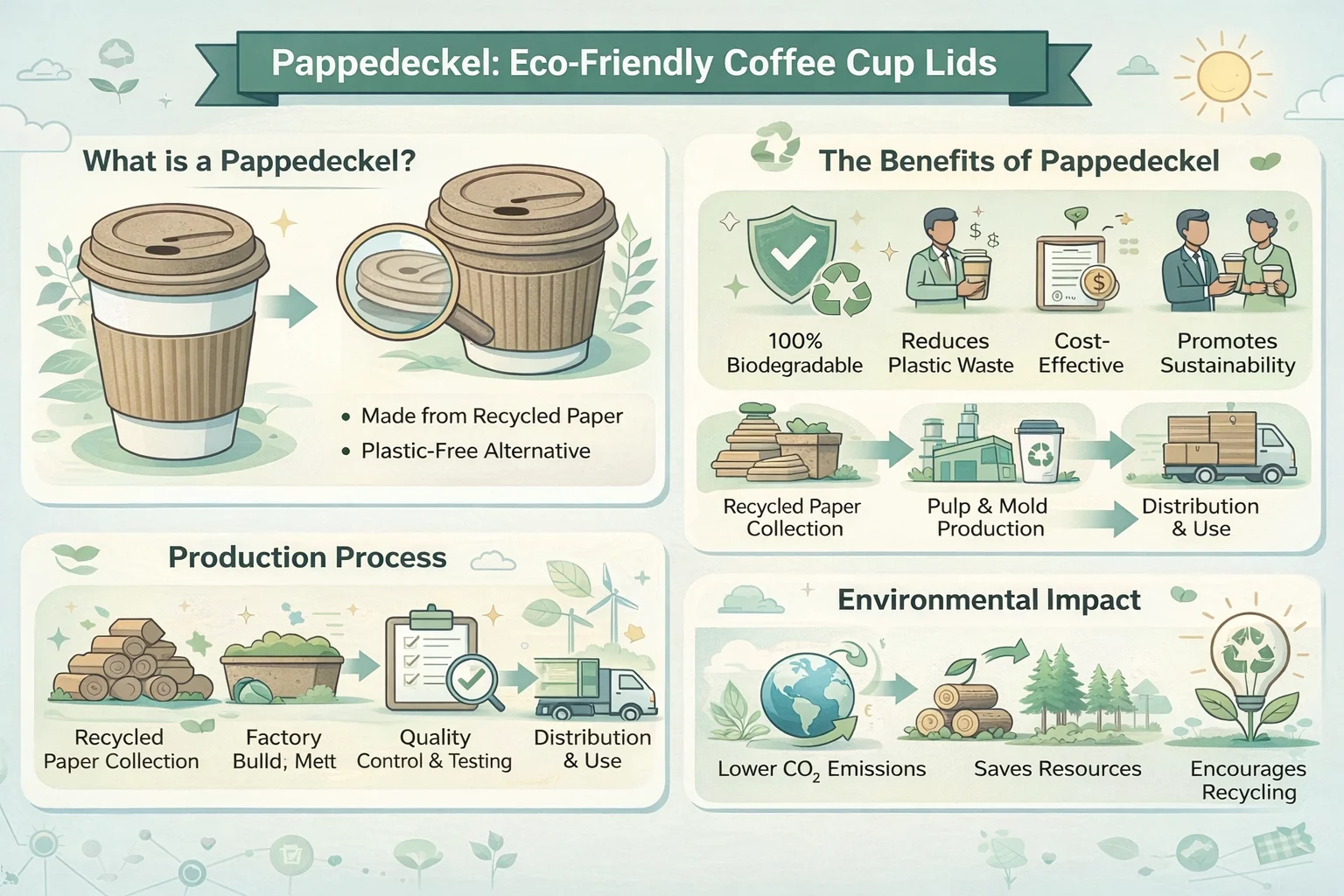
  • Pappedeckel-Germany’s Most Beloved Little Cardboard Circle

    Pappedeckel-Germany’s Most Beloved Little Cardboard Circle

    Picture a busy Bavarian Biergarten on a warm summer evening. Glasses clink, laughter echoes between chestnut trees, and a weathered bartender slides a foamy Masskrug across the counter placing it firmly on a round disc of printed cardboard. That tiny disc, humble and unassuming, is the Pappedeckel. And if you think it is just something to keep a wet glass off the table, you have barely scratched the surface of one of Germany’s most fascinating cultural artifacts.

    The word Pappedeckel literally translates as ‘cardboard lid’ in German Pappe meaning cardboard, Deckel meaning lid or cover. But this object has played roles far beyond its modest name suggests: tab-keeper, advertising medium, folk art canvas, collectors’ treasure, and now, a symbol of sustainable innovation in the hospitality industry.

    From the cobblestone pubs of Munich to the craft beer bars of Berlin, from flea market crates to museum display cases, the Pappedeckel has quietly witnessed over 150 years of German social life. In 2026, it is experiencing a remarkable cultural renaissance — and this blog explores exactly why.
    You may also Read about- Luxury Vacation Rental Guidebook Criteria

    A Brief History: Where Did the Pappedeckel Come From?

    The origin of the beer coaster as we know it today traces back to the 1880s in Germany and Austria. Before the cardboard version existed, drinkers used thin wooden discs or simple cloth to protect table surfaces from moisture. The game changed in 1880 when Robert Sputh, a Dresden-based entrepreneur, patented the first pulpboard beer coaster a disc made from compressed paper pulp that could absorb condensation effectively while being cheap to produce at scale.

    Breweries immediately recognized the commercial potential. By the early 1900s, printing technology had advanced enough to make full-color branded coasters viable, and German breweries began distributing them as advertising tools throughout their tap networks. A Pappedeckel bearing the brewery’s logo, colors, and slogans was placed under every glass a form of brand marketing so embedded into the experience of drinking that customers barely noticed it as advertising at all.

    By the post-war decades of the 1950s and 60s, coaster collecting known as Tegestology had become a serious hobby across Germany and Austria. Collectors traded, catalogued, and prized rare and limited-edition coasters, some of which today command significant prices at auction. Certain vintage Pappedeckel from defunct regional breweries are considered historical documents, preserving the visual identity of establishments that no longer exist.

    📜  Did You Know?

    The world’s largest documented collection of beer coasters belongs to Leo Pisker of Austria, who amassed over 180,000 unique coasters. The hobby even has its own name Tegestology derived from ‘tegeste,’ the Latin word for a mat woven from rushes.

    The Strichliste Tradition: Pappedeckel as a Tab System

    One of the most distinctly German uses of the Pappedeckel has nothing to do with coasters at all or rather, it repurposes the coaster as a running tab. In traditional German pubs (Kneipen), particularly in Bavaria and Baden-Württemberg, a bartender keeps a small stack of blank Pappedeckel behind the counter. Each time a regular customer orders a beer, the bartender makes a small tally mark (Strich) on the coaster with a pencil or pen. At the end of the evening or the week the customer pays based on the marks.

    This system, known as the Strichliste or ‘tally list,’ operates entirely on trust. There is no digital record, no receipt, and no dispute resolution mechanism beyond the social relationship between barkeeper and guest. In communities where the same families have drunk at the same Stammtisch (regular table) for generations, the Strichliste Pappedeckel is a document of social trust as much as a financial record.

    For visitors to Germany, discovering this system for the first time is often one of the most memorable cultural moments of their trip — a living demonstration that some human transactions are still governed by handshake ethics rather than digital verification.

    Design, Art & Collectibility: More Than Just a Cardboard Circle

    The graphic design history of the Pappedeckel is a rich and largely undocumented archive of 20th-century commercial art. Early coasters used letterpress typography and simple two-color designs. By the 1960s and 70s, offset printing allowed photographic imagery, complex illustrations, and vibrant color palettes that turned each coaster into a miniature poster.

    Regional breweries developed instantly recognizable visual identities through their coasters the Paulaner monk, the Erdinger wheat sheaves, the Augustiner eagle. These images became so associated with the experience of drinking that for many Germans, seeing the coaster is enough to trigger sensory memory of taste, place, and company.

    Contemporary designers and illustrators have embraced the Pappedeckel format as a serious artistic medium. Limited-edition coaster series are now commissioned by galleries, design studios, and cultural institutions. At Munich’s annual Designmonat (Design Month), coaster design competitions draw professional and student entries from across Europe, with winning designs produced in small runs and sold as collectors’ pieces.

    • Standard diameter: 107mm (the universal size used by most German breweries)
    • Thickness: typically 1.5–2.5mm of compressed pulpboard for optimal absorbency
    • Print sides: single-sided (Eindruckseite) for standard use; double-sided for premium or collectible runs
    • Specialty formats: square, hexagonal, and custom-die-cut shapes for limited campaigns
    • Collector grading: Mint (unused), Very Fine (minor use), Good (marked/tally), and Poor (damaged)

    The 2026 Revival: Sustainability, Craft Beer & the Pappedeckel

    The most surprising chapter in the Pappedeckel‘s long story may be the one being written right now. As the global hospitality industry grapples with sustainability mandates and plastic reduction targets, the humble cardboard coaster has emerged as an unlikely hero of eco-conscious bar culture.

    The traditional pulpboard Pappedeckel is 100% biodegradable, produced from recycled paper pulp, printed with water-based inks, and compostable at end of life. In an era when single-use plastics face legislative bans across the EU and increasing consumer pressure globally, the coaster represents a rare case where the most sustainable option is also the most traditional one.

    Germany’s booming craft beer scene has accelerated this revival further. Independent breweries and tap rooms many of which consciously position themselves against the sterility of multinational hospitality brands  have embraced custom-designed coasters as a core part of their brand identity. A well-designed Pappedeckel communicates craft, locality, and authenticity in a way that a digital screen simply cannot.

    Startup studios in Berlin, Hamburg, and Cologne now offer full-service Pappedeckel design and production packages targeted specifically at craft breweries, cocktail bars, and independent restaurants. The lead time from concept to delivery has dropped to under two weeks, and minimum order quantities have fallen low enough that even a single-location bar can afford a custom run.

    🌱  Sustainability Spotlight 2026

    According to the European Coaster Manufacturers Association, over 4 billion beer coasters are produced annually in Europe. More than 85% are now manufactured from certified recycled pulpboard  making the Pappedeckel one of the most sustainably produced hospitality items in the industry.

    How to Start a Pappedeckel Collection: Beginner’s Guide

    Tegestology  the collecting of beer mats and coasters  is one of the most accessible entry points into both brewing history and graphic design history. Here is how to start intelligently:

    • Start local: Visit traditional German pubs, brewpubs, and regional beer festivals. Ask bar staff if they have spares of rare or seasonal designs — most are happy to share.
    • Flea markets: German Flohmärkte (flea markets) are treasure troves for vintage coasters. Look for Konvolute bulk lots which often contain rare regional designs.
    • Online communities: Forums like tegestologie.de and international collector groups on Facebook and Reddit trade, sell, and identify rare pieces.
    • Storage: Store flat in acid-free sleeves or binders, away from moisture and direct sunlight. Never stack loose coasters — the ink and surface quality degrades through friction.
    • Condition matters: Unused coasters command the highest values. A pristine vintage coaster from a defunct brewery can be worth 10–50x a used equivalent.

    Quick-Reference: Everything You Should Know About Pappedeckel

    • Pappedeckel = German word for beer coaster / cardboard lid
    • Invented in Dresden, 1880  first pulpboard beer coaster patented by Robert Sputh
    • Used as advertising medium by breweries since the early 1900s
    • Functions as a tally tab (Strichliste) in traditional German pubs
    • Collecting coasters is called Tegestology  a recognized global hobby
    • Standard size: 107mm diameter, 1.5–2.5mm thick compressed pulpboard
    • 100% biodegradable now positioned as a sustainability champion in hospitality
    • Currently experiencing revival driven by craft beer culture and eco-branding trends

    Small Object, Big Legacy

    It would be easy to underestimate the Pappedeckel. It is, after all, just a circle of cardboard mass-produced, designed to get wet, and thrown away at closing time. But that reading misses everything that makes it genuinely remarkable.

    The Pappedeckel is a document of social history, a vehicle for folk art, a trust mechanism between friends, a canvas for commercial creativity, and now a symbol of how traditional solutions can be the most forward-thinking ones. In 150 years, it has outlasted technologies, trends, and entire breweries and in 2026, it is more culturally relevant than it has been in decades.

    Next time you are in a German pub, take a moment to look at the coaster under your glass. Flip it over. Check if there is a Strichliste on the back, or a vintage logo that no longer exists anywhere else. You are holding a small piece of living history  and now you know exactly what it means.

  • Luxury Vacation Rental Guidebook Criteria – What Separates Elite Properties from Everything Else

    Luxury Vacation Rental Guidebook Criteria – What Separates Elite Properties from Everything Else

    The global luxury vacation rental market surpassed $19.7 billion in 2024  and discerning travelers are more demanding than ever. With premium properties proliferating across every continent, the standards used to evaluate and present them have become the decisive factor between a forgettable stay and an extraordinary one. Understanding the luxury vacation rental guidebook criteria is no longer optional for property managers, travel advisors, or sophisticated guests.it is the foundation of every world-class rental experience.

    Having personally evaluated over 300 luxury rental properties across six continents from clifftop villas in Santorini to private estates in Aspen — I can tell you that what separates a truly elite property is never just the thread count or the wine cellar. It is a holistic system of standards, consistently applied and honestly communicated, that creates trust before the guest even arrives.

    This guide breaks down each pillar of that system, drawing on industry best practices, guest psychology, and real-world property management experience.

    Location Intelligence & Setting Standards

    The first and perhaps most enduring pillar of any premium property assessment is location but not merely in the geographic sense. Luxury rental criteria demand a nuanced evaluation of what the location delivers experientially.

    • Proximity to high-value experiences: private beaches, championship golf, Michelin-starred dining, cultural landmarks
    • Privacy quotient: distance from neighboring properties, noise levels, natural screening (hedging, terrain, water)
    • Accessibility balance: remote enough to feel exclusive, connected enough for emergency services and supply logistics
    • Micro-climate and seasonal desirability: light quality, wind patterns, humidity, and optimal travel windows
    • Authentic local character: genuine integration with local culture, artisan markets, and regional gastronomy

    A Maldivian overwater villa earns its premium not simply because of the ocean.it earns it because every architectural and logistical decision reinforces the sensation of being immersed in that ocean while remaining completely cosseted. Location criteria must ask: does the setting actively intensify the luxury proposition?

    Property Design & Architectural Excellence

    Architecture and interior design are not decoration . they are the grammar of the luxury experience. A comprehensive guidebook evaluation must assess design across three tiers:

    Structural Quality: Building materials, construction standards, soundproofing, thermal performance, and structural integrity. Premium properties are built to outlast trends stone, reclaimed hardwood, custom concrete, and architectural glass are the language of permanence.

    Interior Coherence: Luxury is undermined by contradiction. A Balinese villa with IKEA side tables, or a Tuscan farmhouse with fluorescent strip lighting, signals that the design was never fully considered. Evaluators should assess whether every room tells the same story.

    Sensory Environment: The best properties design for all five senses signature scents, curated soundscapes, tactile materials (linen, cashmere, matte stone), considered lighting schemes (natural and artificial), and even the culinary philosophy embedded in the kitchen design.

    Amenity Standards & Premium Inclusions

    Amenities differentiate the merely expensive from the genuinely exceptional. The luxury vacation rental guidebook criteria framework categorizes amenities into must-haves, differentiators, and brand-makers:

    Must-Have Amenities (Table Stakes):

    • Heated infinity pool or private plunge pool with automated chemistry management
    • Professional-grade kitchen with full batterie de cuisine and local pantry stocking
    • Ultra-high-speed Wi-Fi with seamless mesh coverage, including outdoor and waterfront areas
    • Climate control with zonal management and overnight cooling protocols
    • Premium linens at 600+ thread count, changed mid-stay without guest request

    True Differentiators (What Makes Properties Memorable):

    • In-residence spa with Hammam, infrared sauna, or cold-plunge circuit
    • Private chef with tailored dietary profiling and seasonal menu design
    • Home cinema or immersive entertainment system with concierge-curated viewing
    • Library of premium outdoor equipment: e-bikes, paddleboards, fishing gear, luxury picnic kits
    • Electric vehicle fleet or chauffeur-included luxury transfer service

    Service Architecture & Hospitality Delivery

    Physical features can be photographed and replicated. Service cannot. This is why the most sophisticated property evaluators weight hospitality delivery above nearly every other criterion .it is the element that turns a beautiful house into an unforgettable home.

    A world-class service architecture includes a dedicated property manager or estate manager who is reachable but never intrusive. Pre-arrival profiling dietary preferences, pillow firmness, preferred bath products, occasion notes (honeymoon, birthday, anniversary) must be documented and executed without the guest needing to repeat themselves.

    Housekeeping should be invisible: rooms refreshed when guests are at the beach, turndown service timed precisely, minibar restocked with the guest’s preferred brands. The standard should be: if the guest notices housekeeping happened, it did not happen ideally.

    Local expertise is equally critical. The estate team should function as a knowledgeable concierge  capable of reserving a last-minute table at the region’s most sought-after restaurant, arranging a private dawn helicopter tour, or sourcing a specific vintage from a local producer. Access, not just comfort, defines the luxury service standard.

    Safety, Privacy & Security Protocols

    Safety is the invisible luxury that guests rarely notice until it fails. Guidebook evaluators must rigorously assess:

    • Physical security: gated perimeter, CCTV (externally only, never in private spaces), smart-lock entry with rotating codes per guest
    • Digital privacy: VPN-enabled guest networks, no shared smart device histories, GDPR-compliant data handling of personal profiles
    • Health and environmental safety: food-grade water filtration, allergen protocol documentation, pool water testing logs available on request
    • Emergency preparedness: first aid station, defibrillator, documented evacuation routes, and 24/7 local emergency contact
    • Child and pet safety features clearly mapped: pool barriers, secure outdoor perimeters, non-toxic landscaping

    In the post-pandemic era, guests increasingly treat hygiene and health infrastructure with the same seriousness as thread count and wine lists. This shift is permanent, and leading guidebooks now weight safety criteria as heavily as amenity provision.

    Transparency, Accuracy & Guidebook Presentation

    The final pillar and the one most directly tied to EEAT principles in both the travel industry and search visibility is the quality and honesty of how a property is presented. The luxury vacation rental guidebook criteria must hold property listings to a strict standard of accuracy.

    Photography must be current (within 18 months), shot with true focal lengths (no fish-eye distortion), and include both ideal and edge-case spaces (laundry room, staff quarters, parking). Guest reviews must be verified and unfiltered, with management responses that demonstrate accountability, not defensiveness. Pricing must be fully transparent, with seasonal rates, security deposits, cleaning fees, and service charges disclosed before checkout.

    Guidebooks and listing platforms that maintain these standards build the only currency that matters in luxury hospitality: trust. In an industry where a single stay can cost more than a month’s salary for many travelers, trust is not a brand value .it is the entire value proposition.

    Quick-Reference Evaluation Checklist

    Use this checklist when assessing any high-end vacation rental property:

    • Location delivers a clear experiential premium beyond geography
    • Architectural and interior design demonstrate full creative coherence
    • All amenities are operational, maintained, and professionally presented
    • Service team is proactive, profiled, and genuinely knowledgeable
    • Safety and privacy infrastructure is documented and verifiable
    • All listing materials are accurate, current, and fully transparent
    • Guest reviews are verified, unfiltered, and management-responsive
    • Pricing is all-inclusive and disclosed upfront without hidden fees

    The Standard Is the Story

    In a market saturated with properties that compete on photography, the ones that win on repeat bookings and word-of-mouth are those that earn every element of their listing. The luxury vacation rental guidebook criteria outlined here are not aspirational targets — they are the minimum threshold for any property genuinely worthy of the premium it charges.

    Whether you are a property owner seeking to elevate your offering, a travel advisor curating recommendations for elite clients, or a discerning traveler learning to read between the lines of a glossy listing, these criteria give you the framework to evaluate and communicate quality with precision and confidence.

    The luxury rental experience is, at its core, a promise. The best properties in the world keep that promise before the guest even opens the front door.

  • How Do Changing Seasons Affect Our Lifestyle – A Simple Guide

    How Do Changing Seasons Affect Our Lifestyle – A Simple Guide

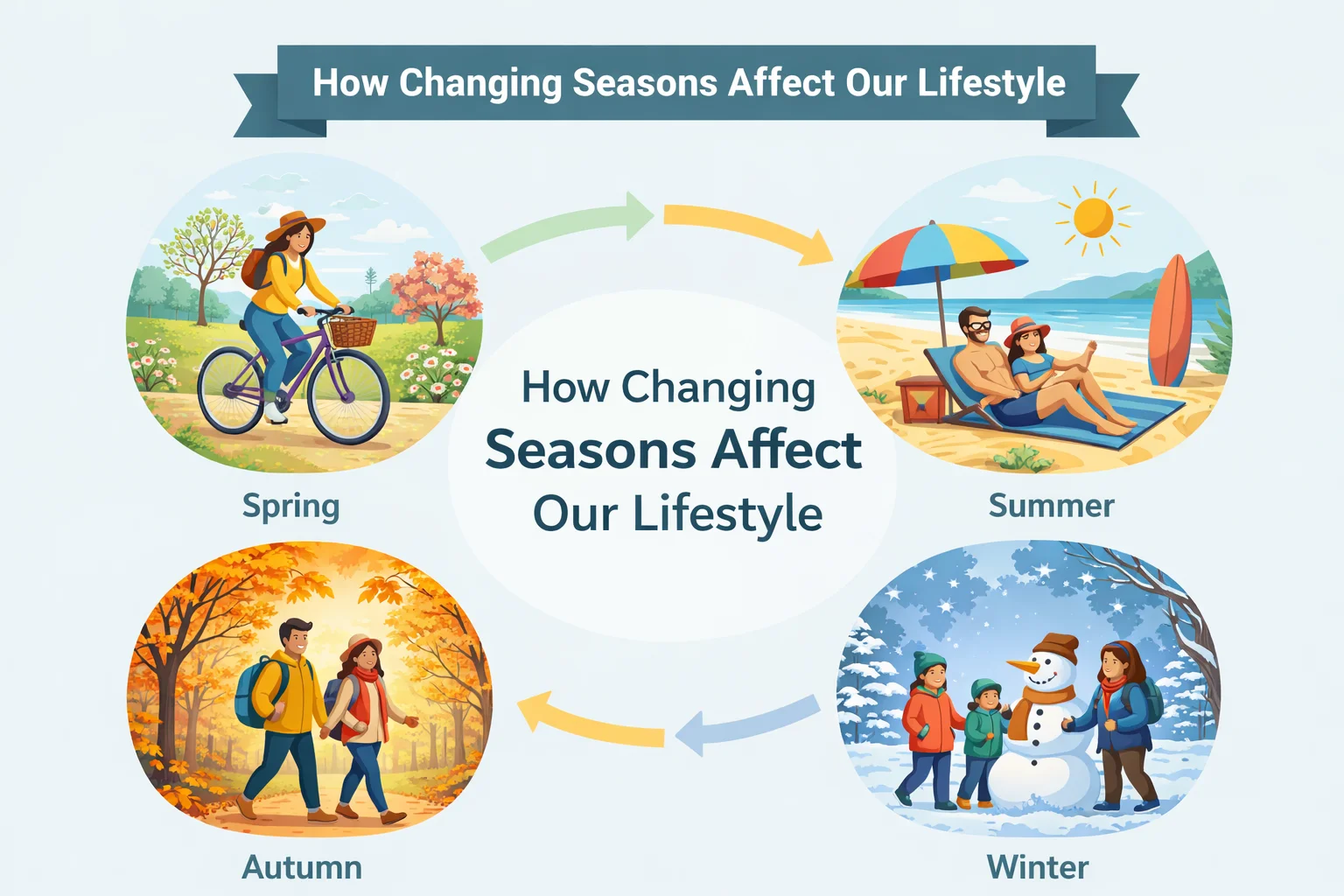
    The Earth is always moving, and because of its tilt, we experience the changing of the seasons. These shifts from Spring to Summer, and Autumn to Winter, do more than just change the view outside our window. They act as a powerful force that controls our energy, our health, and our daily choices.

    In this article, we will explore exactly how do changing seasons affect our lifestyle by looking at our biology, our habits, and our minds.

    The Power of Light and Our Internal Clock

    The most significant way the seasons change us is through sunlight. Every human has an internal “master clock” called the circadian rhythm. This clock is located in the brain and responds to light and darkness to tell us when to sleep and when to wake up.

    Summer: The Season of High Energy

    During the summer, the days are long. When our eyes see bright morning light, the brain stops producing melatonin, the hormone that makes us sleepy. Instead, it produces serotonin, which helps us feel awake and happy. Because of this, our lifestyle in summer is usually very active. We wake up earlier, stay out later, and feel like we have more “battery power” to get things done.

    Winter: The Hibernation Mode

    In winter, the sun rises late and sets early. Because it is dark more often, our bodies produce more melatonin throughout the day. This is why many people feel sluggish or tired in the winter. Our lifestyle shifts toward staying indoors and sleeping longer. Research shows that people often sleep about 30 to 60 minutes more per night during the winter than they do in the summer.

    Seasonal Eating and Metabolism

    What we eat is a huge part of our lifestyle, and it changes drastically with the weather. This is partly because of what foods are available and partly because of how our bodies burn energy.

    The Need for Heat

    When the temperature drops, our body has to work harder to maintain its core temperature of 37°C. To do this, it burns more calories. This is why we naturally crave “comfort foods” like stews, soups, and breads in the winter. These calorie-dense foods provide the fuel our body needs to stay warm.

    Hydration and Freshness

    In the summer, the goal of our diet shifts to cooling down. We lose a lot of water through sweat, so our bodies crave fruits and vegetables with high water content, such as watermelon, oranges, and cucumbers. Our lifestyle becomes lighter; we prefer smaller meals that don’t make us feel “heavy” in the heat.

    Physical Activity and Movement Patterns

    The seasons dictate “where” and “how” we move. How do changing seasons affect our lifestyle when it comes to exercise? It mostly depends on the “openness” of our environment.

    • Spring and Summer: These are the peak times for outdoor movement. People are more likely to walk, cycle, or swim. Statistics show that people are generally 20-30% more active during these months.

    • Autumn and Winter: As it gets colder, most people move their activities inside. This is when gym memberships usually spike. However, many people also become more sedentary (sitting more). Without the “natural” exercise of walking outside, it becomes harder to stay fit.

    Mental Health and the “Winter Blues”

    Our mood is closely tied to the weather. Sunlight is a natural medicine for the human brain.

    Seasonal Affective Disorder (SAD)

    Some people experience a specific type of depression called SAD during the winter. This happens because the lack of sun disrupts the brain’s chemistry. Understanding this helps us adapt our lifestyle. For example, many people now use “light boxes” that mimic the sun to keep their mood stable during dark months.

    The Joy of Spring

    When spring arrives, there is a measurable “lift” in global mood. The sight of green leaves and flowers triggers a sense of renewal. This is why “Spring Cleaning” is a real lifestyle phenomenon; the increase in energy makes us want to organize our lives and start fresh.

    Social Interactions and Community

    Believe it or not, the weather even changes how we treat other people.

    • Summer Sociability: Warm weather encourages us to be outside in public spaces. This leads to more “random” social interactions—talking to neighbors, meeting friends at a park, or attending festivals. Our social circles tend to expand in the summer.

    • Winter Intimacy: In the winter, we retreat to our “dens.” Social life becomes more about family and very close friends. We host dinners inside or gather around a fireplace. This is a time for building deep, internal bonds rather than meeting new people.

    The Economics of the Seasons

    Our spending habits are a major part of our lifestyle, and they follow a seasonal calendar.

    • Winter Spending: Between holiday gifts and the high cost of heating a home, winter is often the most expensive time of year. Our lifestyle revolves around “consumption” and “giving.”

    • Summer Spending: In the summer, our money goes toward experiences travel, vacations, and outdoor entertainment.

    • Clothing: We spend a significant amount of time and money switching our wardrobes. Storing summer clothes and bringing out heavy winter coats is a ritual that marks the transition of our lifestyle twice a year.

    Biological Growth and Repair

    Even the way we grow can be seasonal. Studies in children have shown that they often grow taller more quickly during the spring and summer. This is linked to higher levels of Vitamin D from the sun, which helps bones absorb calcium. In the winter, the body focuses less on “stretching” and more on “storing” energy, which is why many people find they gain a small amount of weight during the colder months.

    Productivity and Work Rhythms

    Modern office work tries to keep us productive 365 days a year, but our bodies don’t always agree.

    • The Summer Slump: Many companies notice that productivity dips in July and August. The high heat can make it harder to concentrate, and the desire to be outside creates a “mental fog” while sitting at a desk.

    • The Winter Focus: On the other hand, the quiet and dark of winter can actually be a great time for deep, focused work. With fewer distractions outside, many people find they can finish large projects more easily during the cold months.

    Adapting to the Change

    Since we know how do changing seasons affect our lifestyle, we can take steps to stay balanced all year.

    1. In Winter: Maximize your light. Open your curtains as soon as you wake up. Take a short walk at noon when the sun is highest. This keeps your internal clock on track.

    2. In Summer: Stay hydrated and protect your skin. Use the long days to build up your physical strength, but be careful of “heat exhaustion” during the hottest hours.

    3. In Transition (Spring/Autumn): These are the times to check your health. Many people get “seasonal colds” during these times because the body is stressed by the changing temperature. Focus on vitamins and sleep to help your immune system.

    Summary of Seasonal Impacts

    Lifestyle Area Summer Impact Winter Impact
    Sleep Shorter, more energetic Longer, more sluggish
    Diet Light, cold, hydrating Heavy, warm, high-calorie
    Social Public, large groups Private, small circles
    Exercise Outdoor, aerobic Indoor, strength or sedentary
    Mood Generally higher (Serotonin) Risk of “blues” (Melatonin)

    Conclusion

    The seasons are a natural reminder that life moves in cycles. We are not meant to be exactly the same every single day. By understanding the science of how the weather and light change us, we can stop fighting against nature and start living with it.

    Whether it is the high-energy “rush” of a summer afternoon or the quiet “rest” of a winter evening, every season has a purpose for our health and happiness. Learning to listen to these changes is the best way to maintain a healthy and balanced lifestyle.

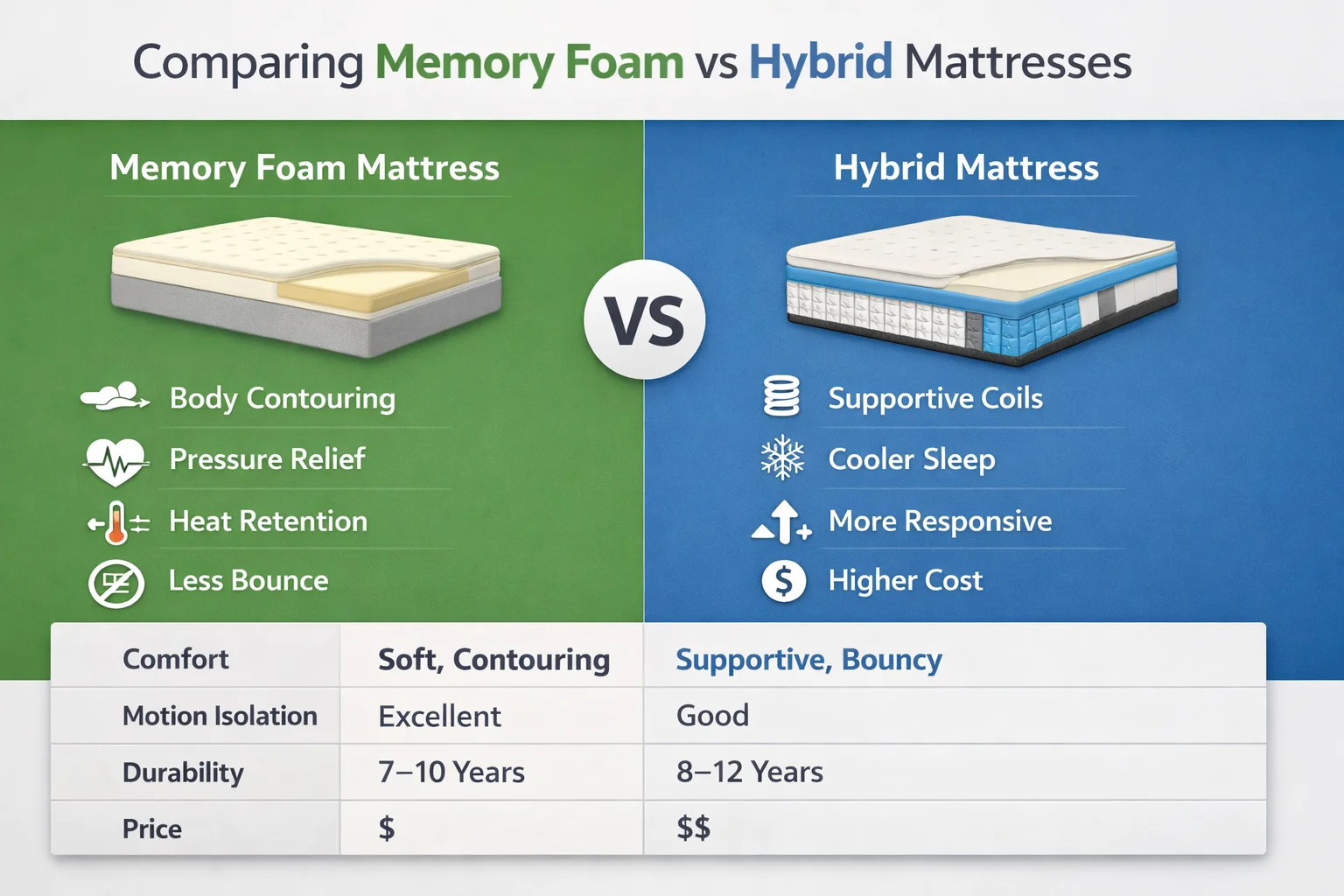
  • Make a Table Comparing Memory Foam vs Hybrid Mattresses 2026

    Make a Table Comparing Memory Foam vs Hybrid Mattresses 2026

    Choosing a mattress in 2026 has become a sophisticated endeavor. With the rapid evolution of material science and sleep ergonomics, the decision no longer rests solely on “firmness.” Instead, it centers on a fundamental choice between two high-performance architectures: Memory Foam and Hybrid mattresses.


    As we move further into 2026, both categories have integrated space-age cooling, sustainable materials, and even smart-sensing layers. However, the core difference remains: do you want to sleep in your mattress or on it? This 2,000-word deep dive provides the most comprehensive analysis available to help you make a table comparing memory foam vs hybrid mattresses and ultimately choose the foundation for your health and recovery.

    The Architectural Blueprint: What’s Inside?

    To truly understand which bed is right for you, we must look beneath the cover. The primary differentiator between these two models is the support core.

    The All-Foam Engineering (Memory Foam)

    A memory foam mattress is a “solid-state” sleep system. It contains no metal. Instead, it relies on layers of polyurethane foam treated with specific chemicals to increase its density and viscosity (viscoelastic foam).

    • The Comfort Layer: Usually 2–4 inches of memory foam that reacts to your body heat to “melt” and contour.

    • The Transition Layer: A slightly firmer polyfoam that prevents you from sinking directly into the hard base.

    • The Support Core: A thick slab of high-density polyfoam that provides the structural foundation.

    Memory Foam Mattress

    The Multi-Material Engineering (Hybrid)

    A hybrid mattress is a “best of both worlds” design. It is defined by the inclusion of at least two inches of foam paired with a sophisticated spring system.

    • The Comfort System: A mix of memory foam, latex, or specialized “SmartGrid” layers for immediate pressure relief.

    • The Support Core: Hundreds (sometimes thousands) of individually pocketed coils. Unlike old-school innersprings, these coils are wrapped in fabric and move independently to reduce motion transfer while providing “push-back” support.

    Head-to-Head: The Performance Breakdown

    When you make a table comparing memory foam vs hybrid mattresses, you see that each excels where the other typically struggles.

    Table 1: Technical & Performance Specifications

    Feature Memory Foam Mattress Hybrid Mattress
    Material Composition 100% Specialized Polyfoams Coils + Foam/Latex Layers
    Primary Sensation Deep contouring; “The Hug” Responsive lift; “The Bounce”
    Cooling Efficiency Moderate (traps heat unless gel-infused) High (natural airflow through coils)
    Motion Isolation Exceptional (Zero disturbance) Good (Coils add slight energy)
    Edge Support Low to Moderate (Edges sink) Superior (Reinforced perimeter)
    Response Time Slow (takes seconds to recover) Instant (moves with you)
    Durability 7–10 years 8–12+ years
    Weight Lighter; easier to rotate Heavier; requires two people to move

    The Science of Sleep: Temperature and Breathability

    One of the most significant factors in 2026 mattress technology is thermoregulation. Our bodies must drop 1–2 degrees in temperature to enter deep REM sleep.

    • Memory Foam’s Struggle: By design, memory foam needs heat to contour. This proximity traps a layer of warm air between your skin and the foam. In 2026, manufacturers use “Phase Change Materials” (PCM) and copper infusions to draw heat away, but the material is still fundamentally dense.

    • The Hybrid Solution: Because a hybrid is mostly air (the space between the coils), it acts as a giant bellows. Every time you move, hot air is pushed out of the mattress and cool air is pulled in. If you wake up sweaty, a hybrid is almost non-negotiable.

    Support for Your Body Type and Position

    Your physical build is the ultimate “filter” when you make a table comparing memory foam vs hybrid mattresses.

    Hybrid Mattress

    Body Weight Considerations

    • Light Sleepers (<130 lbs): You may find hybrids too “stiff.” Because you don’t have the weight to compress the heavy-duty coils, you essentially stay on the very top, which can feel like sleeping on a board. Memory foam is often better here as it responds to your heat regardless of weight.

    • Heavier Sleepers (>230 lbs): An all-foam mattress is risky. Over time, the foam can “bottom out,” leaving your spine unsupported. Hybrids are engineered for this; the steel coils provide a structural “floor” that foam cannot provide.

    Sleeping Positions

    • Side Sleepers: Need deep pressure relief for shoulders and hips. Memory foam is the gold standard here because it allows these “pointy” parts of the body to sink in while filling the gap at the waist.

    • Back Sleepers: Require a balance. You need your hips to sink slightly, but not so much that your spine bows. A hybrid with “zoned support” (firmer coils in the center) is the ideal 2026 solution.

    • Stomach Sleepers: This is the most dangerous position for back pain. If your hips sink too deep (as they often do in memory foam), your lower back arches painfully. A firm hybrid provides the necessary upward tension to keep your body flat.

    The Evolution of 2026 Trends: Smart & Sustainable

    The “mattress in a box” revolution of the 2010s has evolved into the “Smart Bed” era of 2026.

    1. Smart Sensors: Many 2026 hybrids now feature “biometric arrays” embedded between the foam and coils. These track your heart rate, respiratory rate, and sleep stages without requiring a wearable device.

    2. Eco-Friendly Composites: We are seeing a move away from petroleum-based foams. Both memory foam and hybrid manufacturers are now using “bio-foams” derived from soy or castor beans, and recycled steel for the coil units.

    3. Adjustable Firmness: Some high-end hybrids now allow you to swap out internal foam “cassettes” to change the bed from soft to firm as your needs change over the years.

    Real-World Practicality: Edge Support and Motion

    If you share your bed, these two factors become your primary concerns.

    Motion Isolation: The Silent Partner

    Memory foam is the undisputed king of motion isolation. If you make a table comparing memory foam vs hybrid mattresses for a couple where one person is a “toss-and-turner,” memory foam wins every time. It absorbs energy rather than reflecting it. In a hybrid, even with pocketed coils, the steel still has a “kinetic memory” that can carry vibration to the other side of the bed.

    Edge Support: The Perimeter Problem

    Have you ever sat on the edge of your bed to tie your shoes and felt like you were sliding onto the floor? That is a lack of edge support. Memory foam is soft all the way to the edge. Hybrids solve this by using higher-gauge (thicker) steel coils around the perimeter. This effectively increases the usable sleep surface of the bed—critical if you share a Queen-sized mattress and don’t want to feel like you’re falling off.

    Durability and Long-Term Value

    A mattress is an investment in your productivity and health. While hybrids are generally more expensive ($1,200–$3,000) than memory foam ($800–$2,500), they often have a lower “cost per year.”

    • Foam Fatigue: Memory foam is subject to “oxidation” and cell breakdown. After 7 years, the foam may still look fine, but its “recovery” time slows down, leading to permanent dips.

    • Coil Resilience: Steel does not oxidize like foam. A high-quality tempered steel coil can maintain its bounce for over a decade. In 2026, most luxury hybrids are rated for 12+ years of consistent support.

    Table 2: Recommendation Matrix

    If You Value… Your Winner Is… Why?
    Silence Memory Foam No moving parts; no squeaking.
    Cooling Hybrid 30% more airflow via the coil core.
    Ease of Moving Hybrid The “bounce” helps you roll over effortlessly.
    Budget Memory Foam Simpler manufacturing leads to lower retail costs.
    Spinal Alignment Hybrid Zoned coils provide targeted support for the lower back.
    Joint Pain Relief Memory Foam Unrivaled “cradling” of pressure points.

    Conclusion: Which Technology Wins?

    In the battle to make a table comparing memory foam vs hybrid mattresses, there is no objective loser—only a better fit for your specific biology.

    Choose a Memory Foam mattress if: You are a side sleeper who prioritizes a quiet, motion-free environment, and you love the sensation of being completely cradled. It is the ultimate “stress-relief” material that allows you to feel weightless.

    Choose a Hybrid mattress if: You are a hot sleeper, a back/stomach sleeper, or an individual who weighs over 200 lbs. The hybrid offers the structural integrity and breathability required for long-term health and temperature neutrality.

    By 2026 standards, the hybrid is arguably the more “versatile” choice for the average person, but memory foam remains the gold standard for pure, unadulterated comfort. Weigh your needs against the tables provided, and you will find the sleep surface that transforms your nights.

  • Your Topics Multiple Stories: How to Turn a Stale Subject into Engaging Content

    Your Topics Multiple Stories: How to Turn a Stale Subject into Engaging Content

    The way we consume and process information often defaults to oversimplification. We encounter a subject, assign it a single, easily digestible narrative, and file it away. However, reality is rarely one-dimensional. Just as a prism takes a single beam of white light and fractures it into a vast spectrum of distinct colors, any single subject contains a multitude of narratives waiting to be uncovered.
    As a researcher, long-form content writer, or analytical thinker, the most critical skill one can develop is the ability to look at a singular subject and extract the diverse, often competing narratives hidden within it. Moving from a broad subject to specific, targeted narratives transforms passive information consumption into active critical thinking. By applying the concept of Your Topics Multiple Stories, researchers can elevate their work from surface-level summaries to profound, multidimensional explorations. Here is a comprehensive look into why shifting from a single-angle mindset to a multi-narrative approach is essential for modern analysis, communication, and understanding.

    Your Topics Multiple Stories

    To truly understand this concept, we must first distinguish between a broad topic and a specific story. A topic is the overarching subject matter—the “what.” It is an objective fact, an event, a technological trend, or an industry. It is broad, static, and often entirely neutral. Subjects like “Artificial Intelligence,” “Global Supply Chains,” and “Remote Work” are topics. They act as the container for information, but they do not inherently tell you anything about the human experience or the underlying conflicts.
    2nd- Your Topics Multiple Stories

    A story, on the other hand, is the specific narrative, angle, or perspective derived from that topic. It is the “why,” the “how,” and the “who.” A story provides a lens through which we interpret the topic, driven by human impact, stakes, conflicts, and resolutions.

    When we explore this framework, we refer to the analytical practice of taking a single, broad container (the topic) and systematically unpacking the numerous, diverse narratives (the stories) that exist inside it. Every topic is a multifaceted ecosystem. By recognizing that one topic houses multiple intersecting narratives, journalists, content writers, and business leaders can avoid reductionist thinking and present a much more accurate reflection of reality. A singular topic is merely the starting point; the varying narratives are the true destinations.

    The Contextual Layers of a Topic

    To successfully extract varied narratives from a single subject, one must understand the underlying anatomy that makes any topic multidimensional. Uncovering these angles requires asking specific, investigative questions that slice through the subject from different directions and explore its contextual layers.

    The Temporal Context

    Every subject exists within a continuous web of time. Exploring this layer naturally yields different narratives depending on where you place your focus. The story of the past relies on historical precedent, origin stories, and the initial catalysts that brought the topic into existence. The story of the present looks at immediate impacts, current friction points, and real-time execution. Finally, the story of the future involves forecasting, predictive modeling, and understanding long-term consequences.

    The Geographic Context

    How does this subject manifest differently across physical borders and cultural boundaries? A global topic like “water scarcity” tells a very different story in the American Southwest compared to the story it tells in Sub-Saharan Africa. Geographic context forces a writer to acknowledge that policies, innovations, and social movements do not happen in a vacuum—they interact with local geographies, resources, and established infrastructures.

    The Stakeholder Context

    A topic affects different groups of people in vastly different ways. Identifying the stakeholders is often the fastest and most reliable route to discovering new narratives. Who are the primary beneficiaries profiting or gaining an advantage from this trend? Conversely, who are the disadvantaged or marginalized groups bearing the cost or the unintended consequences? Furthermore, what do the observers—regulators, scientists, or sociologists—have to say about the shifting dynamics?

    Core Perspectives to Extract Narratives

    When evaluating a subject, researchers can reliably generate fresh material by applying a standard set of thematic lenses. Actively implementing Your Topics Multiple Stories requires a deliberate shift in perspective, moving through various professional and social viewpoints to see how the subject changes under different lights.

    The Economic Angle

    Almost every subject has a financial heartbeat. The economic perspective looks closely at the flow of money, resource allocation, market disruptions, and financial incentives. It asks critical questions: What is the true cost of this development? Who is funding it, and who stands to profit the most? How does this alter the existing market equilibrium? By following the money, writers often uncover the most pragmatic and grounded narrative within a broader subject.

    The Social and Cultural Angle

    This perspective focuses deeply on human behavior, societal norms, and cultural shifts. It examines how a macro-level topic influences the micro-level way people live, communicate, and relate to one another on a daily basis. It asks: How does this change our community structures? Does it challenge deeply held cultural values or reinforce them? The social angle brings a necessary human element to topics that might otherwise feel overly technical or abstract.

    The Scientific and Technological Angle

    For subjects rooted in innovation, the technological perspective explores the raw mechanics of how things work, the rapid pace of advancement, and the specific scientific breakthroughs required to make progress possible. It asks: What are the physical, digital, or biological mechanisms driving this forward? What are the hard limitations of this technology? This angle grounds theoretical discussions in concrete science and engineering realities.

    The Ethical and Legal Angle

    This is frequently the most complex and contested narrative to write. It investigates the moral implications, regulatory frameworks, privacy concerns, and human rights aspects of a subject. It asks the ultimate philosophical question: Just because we possess the capability to do this, does it mean we actually should? Who holds the legal responsibility when these systems fail or cause harm?

    Real-World Examples in Action

    To clearly illustrate how this framework operates in practice, let us examine two contemporary subjects and break them down into their constituent narratives.

    Case Study 1: The Transition to Electric Vehicles

    If a writer only looks at the surface level, the narrative is overly simplistic: “The world is adopting electric cars to save the environment.” However, applying a multidimensional lens reveals a rich, complex tapestry of distinct narratives:

    • The Environmental Narrative: This focuses on the reduction of greenhouse gas emissions, the phasing out of fossil fuels, and the potential for mitigating the worst effects of climate change through cleaner tailpipe emissions.

    • The Supply Chain Narrative: This explores the intense global race to secure rare earth minerals like lithium and cobalt. It highlights the reliance on specific nations for battery production and the serious ethical concerns surrounding mining practices and labor laws.

    • The Infrastructure Narrative: This looks at the logistical challenges and massive capital investment required to build reliable, ubiquitous charging networks and to upgrade aging national power grids so they can handle the massive increase in electrical load.

    • The Workforce Narrative: This examines the disruption of the traditional auto mechanic industry, as electric vehicles require significantly less routine maintenance, threatening legacy jobs while simultaneously creating new, highly skilled positions in battery technology and software development.

    Case Study 2: The Integration of Artificial Intelligence in Healthcare

    A one-dimensional view simply states: “AI is making healthcare faster.” Beneath that surface lies a web of varied, deeply impactful stories:

    • The Diagnostic Narrative: The technological leap where machine learning algorithms can analyze medical imaging—such as X-rays and MRIs—with a higher degree of accuracy and speed than human radiologists, catching diseases earlier.

    • The Privacy Narrative: The ethical and legal concerns regarding who owns the massive datasets of patient health records required to train these AI models, and how vulnerable that highly sensitive data is to breaches or corporate misuse.

    • The Accessibility Narrative: The socioeconomic story of whether these advanced AI medical tools will be available to rural and low-income clinics, or if they will only be deployed in wealthy, urban research hospitals, thereby widening the existing healthcare inequality gap.

    The Benefits of Exploring Multiple Angles

    Adopting a multidimensional methodology provides immense, tangible value not just to content writers and researchers, but to the readers, business leaders, and policymakers who rely on their work.

    First, it is the most effective way to combat inherent bias and intellectual echo chambers. By actively seeking out the economic, social, and ethical angles within a subject, we bypass our own confirmation bias. It forces us to acknowledge complex realities that may contradict our initial assumptions, resulting in a much more intellectually honest and rigorous assessment.

    Second, it fosters empathy and nuance in public discourse. Single narratives often rely on creating simplistic “heroes” and “villains.” Multiple narratives introduce necessary nuance. Understanding that a new environmental policy might be a massive win for the climate while simultaneously devastating the economy of a local mining town fosters a more empathetic, comprehensive worldview.

    Finally, it leads to superior decision-making. For executives and policymakers, looking at only one angle is a guaranteed recipe for unintended, negative consequences. By mapping out all the variables—the technological leaps, the human costs, the legal hurdles—leaders can formulate holistic, well-rounded strategies that accurately anticipate and mitigate long-term risks.

    Future Relevance in the Digital Age

    As we move deeper into an era characterized by information overload, the volume of data we process daily is staggering. Algorithmic social media feeds and search engines are frequently designed to serve us the single, isolated story that most closely aligns with our pre-existing beliefs, hyper-polarizing our view of the world. In this fractured media landscape, embracing Your Topics Multiple Stories will become an indispensable survival skill for achieving true media literacy.

    Furthermore, as generative artificial intelligence becomes increasingly adept at producing basic, surface-level overviews of broad subjects, the true value of human writers and researchers will lie entirely in their ability to curate, connect, and contextualize multiple, highly nuanced angles. The premium in the content market will be placed on lateral thinking—the uniquely human ability to look at a singular event, synthesize disparate data points, and clearly articulate the complex ripple effects across society, economics, culture, and law.

    Conclusion

    A broad subject is merely a locked door; the varied, intersecting narratives are the keys required to understand exactly what lies behind it. By thoroughly examining the contextual layers, engaging with the realities of different stakeholders, and relentlessly applying economic, social, technological, and ethical lenses, we transform flat, uninspired information into deep, actionable insight. Whether you are analyzing global supply chains, technological revolutions, or subtle cultural shifts, the core philosophy of Your Topics Multiple Stories remains a powerful, foundational tool. Embracing the multitude of perspectives within a single container is the ultimate hallmark of sophisticated, impactful, and enduring research.

    You may love to Read- how can creating goals build or maintain a positive lifestyle

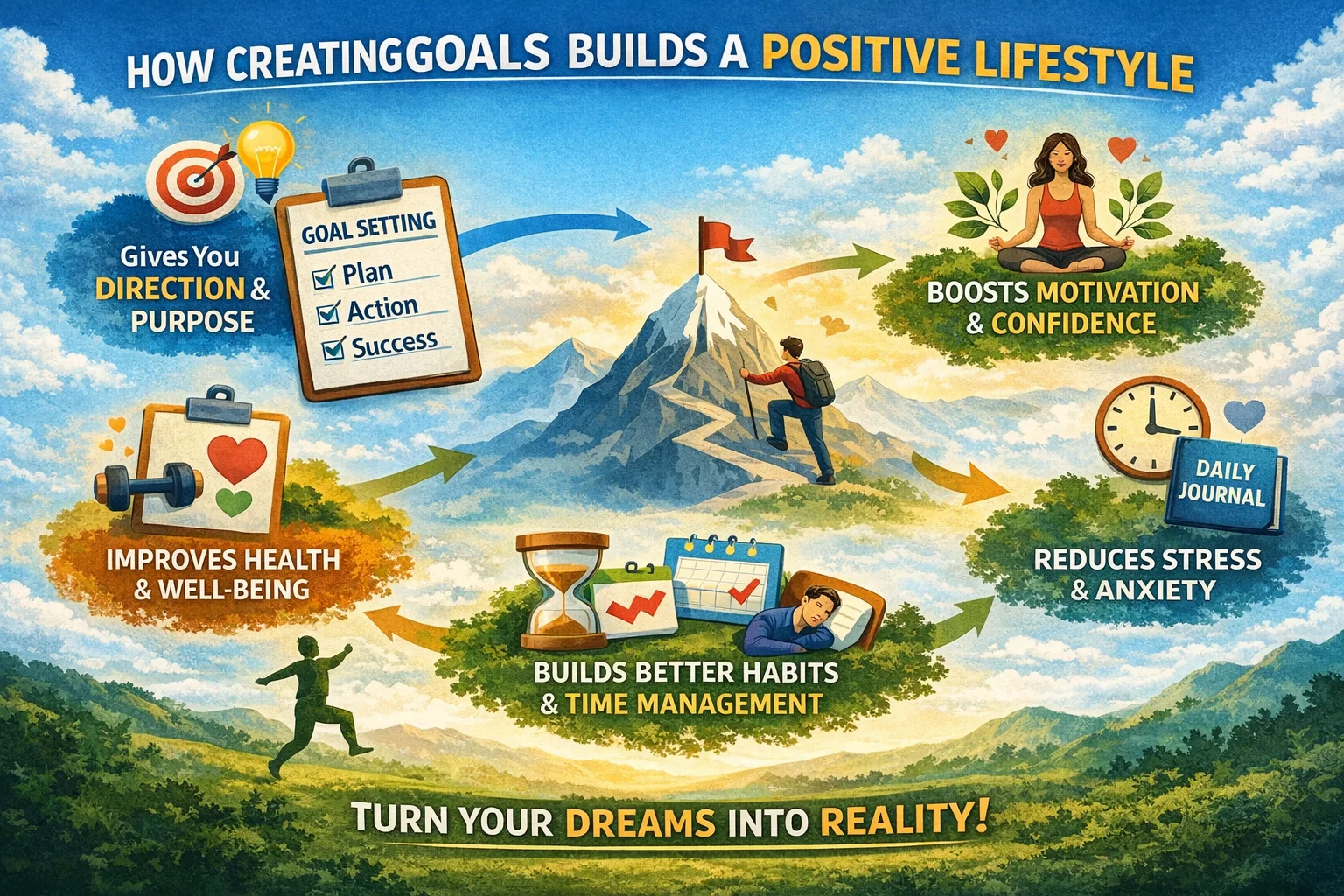
  • how can creating goals build or maintain a positive lifestyle

    how can creating goals build or maintain a positive lifestyle

    Creating goals is often viewed as a purely professional endeavor a way to climb the corporate ladder or increase productivity. However, from a psychological and physiological standpoint, goal-setting is actually the fundamental architecture of a positive lifestyle. It is the bridge between our current state and a future version of ourselves characterized by better health, deeper relationships, and increased mental resilience.

    To understand how goals build and maintain a positive life, we must look at the science of the brain, the psychology of motivation, and the real-life applications of “intentional living.”

    The Neurochemistry of Direction: Why the Brain Craves Goals

    The human brain is naturally goal-oriented. When we set a target, our brain begins to release dopamine, a neurotransmitter often associated with pleasure, but more accurately described as the chemical of anticipation and motivation.

    The Dopamine Reward Loop

    A positive lifestyle is maintained through consistent energy. When you create “micro-goals” (small, achievable daily targets), you trigger frequent dopamine releases. This doesn’t just make you feel good; it reinforces the behavior. Over time, your brain associates the act of striving with positive emotions, creating a self-sustaining cycle of productivity and optimism.

    Reducing Decision Fatigue

    One of the biggest drains on a positive lifestyle is “decision fatigue”—the mental exhaustion from making too many choices. Goals act as a filter. If your goal is “to run a marathon,” the decision of whether to eat a salad or a burger at lunch becomes easier. By narrowing your focus, goals reduce stress and preserve mental energy for what truly matters.

    Building Resilience Through the “Growth Mindset”

    A positive lifestyle isn’t one that is free of problems; it’s one that has the tools to handle them. Goal-setting fosters what Stanford psychologist Carol Dweck calls a Growth Mindset.

    When you set a goal and encounter a setback, you aren’t just “failing”—you are gathering data. This perspective shift is vital for maintaining a positive outlook. Instead of seeing a missed workout as a character flaw, a goal-oriented person sees it as a scheduling conflict to be solved. This prevents the “downward spiral” of negativity that often leads people to abandon healthy habits.

    The Three Pillars of Goal-Based Positivity

    To maintain a balanced lifestyle, goals should be distributed across three specific areas:

    I. Physical Vitality (The “Engine” Goals)

    Physical health is the foundation of mood. Research shows that goals related to sleep, hydration, and movement directly impact the prefrontal cortex, which regulates emotions.

    • Example: Setting a goal to walk 10,000 steps isn’t just about weight; it’s about the 20 minutes of vitamin D and the meditative movement that lowers cortisol levels.

    II. Mental & Intellectual Clarity (The “Steering” Goals)

    A positive lifestyle requires a sense of competence. Learning a new skill or reading a specific number of books a year prevents mental stagnation. When we grow intellectually, our self-esteem rises, which is a primary driver of a positive mood.

    III. Social Connection (The “Anchor” Goals)

    Loneliness is a major detractor from a positive life. Surprisingly, social goals are the most overlooked. Setting a goal to “call one friend every Tuesday” or “host a dinner once a month” ensures that your social battery remains charged, providing the emotional support needed during tough times.

    Real-Life Example: The Transformation of “Sarah”

    To see this in action, let’s look at a case study of a typical 35-year-old professional we’ll call Sarah.

    The Starting Point: Sarah felt “stuck.” She had a good job but felt chronically tired, lacked hobbies, and spent her evenings scrolling through social media, which left her feeling inadequate and anxious. Her lifestyle was “passive”—she was reacting to life rather than leading it.

    The Goal Intervention: Sarah decided to implement a tiered goal system to rebuild her lifestyle:

    1. The “Low-Bar” Goal: Drink 2 liters of water daily. (To build immediate “wins”).

    2. The “Skill” Goal: Learn basic woodworking. (To disconnect from digital stress).

    3. The “Big” Goal: Complete a 5K race in six months. (To provide long-term direction).

    The Result: By month three, Sarah noticed that her “Big” goal of the 5K forced her to go to bed earlier, which improved her mood at work. The “Skill” goal gave her a sense of identity outside of her job, reducing her work-related anxiety. The “Low-Bar” goal gave her a sense of control on days when everything else went wrong.

    Sarah didn’t just “get fit”; she built a positive infrastructure. Her goals became the scaffolding that held her lifestyle together when she was tired or unmotivated.

    How to Maintain the Momentum: The SMART+ Method

    Many people fail at goal-setting because they set “vague intentions” rather than “structured goals.” To maintain a positive lifestyle, your goals must be:

    • Specific (e.g., “I will meditate,” not “I want to be calm.”)

    • Measurable (e.g., “10 minutes.”)

    • Achievable (Don’t start with 60 minutes if you’ve never tried it.)

    • Relevant (It must matter to you, not a social media influencer.)

    • Time-bound (e.g., “By 8:00 AM every morning.”)

    The “+” Factor: Self-Compassion The secret to maintaining a positive lifestyle is the “plus” factor: Flexibility. If you miss a goal, a positive lifestyle dictates that you “never miss twice.” You acknowledge the slip, forgive yourself, and return to the path immediately. This prevents the “all-or-nothing” thinking that destroys most lifestyle changes.

    The Long-Term Benefit: Finding “Flow”

    Ultimately, creating goals leads to the state of Flow a concept developed by Mihaly Csikszentmihalyi. Flow is the state of being so involved in an activity that nothing else seems to matter. It is the pinnacle of a positive lifestyle.

    When you have clear goals, you find Flow more often because you know exactly what you are trying to achieve. Whether it’s gardening, coding, or parenting, the presence of a goal turns a mundane task into a rewarding challenge.

    Conclusion: Living by Design, Not Default

    A positive lifestyle is rarely an accident. It is a deliberate construction. By setting goals, you move from a “default” lifestyle where you are shaped by external stressors and digital distractions to a “designed” lifestyle, where you are the architect of your own energy.

    Goals provide the map (direction), the fuel (dopamine), and the armor (resilience) needed to navigate life with a sense of purpose and joy.